
Chucky (fictional character)
Chucky is the murderous doll antagonist of the Child's Play franchise, a soul-transferred serial killer whose appearance and dark humor helped make him an enduring horror icon in films and television.
Overview
Chucky is the popular name for Charles Lee "Chucky" Ray, a fictional antagonist at the center of the Child's Play horror franchise. Conceived as a murderous, wisecracking doll inhabited by the soul of a human serial killer, Chucky combines elements of slasher cinema with dark comedy. The character appears across multiple feature films and a later television series, and has become one of the better-known figures in modern horror.
Image gallery
5 Images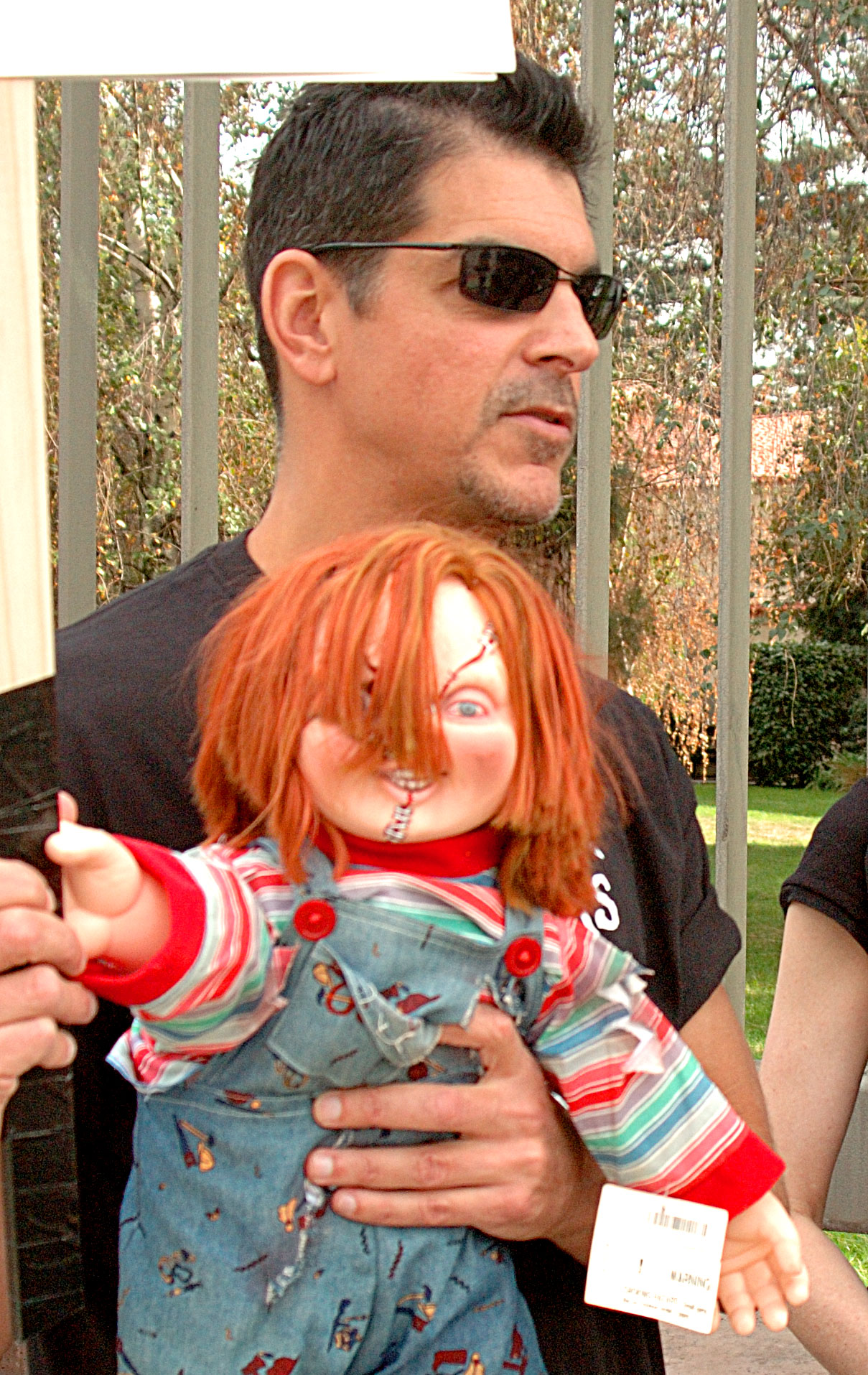


Appearance and characteristics
Originally presented as a toy marketed as a friendly "Good Guy" doll, Chucky's outwardly childlike appearance — round cheeks, striped shirt, and overalls — contrasts with his foul-mouthed, violent personality. As the series progresses his features are increasingly damaged and stitched, reflecting physical deterioration and attempts to repair him. Chucky's strengths are his cunning, persistence, and small size that allows surprise attacks; he is typically armed with knives or household tools and often uses the environment to lethal effect.
Origin and development
The character was created by writer-director Don Mancini for the original 1988 film. In the franchise's primary continuity, Chucky is the transferred soul of a human killer who uses a ritual to inhabit a doll to evade death. The interplay between supernatural elements (a soul transfer) and slasher conventions shaped Chucky's evolution from a straightforward horror antagonist into a recurring antihero with his own darkly comedic voice. The puppet/doll was brought to life using a combination of practical animatronics and puppetry, contributing to the character's tangible, unsettling presence on screen.
Appearances and media
Chucky is the central figure in the original film series and later adaptations. The character features in multiple feature films spanning late 1980s to the 2010s, as well as a contemporary television series that continues the franchise's narrative. Over time the franchise shifted tones between straight horror, camp, and satire, giving each installment a slightly different feel while keeping the doll's core traits recognizable.
Relationships and recurring figures
Several recurring characters define Chucky's story: notably Tiffany Valentine, a companion introduced in later installments who becomes both partner and foil; Tiffany is also portrayed as a doll in the same vein (Tiffany Valentine) and their dynamic blends romance, rivalry, and crime. Other recurring figures include victims, investigators, and the original human child associated with the doll's first transfer. The supporting cast helps ground Chucky's supernatural premise in human drama.
Cultural impact and distinctions
Chucky is widely recognized within the killer-doll subgenre and has crossed into popular culture via merchandise, Halloween costumes, and references across media. The character is distinct for maintaining a continuous, personality-driven presence across sequels, using biting humor and self-aware dialogue. The franchise also features two broad continuities — the original series and a later reboot — and has been voiced and portrayed by multiple performers across different entries, which has influenced how audiences perceive the character over time.
- Key traits: small size, crude humor, relentless violence.
- Creators and voices: Developed by Don Mancini; notable performers have contributed to the doll's voice and puppetry.
- Legacy: An enduring horror icon within late 20th and early 21st century popular culture.
Related articles
Author
AlegsaOnline.com Chucky (fictional character) Leandro Alegsa
URL: https://en.alegsaonline.com/art/20274