
Cinderella — the fairy tale, variants, and cultural influence
Cinderella is a widely known folk tale about a mistreated heroine who attains a better life with magical assistance. This article summarizes origins, motifs, major versions, and enduring adaptations.
Overview
Cinderella is a traditional folk and literary fairy tale that centers on a young woman who endures mistreatment or marginalization but achieves a reversal of fortune through a combination of virtue, luck, and often supernatural aid. The narrative commonly follows a persecuted heroine, a distinguished social event, a magical helper, a lost shoe or token, and recognition by a high-status figure. These elements recur across many cultural forms, making the tale one of the most widely diffused story types in world folklore.
Image gallery
10 Images




Plot summary (typical form)
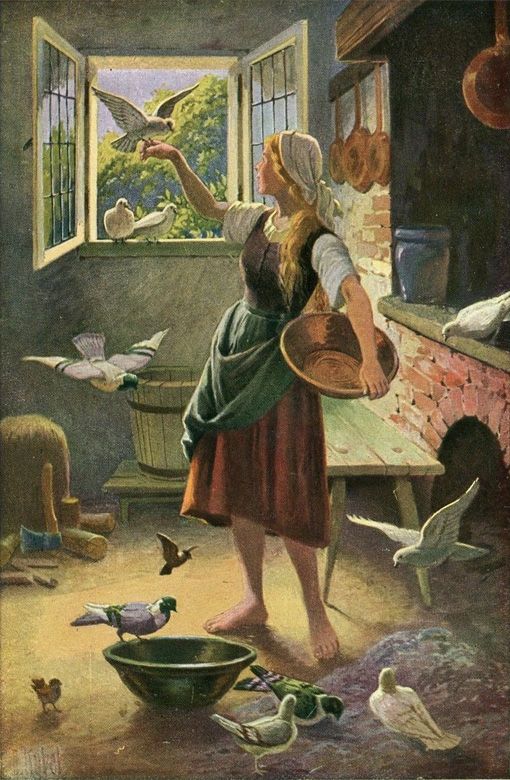
A customary outline begins with a young woman living with a stepfamily who belittles or abuses her. A celebratory occasion (frequently a court ball in European versions) offers an opportunity for social advancement. With magical assistance — a fairy godmother, enchanted animals, or aid from a supernatural source — the heroine is transformed and attends the event. She leaves in haste at a set hour and drops a shoe or other identifying object; the object later enables a search and final recognition, culminating in marriage or restoration of status.
Origins and classification
The tale is preserved in many literary traditions and in oral folklore. A well-known literary rendition is Charles Perrault's Cendrillon, ou la petite pantoufle de verre published in Paris in 1697, which introduced or popularized motifs such as the glass slipper and the fairy godmother in the French tradition. Earlier and contemporary written antecedents include Italian collections such as Giambattista Basile's Pentamerone and Renaissance miscellanies. The Brothers Grimm recorded a German variant, commonly titled "Aschenputtel," in their early nineteenth-century compilation.
Folklorists classify the core story under the international tale type often referred to as ATU 510A (the persecuted heroine). This classification groups narratives that share the shoe-test recognition and combination of persecution, magical help, and final reward.
Motifs and variant elements
Major motifs include the stepmother and stepsiblings, animal helpers or enchanted trees, transformation scenes (dress, coach, or transport), a time limit that compels a hasty departure, and a test by means of a shoe, ring, or other small object. Regional and cultural variants substitute different helpers (e.g., birds, a dead mother's spirit, or a household spirit), alter the token left behind, or change the social context of the celebratory event. Some versions emphasize poetic justice or retribution; others foreground destiny, social mobility, or inner virtue.
Geographic spread and cultural variants
Analogues of the Cinderella narrative appear worldwide. East Asian, South Asian, African, Southeast Asian, Indigenous Australian, and Native American traditions preserve stories that share the key pattern while integrating local beliefs, customs, and symbolic objects. Comparative studies trace how a recognizable narrative skeleton adapts to local moral codes and social structures, producing a wide but coherent family of tales.
Major literary and artistic versions
Beyond Perrault, important versions include Basile's earlier telling and the Brothers Grimm's German variant; both have influenced subsequent retellings and scholarship. The tale has inspired classic stage forms such as ballet (notably the ballet score by Sergei Prokofiev), operatic treatments, pantomime traditions in Europe, and many film and television adaptations. It has proved adaptable to children's literature, adult reworkings, and modern reinterpretations that emphasize agency or critique traditional gender roles.
Interpretation and modern perspectives
Scholars and creators often examine Cinderella through lenses of gender studies, class analysis, and narrative function. Modern retellings may grant the heroine greater initiative, reframe the romantic conclusion, or subvert the original reward structure. The tale is also used to discuss how folklore circulates, the role of written fixations versus oral variability, and the relationship between folklore motifs and cultural values.
Adaptations and cultural impact
The Cinderella plot has been adapted in stage musicals, animated and live-action films, television specials, ballets, and countless picture-book editions. Popular culture references draw on the story's symbolic power to signify sudden social elevation or transformation. At the same time, critical adaptations question its assumptions and offer diverse perspectives on destiny, merit, and identity.
Further resources and representative editions
- Perrault edition and discussion
- Basile's Pentamerone
- Early anonymous publications
- Comparative Renaissance texts
- Studies of the persecuted heroine motif
- On fairy godmother and helper motifs
- Ball and court contexts in literary versions
- Children's picture-book editions and illustrations
- Bibliographies and scholarly surveys
- Textual studies and annotated editions
- Archival collections and manuscripts
- Illustration and visual history catalogs
- Performance records and theatre studies
- Online guides to comparative variants
- Grimm collection resources
- Basile scholarship and translations
- Global folklore case studies
- Media adaptations and critical appraisals
- Cultural criticism and reinterpretations
- Comparative folklore reference works
Questions and answers
Q: Who wrote the story of Cinderella?
A: Charles Perrault wrote the story of Cinderella.
Q: When was it first published?
A: The story was first published anonymously in Paris in 1697 in Histoires ou contes du temps passé (English: Stories or Tales of Past Times).
Q: What is the plot of the story?
A: The plot of the story is about an ill-treated girl who, with the help of her fairy godmother, travels to a ball in a pumpkin coach. She flees the ball at midnight and loses her glass slipper. A prince, who has fallen in love with her, finds her lost slipper and uses it later to find her.
Q: Are there other European tales similar to "Cinderella"?
A: Yes, there are other European tales similar to "Cinderella", such as Bonaventure des Periers's New Recreations and Joyous Games (1558) and Giambattista Basile's Pentamerone (1634-6). The Brothers Grimm also included their version, "Aschenputtel", in Children's and Household Tales (1812).
Q: Are there similar tales from other cultures?
A: Yes, there are similar tales from other cultures such as Chinese, Indian, African, Javanese, Australian and Japanese literature and folklore.
Q: How has Cinderella been adapted over time?
A: Cinderella has been adapted over time for stage performances, movies, television shows and other media.
Related articles
Author
AlegsaOnline.com Cinderella — the fairy tale, variants, and cultural influence Leandro Alegsa
URL: https://en.alegsaonline.com/art/20403