
Chitty Chitty Bang Bang — 1968 British fantasy musical film
1968 family musical film loosely adapted from Ian Fleming's novel. Noted for its memorable songs by the Sherman Brothers, imaginative fantasy, memorable villains and later stage adaptations.
Overview
Chitty Chitty Bang Bang is a 1968 British fantasy musical film loosely adapted from a children's novel by Ian Fleming. Conceived as a family entertainment, the movie blends live-action spectacle, original songs and whimsical fantasy. The screenplay was shaped by Roald Dahl together with Ken Hughes, while the music was written by the team of the Sherman Brothers. The title song, and the image of the extraordinary car itself, have become enduring elements of popular culture.
Image gallery
10 Images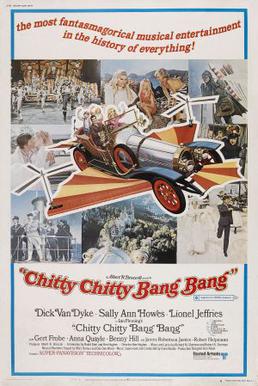


Plot and principal characters
The story follows eccentric inventor Caractacus Potts and his children as they restore an old racing car that displays miraculous abilities. The car, named Chitty Chitty Bang Bang, becomes central to a sequence of adventures that include land travel, flight and a trip to a small fictional European nation where toys are outlawed. Key characters include inventor Caractacus Potts (played by Dick Van Dyke), the charming Truly Scrumptious, the Potts family elder, and a series of antagonists such as Baron Bomburst and his wife, the Baroness. One of the most talked-about figures from the film is the sinister Childcatcher, whose design and performance have remained highly memorable and contentious among audiences and critics.
Cast, songs and creative team
The film featured a large ensemble cast and a creative team drawn from British and American cinema. Cast highlights include:
- Dick Van Dyke as Caractacus Potts
- Sally Ann Howes as Truly Scrumptious
- Lionel Jeffries as Grandpa Potts
- James Robertson Justice as Lord Scrumptious
- Robert Helpmann as the Childcatcher
- Gert Fröbe as Baron Bomburst; Anna Quayle as the Baroness in the film
Musical numbers were written and supplied by the Sherman Brothers and include the title song that became an anthem for the film. Other memorable pieces — such as lullaby-style and dance numbers performed onscreen — contributed to the film’s identity as a family musical. The title song was nominated for an Academy Award for Best Original Song.
Production and design
The film was directed by Ken Hughes and produced by Albert R. Broccoli, who was better known as a producer of the James Bond movies based on Fleming’s novels. The technical work combined practical effects, mechanical props and location shooting to realize sequences in which the car flies and performs other magical feats. Several working copies of the car were built for filming; these vehicles later attracted interest from collectors and museums.
Reception, legacy and adaptations
Upon release the film earned mixed reviews from critics but established a strong fan base among families and children. Over time it achieved classic status in many countries and is often remembered for its theatricality, choreography and set pieces. The Childcatcher and the film’s villains are frequently cited among the most striking aspects, both praised for their inventiveness and discussed for their unnerving tone within an otherwise lighthearted story.
Beyond the screen, Chitty Chitty Bang Bang inspired stage adaptations and revivals. A major theatrical version — expanded and reworked for the stage — premiered in the early 21st century and has played in the West End and on Broadway as part of the story’s long afterlife. The film’s songs, visual motifs and the iconic car continue to appear in retrospectives, family programming and theatrical revivals.
Notable facts and distinctions
- The film is only loosely based on the original Fleming book, which the author wrote as a story for his son; the screenplay introduces new scenes and characters not present in the novel.
- Roald Dahl’s involvement in the screenplay contributed distinctive humorous and dark touches absent from many other family films of the era.
- Chitty’s blend of practical special effects and elaborate set-pieces represents filmmaking techniques of the late 1960s and remains a point of interest for aficionados of classic family cinema.
- While broadly celebrated for its music and imagination, certain characters and design choices—especially the Childcatcher—have provoked debate about tone and representation in children’s entertainment.
Today Chitty Chitty Bang Bang remains a frequently cited example of mid-20th-century family filmmaking: part musical, part fantasy adventure, and notable for a central prop—the magical car—that continues to capture public imagination.
Questions and answers
Q: Who wrote the script for Chitty Chitty Bang Bang?
A: The script was written by Roald Dahl and Ken Hughes.
Q: Who composed the songs in the movie?
A: The songs were composed by the Sherman Brothers.
Q: What award did "Chitty Chitty Bang Bang" receive a nomination for?
A: The song "Chitty Chitty Bang Bang" was nominated for an Academy Award.
Q: Who directed the film?
A: The film was directed by Ken Hughes.
Q: Who produced both films based on Ian Fleming's novels?
A: Both films were produced by Albert R. Broccoli.
Q: Who played Baron Bomburst in the 1968 film?
A: Baron Bomburst was portrayed by Gert Fröbe, who also played Auric Goldfinger in a James Bond film.
Q: Who created Baroness Bomburst, which did not appear in Ian Fleming's novel?
A:The character of Baroness Bomburst was created by screenwriter Roald Dahl.
Related articles
Author
AlegsaOnline.com Chitty Chitty Bang Bang — 1968 British fantasy musical film Leandro Alegsa
URL: https://en.alegsaonline.com/art/19862
Sources
- flickfacts.com : flickfacts.com/movie/117/chitty-chitty-bang-bang
- ianflemingcentenary.com : "Ian Fleming Centenary, James Bond, Chitty Chitty Bang Bang, Devil may care, Sebastian Faulks new novel, Ian Fleming exhibition"
- mgm.com : Chitty Chitty Bang Bang
- british-film-locations.com : "Chitty Chitty Bang Bang Filming Locations"
- books.google.com : Leonard Maltin's 2009 Movie Guide
- ew.com : "50 Most Vile Movie Villains"
- rottentomatoes.com : "Chitty Chitty Bang Bang"