
Chitral
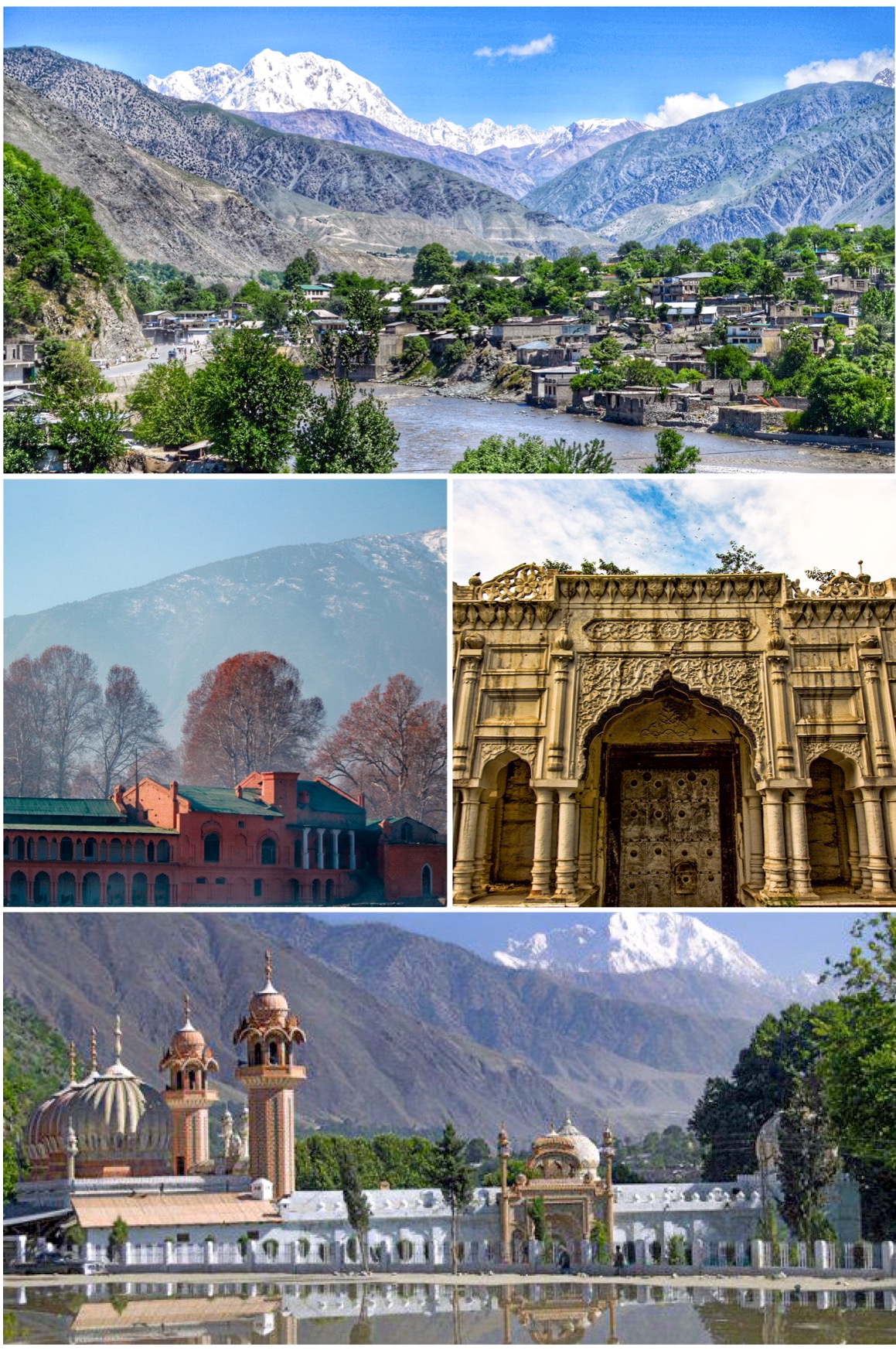
Chitral is the principal town of Chitral District in Khyber Pakhtunkhwa, Pakistan. It lies on the Chitral River and serves as a cultural, administrative, and market center for surrounding mountain valleys.
Overview
Chitral is the main town and administrative centre of the Chitral District, located in the mountainous northwestern region of Pakistan. The settlement stands on the western bank of the Chitral River and serves as the district's commercial and government hub. Population estimates for the town are modest — the urban community is commonly reported to be around 20,000 residents — but it supports a much larger rural hinterland of villages and high valleys.
Image gallery
5 Images


Geography and climate
Chitral sits in a deep river valley surrounded by high ridges of the Hindu Kush. The town's position at lower elevations of the valley makes it a gateway to higher passes and plateaus. Winters are cold with snowfall in surrounding mountains; summers are relatively mild and dry. Historically the town was seasonally isolated by high passes, though road improvements and tunnel projects have reduced that isolation and improved year-round access.
Local language and identity are notable features. The indigenous language, Khowar, is widely spoken alongside Urdu and Pashto, and the area is home to several distinct cultural groups including communities in the neighbouring valleys with unique traditions. Chitral town provides schools, markets, and administrative services for these diverse populations.
History and development
Chitral has a long history as a regional polity and trading centre at the crossroads of mountain passes. It was the seat of local rulers and experienced contacts with neighboring states and colonial agents during the 19th and 20th centuries. Over time the town developed civic institutions and infrastructure to serve the needs of a mountainous district, while retaining strong local cultural practices and traditional crafts.
Economy, culture and attractions
The local economy combines agriculture in valley floors, animal husbandry, small-scale trade and public services. Chitral is also a base for tourism into surrounding highlands: trekking, cultural visits and seasonal events draw visitors. Notable attractions and events include:
- Shandur and the high plateau polo festival, a traditional and well-known sporting event.
- Historic sites and local bazaars in Chitral town that reflect regional architecture and handicrafts.
- Access points for trekking and mountaineering into the Hindu Kush and nearby valleys.
- Nearby cultural areas such as the Kalash valleys, with distinct religious and cultural traditions.
For practical travel, visitors are advised to plan for mountain conditions and to check seasonal road and pass status. Chitral remains important as a regional administrative centre and a cultural crossroads in northern administrative capital areas, linking remote valleys to wider national networks.
Related articles
Author
AlegsaOnline.com Chitral Leandro Alegsa
URL: https://en.alegsaonline.com/art/19850
Sources
- na.gov.pk : "Personal Profile"
- chitralnews.com : "Geography of Chitral"
- iranicaonline.org : "INDO-IRANIAN FRONTIER LANGUAGES"
- pakpost.gov.pk : "Post Codes"