
Cerro de Pasco — High‑altitude mining city in Peru
Cerro de Pasco is a Peruvian city and capital of Pasco Region, notable for its very high elevation, long history of mining (silver, lead, zinc), and environmental and social impacts tied to mineral extraction.
Cerro de Pasco is a city in central Peru and serves as the administrative capital of the Pasco Region. Perched at roughly 4,300 meters above sea level, it is among the world’s highest urban settlements. The city developed around rich mineral deposits and remains strongly associated with large-scale mining.

Image gallery
6 Images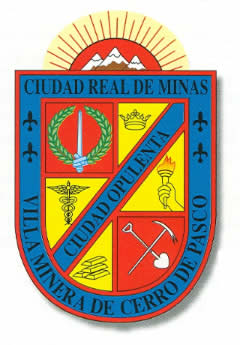


Characteristics
Cerro de Pasco combines rugged highland geography with an industrial urban core. Typical characteristics include:
- Very high elevation and a cold, thin-air climate with large day–night temperature swings.
- An economy historically and currently dominated by mining—both open-pit and underground operations extracting polymetallic ores such as silver, lead and zinc.
- Infrastructure and housing closely interwoven with mining facilities; visible mine workings are a defining part of the cityscape.
History and development
The settlement grew during the colonial period as Spanish and later international interests developed the rich veins of metal-bearing rock. Over centuries the town evolved from a small mining camp into a regional administrative center, with successive waves of technological change enlarging operations and attracting workers from surrounding highland communities.
Mining brought wealth and population growth but also shaped social relations and urban form. Industrial expansion in the 19th and 20th centuries left a legacy of infrastructure, company towns, and periodic labor disputes typical of mineral regions.
Environmental and social issues
Cerro de Pasco has been the focus of attention for environmental and public-health reasons. Intensive extraction and processing have led to contamination concerns—especially from heavy metals in soil, water and air—that affect neighborhoods near mine facilities. These problems have prompted scientific studies, public debate, and efforts at remediation and, in some cases, relocation of affected communities.
Despite these challenges, the city remains a key center for regional government services, trade and cultural life in the central Andes.
Importance and notable facts
- One of the world’s highest cities by elevation, giving it distinctive climatic and logistical conditions.
- Serves as a regional capital and commercial hub for the central highlands.
- Often cited as an example of the complex balance between resource-driven economic development and environmental and social impacts.
Visitors and researchers come for mining history, Andean landscapes and to study the social dynamics of a community shaped for generations by extraction.
Related articles
Author
AlegsaOnline.com Cerro de Pasco — High‑altitude mining city in Peru Leandro Alegsa
URL: https://en.alegsaonline.com/art/18217