
Centovalli: the Swiss-Italian valley between Locarno and Valle Vigezzo
Centovalli is a steep-sided valley in Ticino, Switzerland, extending from Intragna near Locarno to the Italian border where it continues as Valle Vigezzo; known for its scenery and the Domodossola–Locarno railway.
Centovalli is a narrow, forested valley in the southern Swiss Alps that lies within the canton of Ticino. It begins around Intragna near Locarno and descends southward toward the Swiss–Italian border. On the Italian side the same valley system is commonly called Valle Vigezzo. Centovalli is prized for its deep gorges, mixed broadleaf and coniferous woods, and a sequence of small villages linked by winding roads and footpaths.
Image gallery
10 Images


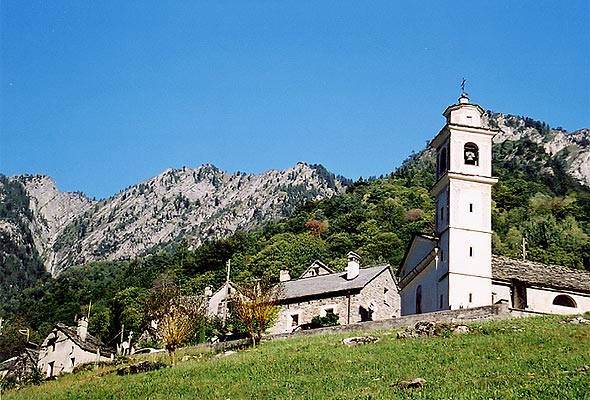


Geography and landscape
The valley is characterized by steep slopes that channel streams and small rivers through narrow ravines. Vegetation varies with altitude, from chestnut and beech stands at lower levels to alpine meadows higher up. Settlements are typically clustered on terraces or along valley floors, offering panoramic views and easy access to trails. The terrain and climate create habitats for a variety of mountain flora and fauna and a mosaic of cultivated and wild areas.
History and cultural notes
Centovalli and its Italian continuation, Valle Vigezzo, have long been borderlands where linguistic, economic and cultural influences from both Switzerland and Italy meet. The area developed through pastoralism, small-scale farming, and seasonal migration. Valle Vigezzo gained a reputation as the “Valley of Painters” because of a tradition of itinerant and studio artists; Centovalli has a related local heritage of handicraft and rural traditions that persist in festivals and village life.
Railway, access and tourism
A defining feature of modern Centovalli is the Domodossola–Locarno railway, often called the Centovalli railway. This narrow-gauge line links Locarno in Switzerland with Domodossola in Italy, crossing the border and following the valley’s curves. The route is celebrated for its scenic viaducts, tunnels and river crossings and is a major attraction for visitors who travel the line for landscape views. The valley is also popular for hiking, cycling and small-scale rural tourism focused on local food, crafts and mountain scenery.
Villages, routes and practical information
- Key settlements provide services for visitors and serve as trailheads.
- The railway offers regular connections and is an alternative to the valley road.
- Outdoor activities include day hikes, longer mountain treks and cultural visits.
For travelers wishing to learn more about the valley’s geography and attractions, resources about Centovalli, local cantonal information in Ticino, and municipal guides for Locarno provide practical details on routes, schedules and accommodations. Centovalli remains an accessible example of Alpine valley life where natural scenery, cross‑border history and a scenic railway combine to attract visitors year-round.
Tags
Related articles
Author
AlegsaOnline.com Centovalli: the Swiss-Italian valley between Locarno and Valle Vigezzo Leandro Alegsa
URL: https://en.alegsaonline.com/art/17996
Sources
- bfs.admin.ch : "Arealstatistik Standard - Gemeinden nach 4 Hauptbereichen"
- bfs.admin.ch : "Ständige Wohnbevölkerung nach Staatsangehörigkeitskategorie Geschlecht und Gemeinde; Provisorische Jahresergebnisse; 2018"