
Cedar Falls, Iowa: Overview, history, and community profile
Cedar Falls is a city in northeastern Iowa, part of the Waterloo–Cedar Falls region and home to the University of Northern Iowa. This article summarizes its geography, development, institutions, and local character.
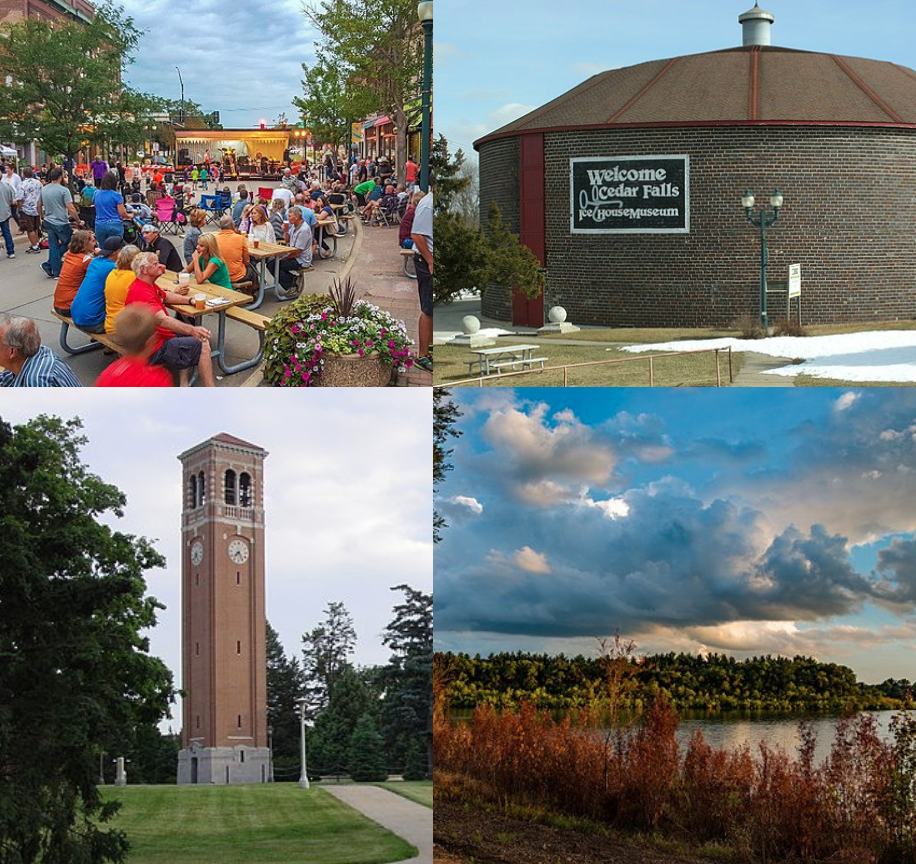
Cedar Falls is a city in the U.S. state of Iowa, located within the Waterloo–Cedar Falls metropolitan area and the broader region of northeastern Iowa. The city grew along the Cedar River and combines a college-town atmosphere with a Midwestern municipal setting. Its mix of residential neighborhoods, a pedestrian-friendly downtown, and public green space define much of its local identity.
Image gallery
9 Images


Geography and built environment
Cedar Falls sits beside a river that shaped its early industry and remains central to recreation and parks. The downtown area features historic commercial buildings and civic institutions. Residential sections range from older homes near the river and university to newer subdivisions on the outskirts. Local planning emphasizes trails, riverfront access, and preservation of historic districts.
History and development
The community developed in the 19th century as settlers and small industry established mills and services along the river. Over time the town incorporated municipal services and expanded with rail and road connections typical of Midwestern cities. As regional commerce evolved, Cedar Falls diversified beyond its early industrial base into education, retail, and light manufacturing.
Education, economy, and culture
Cedar Falls is widely known as the location of the University of Northern Iowa, a public regional university that is a major employer and cultural anchor. The presence of the university influences local arts, sports, and small business activity. The economy includes education, health care, retail, and a range of professional services. Community events, farmers markets, and university performances contribute to a lively civic calendar.
Notable features and community life
- Strong emphasis on parks, trails, and riverfront recreation.
- Historic downtown with shops, restaurants, and cultural venues.
- A demographic mix that blends students, long-term residents, and families.
- Part of the Waterloo–Cedar Falls regional economy and transportation network.
For further municipal information, regional planning, or higher-education resources, see local sources and institutional websites such as the city government and the university. Many readers find visiting downtown or attending a university event a useful way to experience Cedar Falls firsthand. Additional context and services are available through regional partners and public records accessible online via official portals like regional resources.
Related articles
Author
AlegsaOnline.com Cedar Falls, Iowa: Overview, history, and community profile Leandro Alegsa
URL: https://en.alegsaonline.com/art/17817