
Caroline of Ansbach (Queen Consort of Great Britain)
German-born consort of King George II (1683–1737). Influential in politics, patronage and court culture; acted for the crown during the king's absences and shaped early Georgian Britain.
Overview
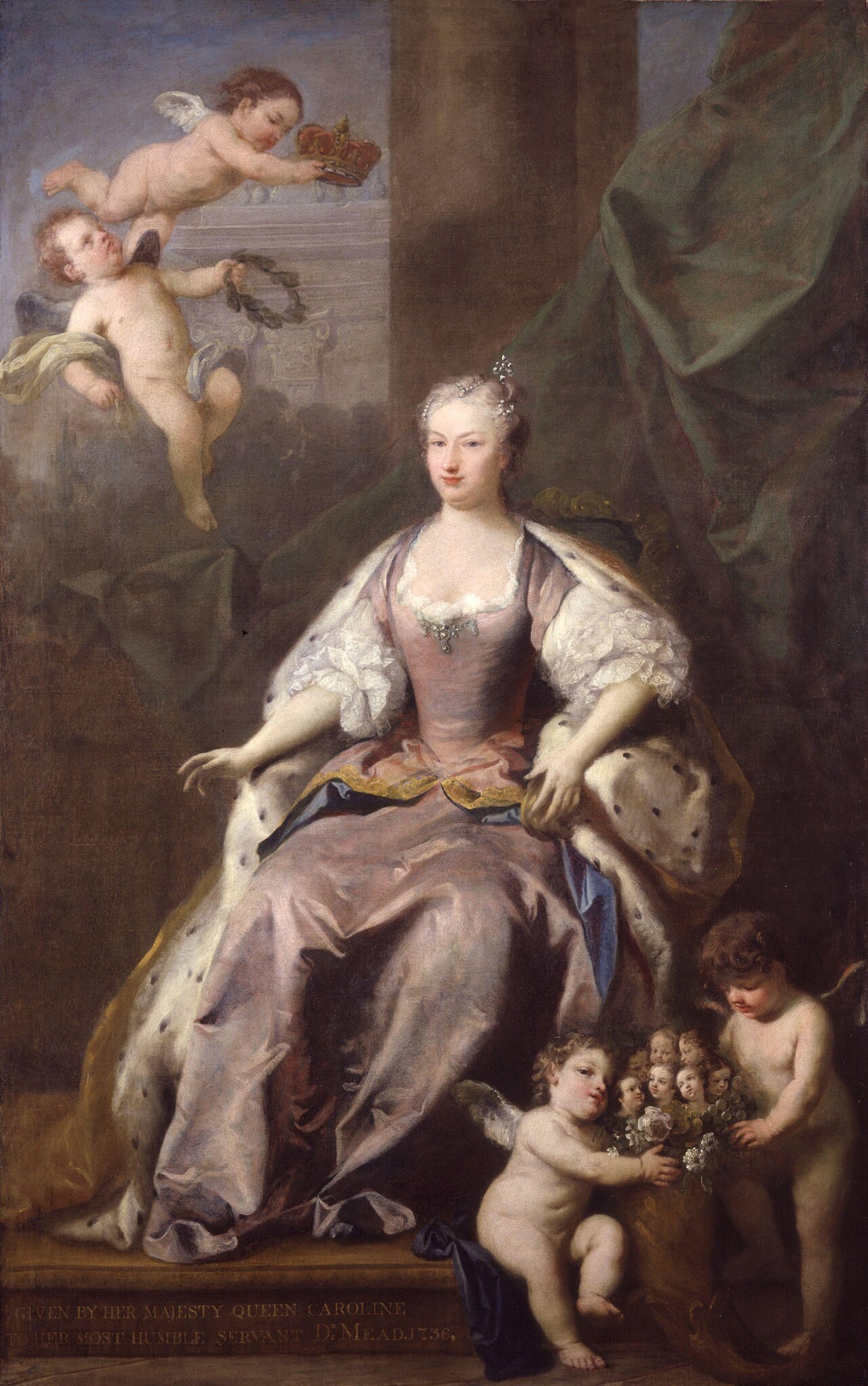
Caroline of Brandenburg-Ansbach (Wilhelmina Charlotte Caroline; 1 March 1683 – 20 November 1737) was queen consort to George II and a central figure in the court and government of early Georgian Britain. Born into the Franconian branch of the House of Hohenzollern, she brought intelligence, education and political skill to a role that extended beyond ceremonial duties.
Image gallery
10 Images





Early life and marriage
Caroline was raised in the small principality of Brandenburg-Ansbach and received a broad education for a woman of her rank, studying languages, religion and philosophy. She married the future George II in 1705; the union produced several children, most notably Frederick, Prince of Wales. Her background and education helped her adapt to the complex social and political environment of the British court.
Role as queen and political influence
As queen consort (from 1727 until her death in 1737), Caroline was widely regarded as politically astute. She cultivated relationships with ministers and advisers and is credited with supporting the development of party government in practice by backing experienced administrators. On occasions when the king was absent in Hanover, she was entrusted with royal responsibilities and the exercise of certain prerogatives, acting as an experienced and steady presence at the center of governance.
Patronage, personality and legacy
Caroline played a notable role as a patron of the arts, architecture and the sciences, encouraging cultural life at court and fostering intellectual exchange. Her temperate religious views and reputation for moderation helped shape the tone of the monarchy during a formative period. Relations with her eldest son were often strained, reflecting the political divisions of the time, but her overall legacy is that of a consort who exercised soft power through patronage, diplomacy and personal influence.
Notable facts
- Born into the House of Hohenzollern and educated for public life.
- Married the future king in 1705 and became queen consort in 1727.
- Acted for the crown during the king's absences and supported ministerial government.
- Remembered as a patron of arts and sciences and an influential court figure.
Related articles
Author
AlegsaOnline.com Caroline of Ansbach (Queen Consort of Great Britain) Leandro Alegsa
URL: https://en.alegsaonline.com/art/17198