
Caesar cipher
A simple substitution cipher that shifts letters by a fixed amount. Originating in Roman times, it illustrates basic encryption, has variants like ROT13, and is useful for teaching and puzzles but is cryptographically weak.
The Caesar cipher is one of the oldest and simplest methods of encrypting text. In its basic form each letter in the plaintext is moved a fixed number of places down or up the alphabet. It is a fundamental example in cryptography and belongs to the broader family of substitution cipher techniques. The method is commonly linked to Julius Caesar, who reportedly used a shift for private correspondence.
Image gallery
4 Images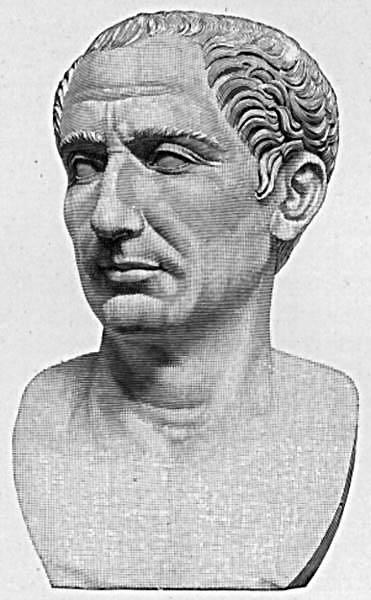


How it works
Operation is straightforward and mechanical: choose a shift (the key), then replace every alphabetic character by the letter that is that many positions away. Non-alphabetic characters are often left unchanged. Case is sometimes preserved so that uppercase maps to uppercase and lowercase to lowercase.
- Pick a shift value (for example, 3).
- For each letter, move forward in the alphabet by that many positions (wrapping from Z to A).
- Collect the transformed letters into the ciphertext.
Example (shift of 3): A → D, B → E, C → F. The plaintext "HELLO" becomes "KHOOR" under that shift.
History and variations
Although associated with Roman military and political practice, the Caesar cipher predates complex systems and later inspired many classroom examples. A well-known variant is ROT13, where the alphabet is rotated by 13 places; applying ROT13 twice returns the original text, which made it useful for simple obfuscation on Internet forums.
Security, analysis and uses
From a security perspective the Caesar cipher is insecure for serious protection. There are only 25 nontrivial shifts in the Latin alphabet, so an attacker can try all possibilities (brute force) quickly. Frequency analysis — comparing letter frequencies in the ciphertext to expected language frequencies — also breaks it easily. Today this cipher is mainly used for education, historical illustration, puzzles, toy examples in programming exercises, and light obfuscation rather than confidential communication.
Because of its simplicity it remains a useful teaching tool: it demonstrates the distinction between substitution and transposition, introduces the idea of a key, and provides a hands-on way to learn cryptanalysis basics. For practical cryptographic needs, modern symmetric and asymmetric algorithms are employed instead.
Related articles
Author
AlegsaOnline.com Caesar cipher Leandro Alegsa
URL: https://en.alegsaonline.com/art/15947
Sources
- learncryptography.com : "Learn Cryptography - Caesar Cipher"
- xarg.org : "Cracking a Caesar cipher • Open Source is Everything"