
Burghclere: village and civil parish in Hampshire, England
Burghclere is a small Hampshire village and civil parish near the West Berkshire border, known for Sandham Memorial Chapel, rural walks, a Victorian parish church and local schools.
Burghclere is a small village and civil parish in the county of Hampshire, in southern England. It lies close to the boundary with West Berkshire and is locally administered as a parish community. At the 2011 census the population was recorded as about 1,152 people. The village combines a primarily rural setting with a modest range of local services and historic buildings, making it typical of the small villages that characterise this part of Hampshire and the adjoining Berkshire downs. For general information about the settlement see the local entry at Burghclere.
Image gallery
3 Images
Landscape and character
Burghclere sits amid rolling farmland and chalk downland that is popular with walkers and nature enthusiasts. The parish includes open fields, hedgerows and small wooded areas, with local paths that follow the course of a disused railway and link to neighbouring parishes. Local high points such as Beacon Hill and a route known locally as Jacob's Ladder are well used for informal recreation, and in winter they often attract sledging or snowballing when conditions permit. The village retains a quiet, agricultural character alongside a small cluster of community buildings and residences.
Institutions and community life
The community supports several educational and cultural institutions. The principal schools are:
- Burghclere Primary School – the local state primary serving younger pupils and running community events.
- The Clere School – a local authority secondary school that serves Burghclere and nearby villages.
- St Michael's School – an independent Catholic school located in the parish.
Local religious life centres on the Church of the Ascension, a parish church consecrated in 1838. The building was later restored and enlarged: a spire was added and the church underwent restoration work in 1874–1875, reopening on Ascension Day, 13 May 1875. The church tower houses a ring of six bells, some of which were moved from nearby All Saints in Newtown; additional treble bells were provided to mark Queen Victoria's jubilees in the late 19th century. The primary school and local groups use the church for seasonal services and community ceremonies, and the village band occasionally performs at services and events.
Art, heritage and attractions
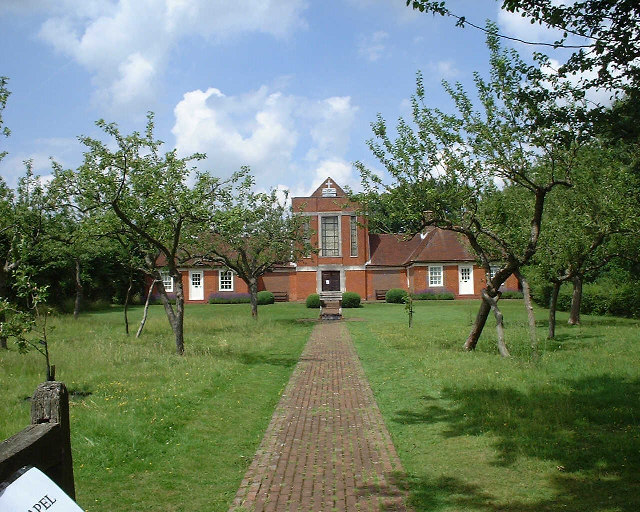
Burghclere is perhaps best known beyond the immediate area for Sandham Memorial Chapel, a small but significant house of art preserved by the National Trust. The chapel contains a notable sequence of paintings by the 20th-century artist Stanley Spencer depicting scenes connected to the First World War; it attracts visitors interested in art and social history. The village and surrounding countryside also provide a setting for local fairs, countryside rambles and wildlife observation, connecting residents and visitors to the broader cultural landscape of Hampshire and the neighbouring Berkshire downs.
History and notable facts
The recorded history of Burghclere reflects the gradual development of an agricultural parish with later Victorian-era influences, particularly visible in its church architecture and local amenities. The presence of the disused railway corridor hints at 19th- and early 20th-century transport changes that affected many rural communities. Today Burghclere balances its historic features—church, chapel, and traditional village layout—with active village life centred on schools, clubs and seasonal events, maintaining a sense of continuity while serving the needs of a modern rural population.
For practical visitors' information, local contacts and parish details, the village entry and parish council pages are useful starting points: Burghclere information, county resources at Hampshire, national context at England and neighbouring area guidance at West Berkshire.
Related articles
Author
AlegsaOnline.com Burghclere: village and civil parish in Hampshire, England Leandro Alegsa
URL: https://en.alegsaonline.com/art/15415
Sources
- neighbourhood.statistics.gov.uk : "Civil Parish population 2011"
- burghcleresportsclub.co.uk : Sports Club