
Wyoming County, Pennsylvania: overview, history, geography, and communities
A concise encyclopedia-style overview of Wyoming County, Pennsylvania, covering geography, history, population, communities, economy, recreation, and government.
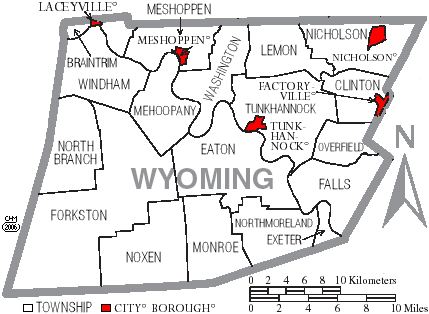
Wyoming County is a rural county in northeastern Pennsylvania. As recorded in the 2010 census, the population was 28,276 and the county seat is Tunkhannock. The county lies within the Susquehanna River watershed and includes a mix of river valleys, rolling hills and forested uplands. For official information see the county website: Wyoming County official site.
Image gallery
4 Images


Geography and landscape
The landscape is typical of Pennsylvania's Endless Mountains region: narrow valleys carved by tributaries of the Susquehanna, agricultural fields, and sizeable woodlands that support outdoor recreation. Small state parks, local trails and rivers provide fishing, hiking and birding opportunities. For general state context see Pennsylvania and for regional resources consult state and regional guides.
History and name
Wyoming County was created in the mid-19th century from adjoining counties and has roots in early American settlement, agriculture and lumbering. The county’s name links to the broader Wyoming Valley region; that place-name itself comes from a Native American term applied by early settlers. Historical sites and small museums in the county document nineteenth-century life and industry.
Communities, economy and services
Tunkhannock serves as the administrative and cultural center. Other boroughs and townships are primarily residential, agricultural or forested. The local economy combines farming, small manufacturing, service businesses and tourism. For demographic and census details see census sources.
Points of interest and government
Visitors find historic districts, river access points and seasonal festivals. County government provides typical services—courts, planning, public works and emergency services—coordinated from the seat in Tunkhannock. The municipal center is described at Tunkhannock municipal information.
- Major attractions: local parks, river recreation, historic downtown Tunkhannock
- Typical activities: fishing, hiking, small-town festivals
- Notable facts: rural character, scenic valleys, community institutions
Author
AlegsaOnline.com Wyoming County, Pennsylvania: overview, history, geography, and communities Leandro Alegsa
URL: https://en.alegsaonline.com/art/148095