
W. T. Cosgrave: First Head of Government of the Irish Free State
Profile of W. T. Cosgrave (1880–1965), leader in the founding years of the Irish Free State — his roles, policies, and legacy as a statesman who built many early institutions of modern Ireland.
William Thomas Cosgrave (6 June 1880 – 16 November 1965) was a central figure in Ireland's transition from British rule to independent governance. A pro‑Treaty politician and pragmatic administrator, he led the governments that established and consolidated the Irish Free State in the 1920s and early 1930s. Cosgrave combined a background in revolutionary politics with a cautious, conservative approach to state building, and his tenure shaped many of the new state's institutions.
Image gallery
6 Images

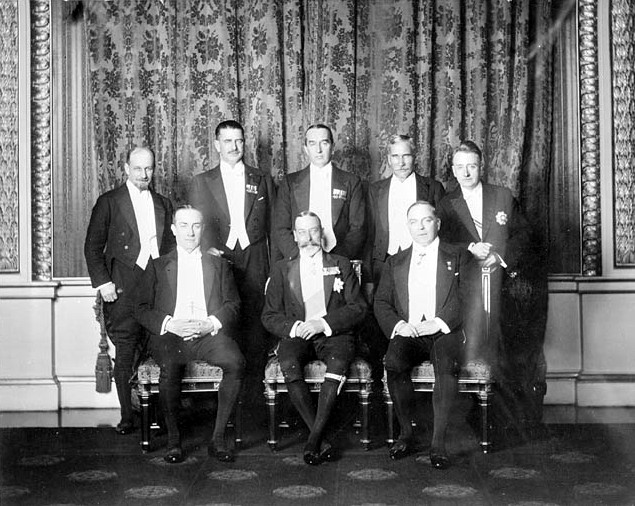


Early life and political beginnings
Born in Dublin, Cosgrave became active in nationalist circles in his youth. He entered national politics in the aftermath of the 1916 Rising and was elected to the British House of Commons at the 1918 general election for North Kilkenny. Like other Sinn Féin MPs elected in 1918, he did not take his Westminster seat and instead sat in the revolutionary Dáil Éireann. During the War of Independence and the turbulent years that followed, Cosgrave emerged as a supporter of the Anglo‑Irish Treaty and moved into leadership roles in the provisional and Free State administrations.
Head of government and senior offices
- Chairman of the Provisional Government (Aug–Dec 1922)
- President of Dáil Éireann (Sept–Dec 1922)
- President of the Executive Council (1922–1932), the effective head of the Irish Free State government
- Leader of Cumann na nGaedheal (1923–1933) and later Leader of Fine Gael (1934–1944)
- Ministerial posts earlier in his career included responsibility for local government and finance
In these capacities Cosgrave presided over the Free State during the Irish Civil War and its immediate aftermath. His administrations prioritized restoring public order, creating a functioning civil service, and establishing the legal, financial and policing institutions necessary for an independent state.
Policies, achievements and style
Cosgrave's governments pursued conservative fiscal policies and emphasized stability, rule of law, and continuity with existing administrative frameworks where practical. Notable achievements attributed to the period of his leadership include the organisation of public finances, the founding and professionalisation of a national police force, and the consolidation of courts and local government structures. He was widely regarded as an able administrator who preferred steady institution‑building to charismatic or populist politics.
Opposition, later career and legacy
Cosgrave led the pro‑Treaty party into electoral competition and remained a member of the Dáil from 1921 until 1944. His government was defeated at the 1932 general election by Fianna Fáil, led by Éamon de Valera, after which he served as Leader of the Opposition for more than a decade. He continued to lead his party through reorganisation and the formation of Fine Gael, but he never regained the premiership. Although he was the Free State's head of government for ten years, he did not hold the later constitutional title of Taoiseach, which was introduced under the 1937 constitution.
Notable facts and family
Cosgrave's political career spanned revolutionary, wartime and peacetime roles, making him a key figure in transforming a revolutionary movement into a functioning parliamentary government. His commitment to institutional continuity helped stabilise the new state, even as some of his fiscal and social policies attracted criticism. His family continued to play a role in Irish public life: his son, Liam Cosgrave, later served as Taoiseach.
Further reading and context
For an overview of the parties and parliamentary offices with which he was associated, see resources on Fine Gael and the role of a Teachta Dála. Cosgrave's life illustrates the tensions faced by early Irish leaders who moved from revolutionary activity to the practical demands of government and institution‑building.
Author
AlegsaOnline.com W. T. Cosgrave: First Head of Government of the Irish Free State Leandro Alegsa
URL: https://en.alegsaonline.com/art/147359