
Tuscarora people — Iroquoian Native American tribe
The Tuscarora are an Iroquoian-speaking Indigenous people of the Northeastern Woodlands, with historic homelands in the southeastern United States and present communities in North Carolina, New York, and Ontario.
Overview
The Tuscarora are an Indigenous people originally based in the southeastern part of what is now the United States. They speak a language of the Iroquoian family and are traditionally associated with the cultural region known as the Northeastern Woodlands. Over centuries the Tuscarora maintained village life, cultivated crops, and developed political and kinship systems similar to other Iroquoian peoples.
Image gallery
3 Images

Language, society and culture
The Tuscarora language belongs to the Iroquoian branch and is closely related to other Haudenosaunee languages. Traditionally they lived in permanent or semi-permanent villages with longhouses, practiced agriculture (notably the "Three Sisters"—corn, beans and squash), and organized themselves around extended kin groups and clan relationships. Many cultural practices reflect matrilineal descent patterns common among Iroquoian nations.
History and migration
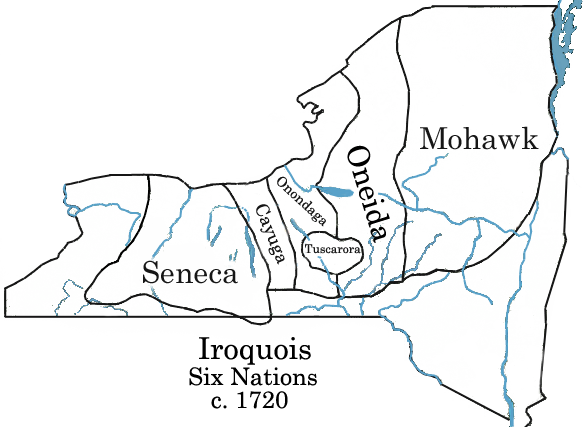
In the early 18th century conflict with European colonists culminated in the Tuscarora War (1711–1713). As a result of warfare, disease, and pressure on lands, large numbers of Tuscarora migrated northward over several decades. Many who moved north joined or were adopted by the Haudenosaunee (Iroquois) Confederacy, where they came to be recognized alongside other member nations.
Contemporary communities
Today Tuscarora people live in several distinct communities. Some remain in their historic region of the southeastern United States and maintain ties to North Carolina. Others live in upstate New York and in Ontario, Canada, where descendants settled on lands associated with the Six Nations. Modern Tuscarora communities operate tribal or band governments, pursue cultural revitalization, and engage in economic and educational initiatives.
Notable facts and contemporary importance
The Tuscarora story illustrates broader themes of Indigenous resilience, migration, and adaptation during the colonial era. Language and cultural revitalization efforts are active in many communities; elders and educators work to teach Tuscarora language and traditions to younger generations. Their role within the larger Haudenosaunee confederation is a distinct historical example of intertribal adoption and alliance.
Key aspects
- Language: Iroquoian family; revitalization efforts ongoing.
- Traditional economy: agriculture, hunting, fishing, and trade.
- Social organization: clan and kin-based systems with matrilineal features.
- Historical events: Tuscarora War and subsequent northward migration.
- Present day: communities in North Carolina, New York, and Ontario engaged in cultural preservation and self-governance.
Author
AlegsaOnline.com Tuscarora people — Iroquoian Native American tribe Leandro Alegsa
URL: https://en.alegsaonline.com/art/147000