
Turk 182 (1985 film)
Turk 182 is a 1985 American action comedy-drama directed by Bob Clark about a maverick's campaign to expose city bureaucracy. The film mixes vigilante stunts, satire, and melodrama and features an ensemble cast.
Overview
Turk 182 is a 1985 American action comedy-drama directed by Bob Clark and distributed by 20th Century Fox. The story blends street-level stunts, broad humor and melodramatic family elements to follow a working-class protagonist who wages a public campaign against municipal authorities. The film is set in an urban American environment and reflects 1980s concerns about institutions, pride and recognition.
Image gallery
1 Image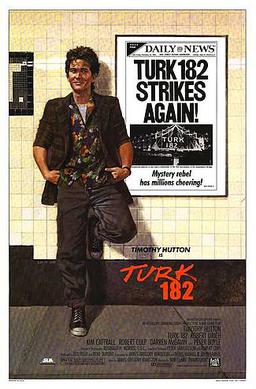
Premise and plot elements
The central premise follows an ordinary man who becomes an unlikely symbol after a personal injustice involving a family member and city bureaucracy. Rather than pursue only legal channels, he adopts a flamboyant, publicity-seeking approach that includes graffiti, daring public acts and media-savvy provocation aimed at shaming officials and rallying public opinion. The film uses both comic set pieces and dramatic family scenes to dramatize the escalating confrontation.
Cast
- Robert Urich as the film's lead character.
- Timothy Hutton in a supporting role.
- Kim Cattrall among the principal cast.
- Robert Culp appears in a key part as an authority figure.
- Darren McGavin and Steven Keats in supporting roles, with Paul Sorvino and Peter Boyle rounding out the ensemble.
Production and release
Directed by Bob Clark, who had experience with both dark comedy and mainstream drama, the film was produced in the mid-1980s and released by a major studio. Its mix of genres—action stunts, slapstick elements and earnest family drama—was a deliberate choice intended to appeal to a broad audience, though it also invited differing expectations from critics and viewers.
Reception and legacy
On release the film received mixed to negative reviews from many critics, who cited tonal unevenness and implausible plotting; other viewers and some commentators appreciated its energetic performances and populist flair. Over time it has been remembered as an example of 1980s commercial filmmaking that combined social grievance with crowd-pleasing spectacle. It is sometimes discussed in relation to other Bob Clark films and is noted for its examination of civic pride and celebrity-driven activism.
Themes and notable aspects
Turk 182 touches on themes of recognition, institutional failure, and the power of publicity. Its protagonist’s transformation into a public symbol illustrates how media tactics can be used to challenge authority. The film remains of interest for its cast, its director's stylistic range, and its portrayal of urban protest through theatrical rather than purely legal means.
Author
AlegsaOnline.com Turk 182 (1985 film) Leandro Alegsa
URL: https://en.alegsaonline.com/art/146992