
The Grim Adventures of Billy & Mandy (video game)
A licensed arena-style fighting game based on the Cartoon Network series, developed by High Voltage Software and released for multiple consoles with multiplayer and series-themed stages.
Overview
The Grim Adventures of Billy & Mandy is a licensed fighting video game developed by High Voltage Software. It adapts the darkly comedic Cartoon Network series and was released in versions for PlayStation 2 (PS2), Nintendo GameCube, Game Boy Advance (GBA) and Wii. The game presents characters, locations and the tone of the TV show, aiming primarily at fans of the franchise and local multiplayer play.
Image gallery
1 Image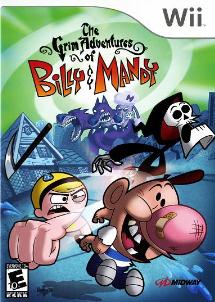
Gameplay and features
The game is built around arena-style combat rather than traditional one-on-one fighting. Players select from a roster of characters drawn from the series and battle in enclosed stages that reference settings from the cartoon. Matches emphasize fast, chaotic exchanges, item use and stage hazards rather than deep combo systems.
- Playable characters and familiars taken from the television show.
- Multiple stages inspired by locations familiar to viewers.
- Support for local multiplayer skirmishes and single-player modes against CPU opponents.
- Unlockable content and costume or stage variations that reward continued play.
Development and release
Produced as part of a wave of licensed games tied to Cartoon Network properties, the title was developed to run across both home consoles and a handheld. Developers tailored each platform build to its hardware: home-console editions deliver 3D arenas and local multiplayer on TV, while the handheld version adapts the experience to the portable format. The game draws directly on the visual style and humor of the Cartoon Network series The Grim Adventures of Billy & Mandy.
Reception and legacy
Critical response was mixed, with reviewers noting that the game mostly succeeds as a party-style brawler for fans but does not markedly innovate within the genre. It is often remembered as a straightforward tie-in that captures the characters and aesthetics of the TV show, making it of interest to collectors and younger players who enjoyed the original cartoons.
Notable aspects include its local multiplayer focus and faithful use of the show's quirky, macabre humor. As with many licensed titles, the game illustrates how television properties were translated into interactive formats during the mid-2000s, balancing fan service with accessible gameplay mechanics aimed at casual audiences.
Author
AlegsaOnline.com The Grim Adventures of Billy & Mandy (video game) Leandro Alegsa
URL: https://en.alegsaonline.com/art/146615