
Tennessee House of Representatives
The lower chamber of Tennessee's legislature. Composed of 99 elected representatives, it drafts and passes state laws, originates budget measures, performs oversight, and represents local districts.
The Tennessee House of Representatives is the lower house of the Tennessee General Assembly, the state legislature of Tennessee. It is a key lawmaking body that represents local districts, introduces and votes on legislation, and shares responsibility with the Tennessee Senate for shaping state policy.
Image gallery
2 Images
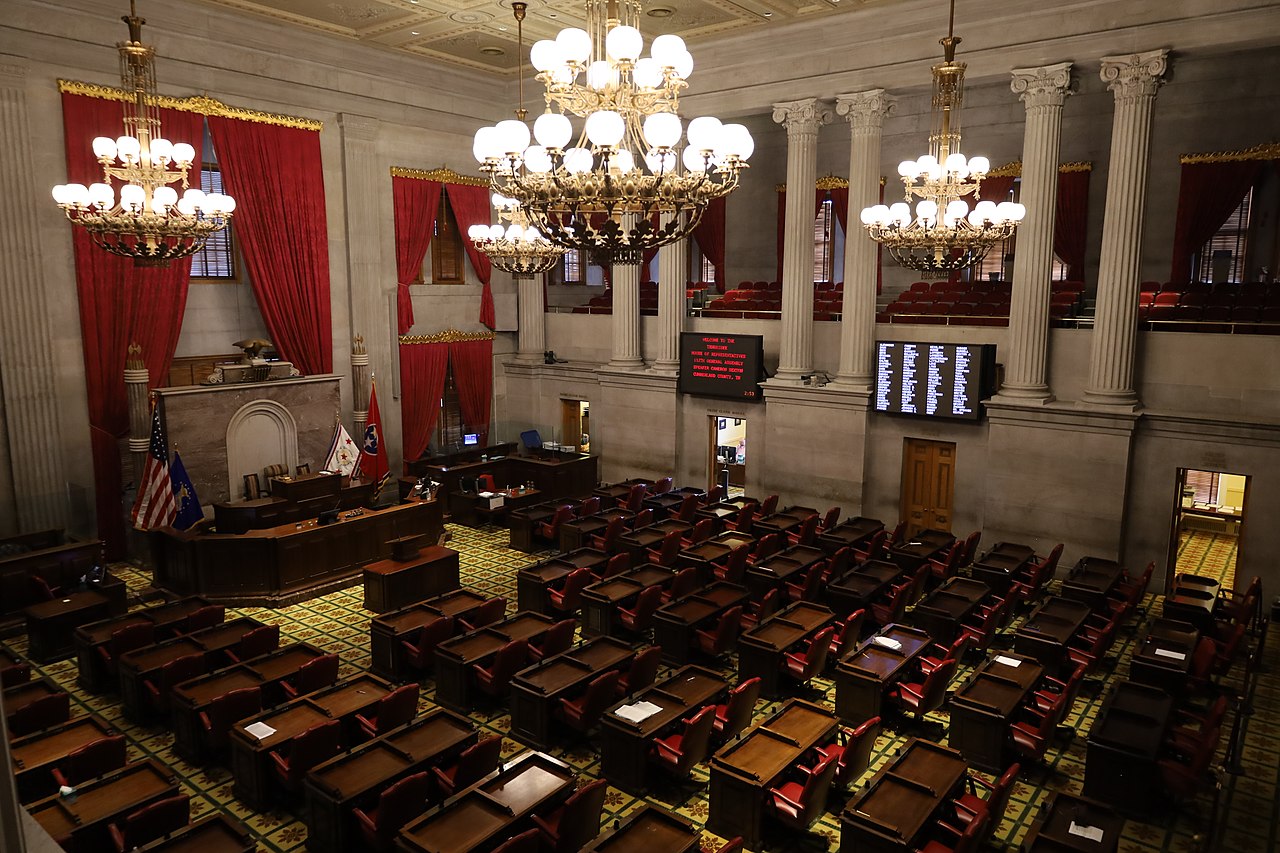
Composition and organization
The chamber is composed of 99 members elected from single-member districts. Representatives commonly serve two-year terms and may run for re-election without term limits. Leadership includes a Speaker chosen by members, majority and minority leaders, and a network of standing committees that review bills before they reach the floor.
Functions and procedures
The House proposes, amends, and passes bills on a wide range of subjects—education, transportation, public safety, and the state budget among them. Appropriation and revenue measures typically begin in the House. Legislation is examined in committee hearings, debated on the floor, and, if passed, sent to the Senate; differences are resolved through conference procedures.
History and meeting place
The chamber was established when Tennessee became a state in 1796 and has evolved alongside the commonwealth’s political institutions. Today the House meets in the Tennessee State Capitol in Nashville as part of the bicameral General Assembly. Over time its rules, committee structure, and procedures have adapted to changing needs and population growth.
Role and public engagement
Beyond lawmaking, the House has oversight responsibilities, including the power to initiate impeachment proceedings for certain state officers; the Senate then conducts the trial. Members often balance legislative duties with other employment, making the body a working or "citizen" legislature. Citizens can participate by contacting representatives, attending committee hearings, and tracking bills.
Notable distinctions
- The House is the larger of the two legislative chambers in Tennessee and often serves as the origin point for budget and revenue policy.
- Its part-time character and single-member districts make local constituent service a central function for representatives.
- As part of the state’s bicameral system, the House works in partnership with the Senate to balance local representation with statewide review.
Author
AlegsaOnline.com Tennessee House of Representatives Leandro Alegsa
URL: https://en.alegsaonline.com/art/146504