
Surprise, Arizona — overview, history, and community highlights
Surprise, a city in Maricopa County, Arizona, is a growing Phoenix-area suburb known for desert climate, rapid development, spring training baseball, retirement communities and recreational amenities.
Surprise is a city in Maricopa County in the U.S. state of Arizona, part of the larger Phoenix metropolitan area in the United States. Located northwest of central Phoenix, Surprise combines suburban neighborhoods, planned retirement communities and recreational facilities set within the Sonoran Desert landscape. Its economy and identity reflect a mix of residential growth, regional retail and year-round leisure activities.
Image gallery
5 Images



Geography and climate
Surprise sits in the lower-elevation Sonoran Desert, where summers are very hot and dry and winters are mild. The city is made up of single-family neighborhoods, master-planned developments and pockets of commercial corridors. Natural features are typical of the desert Southwest — low scrub, palo verde and saguaro cactus — and many public spaces are designed with heat and water conservation in mind.
History and development
The community emerged in the 20th century as settlement spread outward from Phoenix. Originally a small agricultural and ranching area, Surprise grew markedly in the late 20th and early 21st centuries as part of suburban expansion. Growth has been shaped by master-planned communities, retiree-oriented developments and investments in parks and civic infrastructure.
Economy and community life
Surprise functions largely as a residential and service-oriented city. Local employment includes retail, healthcare, education and public services. Retirement communities and active adult neighborhoods contribute to a significant portion of the population profile, while newer housing developments attract families and commuters working elsewhere in the metro area.
Recreation, culture and notable features
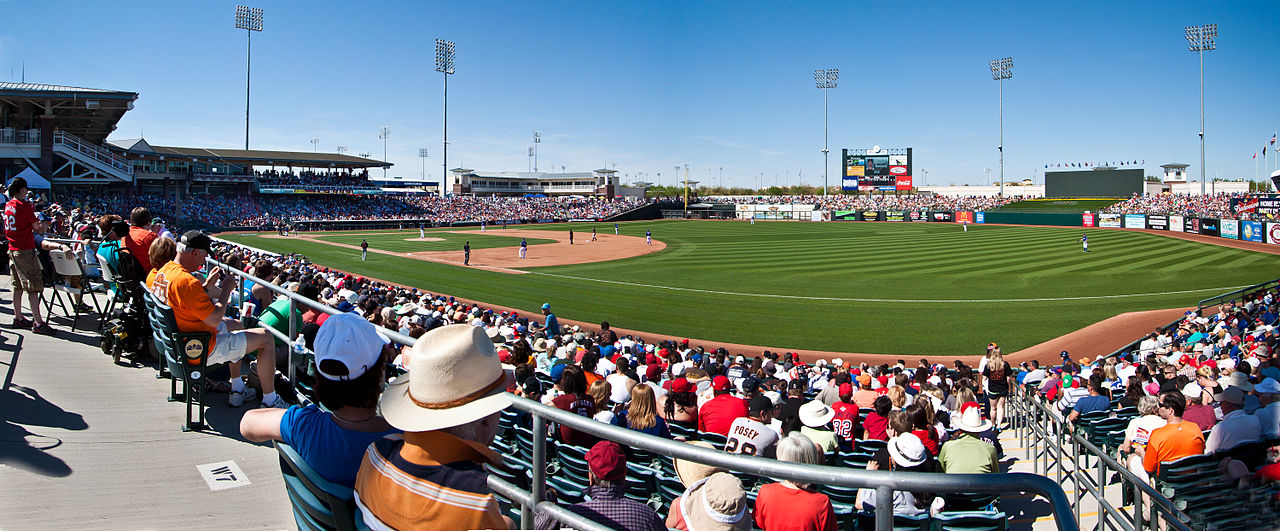
- Surprise Stadium — a focal point for spring training baseball and community events.
- Regional parks, trails and recreational campuses supporting sports, aquatics and outdoor activity.
- Community festivals, markets and civic programs that reflect suburban and desert lifestyles.
Visitors and residents value Surprise for its access to Phoenix-area amenities, seasonal recreation events and relatively newer civic facilities. The city illustrates a broader pattern in the American Southwest: rapid suburban growth, a mix of retirees and commuters, and adaptation to hot, arid environmental conditions.
Author
AlegsaOnline.com Surprise, Arizona — overview, history, and community highlights Leandro Alegsa
URL: https://en.alegsaonline.com/art/146322