
Stand By Me (1986 film)
1986 coming-of-age drama directed by Rob Reiner, adapted from Stephen King's novella The Body. A nostalgic, critically acclaimed tale of childhood friendship, loss of innocence, and growing up.
Stand By Me is a 1986 American coming-of-age adventure drama film directed by Rob Reiner and adapted from the novella "The Body" by Stephen King. The story follows four young boys who set out on a short journey to find the body of a missing teenager. Shot and released in the mid-1980s, the film earned strong critical praise for its tone, performances, and faithful treatment of the source material, and it received an Academy Award nomination in 1987.
Image gallery
4 Images
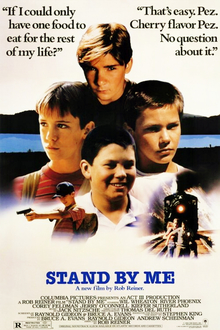


Premise and themes
The narrative is framed as a recollection by an adult narrator who looks back on a pivotal episode of his youth. The plot centers on friendship, the erosion of childhood innocence, and the rites of passage that accompany growing up. Along the way the boys face bullying, familial tensions, moral choices, and the shock of encountering death. The film blends moments of adventure and humor with quieter, more reflective scenes that underscore memory and regret.
Cast and characters
- River Phoenix — one of the central young protagonists
- Wil Wheaton — member of the core group of boys
- Corey Feldman — a supporting youth role
- Jerry O'Connell — among the adolescent ensemble
- Kiefer Sutherland — appears in a supporting role
- Richard Dreyfuss — provides the voice of the adult narrator
- John Cusack — appears in a small role
Production and release
The film was produced and distributed by Columbia Pictures and became widely known for its period setting and use of a popular, evocative soundtrack anchored by the title song. Director Rob Reiner kept the tone intimate and character-focused, aiming to preserve the emotional core of Stephen King’s original novella while adapting it for the screen.
Reception and legacy
Stand By Me was praised for its performances, especially from its young cast, and for its sensitive depiction of adolescence. Critics noted the film’s ability to balance bittersweet reflection with moments of warmth and levity. Over time it has become a staple example of the coming-of-age genre in American cinema and is often cited for its influence on later films exploring youth and memory.
Notable facts
- The film’s title and one of its most memorable musical moments draw on a well-known song that reinforces the theme of loyalty.
- It helped raise the profiles of several young actors and remains one of the best-remembered screen adaptations of a Stephen King work not centered on horror.
- The production combined a restrained visual approach with strong character work, contributing to its continued study in discussions of film and adolescence.
Author
AlegsaOnline.com Stand By Me (1986 film) Leandro Alegsa
URL: https://en.alegsaonline.com/art/146092