
Sister Act (1992 film)
1992 American musical comedy film starring Whoopi Goldberg as a singer who hides in a convent. Directed by Emile Ardolino, it blended comedy, music, and heart and led to a sequel and later remake interest.
Overview
Sister Act is a 1992 American musical comedy that follows a charismatic nightclub singer who is placed in a convent for her protection and ends up transforming the church choir. Directed by Emile Ardolino, the film mixes broad comic situations with musical numbers and a warm tone that highlights community and personal change. For more details see Sister Act (1992).
Image gallery
5 Images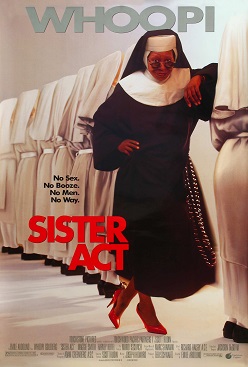



Plot and tone
The story centers on a performer who witnesses a crime and, under a witness protection arrangement, assumes a nun's life temporarily. What begins as a case of hiding evolves into a culture clash: secular showmanship meets religious routine. The film balances slapstick and character-driven humor with scenes of music rehearsal and performance, and it emphasizes themes of belonging, redemption, and the unexpected benefits of collaboration.
Principal cast and characters
- Whoopi Goldberg as the lead — a singer whose streetwise energy energizes the convent choir.
- Maggie Smith as a senior nun whose authority is tested and ultimately softened.
- Kathy Najimy in a supporting role adding comedic contrast.
- Wendy Makkena among the ensemble portraying fellow sisters.
- Mary Wickes in a memorable supporting turn.
- Harvey Keitel appears in a dramatic role connected to the film's crime element.
Production and reception
The production leaned on the chemistry of its cast and on musical arrangements that rework familiar songs into choral settings. Upon release it became widely popular with audiences for its upbeat spirit and accessible humor, and it helped boost the careers of several cast members. Critics were divided between praise for its entertainment value and reservations about its predictability, but its popularity made it a recognizable film of its era.
Legacy and related works
Sister Act led to a 1993 sequel, Sister Act 2: Back in the Habit, which continued the musical-comedy premise with a new story arc. The original film has also inspired stage adaptations and ongoing interest in a feature remake, which has been reported to be in development. Its blend of comedy and music has kept it part of popular culture discussions about feel-good cinema of the early 1990s.
Notable distinctions
The film is often noted for bringing musical performance into a mainstream comedy and for showcasing a leading performance by a Black actress in a commercially successful studio comedy. It remains frequently cited when discussing movies that combine community-building themes with lighthearted entertainment.
Author
AlegsaOnline.com Sister Act (1992 film) Leandro Alegsa
URL: https://en.alegsaonline.com/art/145820