
Roy J. Glauber — Theoretical physicist and pioneer of quantum optics
Encyclopedic summary of Roy J. Glauber (1925–2018), his quantum theory of optical coherence, core concepts (coherent states, correlation functions, photodetection), career posts and Nobel recognition.
Overview
Roy Jay Glauber (September 1, 1925 – December 26, 2018) was an American theoretical physicist best known for formulating the quantum theory of optical coherence. His work provided the mathematical and conceptual framework to relate quantum states of light to measurable intensity correlations in optical experiments and to distinguish classical from nonclassical light. He spent most of his career on the faculty at Harvard University and later held an adjunct appointment in optical sciences; in 2005 he was awarded one half of the Nobel Prize in Physics for his contributions to quantum optics.
Image gallery
2 Images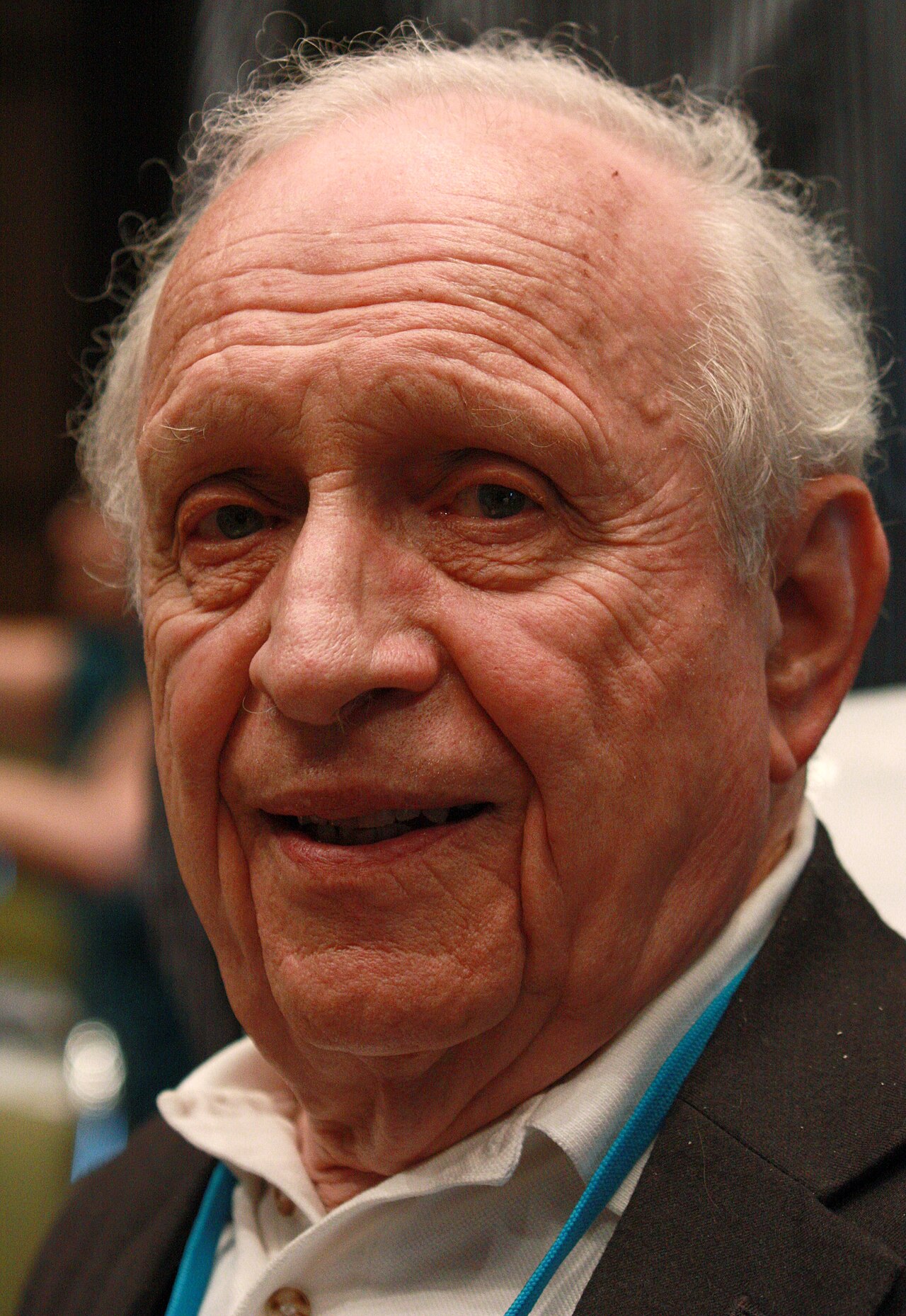

Core contributions
Glauber developed a microscopic, quantum-mechanical approach to light that formalized how photodetectors respond to radiation and how measured photon statistics arise from underlying quantum states. Central to his approach are correlation functions—commonly denoted g(1), g(2) and higher orders—that quantify phase and intensity correlations between detection events. These tools make precise the difference between coherent light (well described by classical wave theory) and nonclassical states (which can exhibit effects such as antibunching and sub-Poissonian photon statistics).
Key concepts and examples
- Coherent states: States of the radiation field that most closely resemble classical monochromatic waves. These are sometimes called Glauber coherent states and play a central role in laser theory and semiclassical approximations.
- Correlation functions: Mathematical measures g(1), g(2), ... used to test coherence and to reveal quantum behavior; for example, g(2)(0)<1 is a signature of photon antibunching and nonclassical light.
- Photodetection theory: A formal link between the quantum state of the electromagnetic field and detector click statistics, which allowed a consistent interpretation of experiments such as intensity interferometry.
Relation to experiment and other developments
Glauber's formalism clarified the interpretation of earlier intensity-correlation experiments and influenced the design of new optical measurements. It provided a theoretical foundation for understanding results from single-photon detectors, Hanbury Brown–Twiss–type experiments, and later work in quantum information and quantum communication that relies on precise control of photon statistics. His ideas are widely used in quantum optics, laser physics, spectroscopy and the emerging technologies that exploit nonclassical states of light.
Career, honours and legacy
Glauber held the Mallinckrodt Professorship in Physics at Harvard University and later served as an Adjunct Professor of Optical Sciences at the University of Arizona. In 2005 he shared one half of the Nobel Prize in Physics for his theoretical description of optical coherence; the other half was awarded jointly to John L. Hall and Theodor W. Hänsch for related experimental advances. His work continues to appear in textbooks and reviews and remains foundational for researchers studying the quantum properties of light.
Further reading and resources
Biographical information and authoritative profiles can be found in institutional pages and professional summaries: consult the general biographical profile for an overview biographical profile, material on the Mallinckrodt chair and departmental history Mallinckrodt professorship, and department pages for the field of physics physics department. For archival material and academic listings see faculty pages at Harvard Harvard University and for his later affiliation consult the Optical Sciences program at the University of Arizona University of Arizona. The Nobel citation summarizes the prize rationale and impact Nobel citation, and obituary notices record his passing and remembrances obituary.
Readers seeking technical depth may consult standard texts on quantum optics that build on Glauber's formalism, review articles that survey correlation-function methods, and collections of his original papers available through academic archives and scientific libraries. His theoretical language remains a standard part of education and research in modern photonics and quantum technologies.
Author
AlegsaOnline.com Roy J. Glauber — Theoretical physicist and pioneer of quantum optics Leandro Alegsa
URL: https://en.alegsaonline.com/art/145124