
Road to Perdition: film overview, production, themes and reception
Road to Perdition (2002) is a crime drama directed by Sam Mendes, adapted from a graphic novel. Noted for its cinematography, performances by Tom Hanks and Paul Newman, and its meditation on violence and fatherhood.
Overview
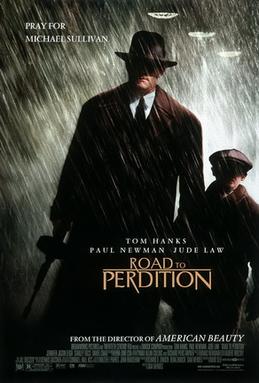
Road to Perdition is a 2002 American crime drama directed by Sam Mendes. The screenplay was adapted by David Self from a graphic novel written by Max Allan Collins and illustrated by Richard Piers Rayner. The film follows a mob enforcer and his young son during 1931, at the height of the Great Depression, as they pursue revenge against a crime boss who ordered the murder of their family. The principal cast includes Tom Hanks, Paul Newman, Jude Law and Daniel Craig.
Image gallery
5 Images


Plot and principal elements
The narrative centers on themes of loyalty, retribution and the moral cost of violence. The father-son relationship drives the story: the protagonist attempts to protect his child while confronting the criminal world that threatens them. The film's period setting, costuming and production design evoke the early 1930s without turning the era into mere backdrop; it is integral to the characters' choices and the film's austere tone.
Production, style and cinematography
Filming took place largely in the Chicago area. Director Mendes, after the success of American Beauty, pursued a restrained approach that favored visual storytelling over extended dialogue. Cinematographer Conrad L. Hall used light, weather and framing to create symbolic images that reflect the characters' inner lives. Hall's work on the picture received wide recognition; he died shortly after the film's release and was posthumously honored, including an Academy Award for Best Cinematography referenced here as that accolade.
Themes and critical response
Critics and viewers noted the film's contemplative mood and its exploration of consequence rather than glorification of crime. Performances, particularly by Hanks and Newman, were praised for their restraint and emotional clarity. Reviewers also highlighted the deliberate pacing, evocative visuals and the effective use of silence and minimal dialogue to convey tension and intimacy between characters.
Reception, box office and release
Released in July 2002, the film performed solidly at the box office, earning over $180 million worldwide. It drew attention during awards season for its technical accomplishments and acting. The film was later issued on home media in early 2003. Its blend of literary source material, classical filmmaking techniques and strong cast helped maintain its reputation as a notable crime drama of the early 21st century.
Notable facts and legacy
- The screenplay is a faithful adaptation of the graphic novel, preserving its themes of family and fate.
- Conrad L. Hall's cinematography is commonly cited as central to the film's lasting impact.
- Directorial choices emphasized imagery over exposition, a stylistic thread linked to Mendes's earlier work.
- The film remains a reference point for filmmakers interested in visual storytelling within a period crime narrative.
For further reading on the director, screenplay and principal cast, follow the links embedded in this article to explore original interviews, production notes and critical essays.
Author
AlegsaOnline.com Road to Perdition: film overview, production, themes and reception Leandro Alegsa
URL: https://en.alegsaonline.com/art/144905