
Richard B. Russell Jr.: Long-serving U.S. Senator and Georgia Governor
Richard B. Russell Jr. (1897–1971) was a prominent Georgia Democrat who served as governor and one of the longest-serving U.S. senators, noted for his influence on defense policy and his opposition to civil rights legislation.
Richard Brevard Russell Jr. (November 2, 1897 – January 21, 1971) was an American politician and a leading figure in the Democratic Party for much of the mid-20th century. He represented the political traditions of the Southern Democrats who dominated regional and national politics in that era. Russell combined long tenure, committee leadership and procedural skill to shape debates on defense, budget, agriculture and states' rights.
Image gallery
5 Images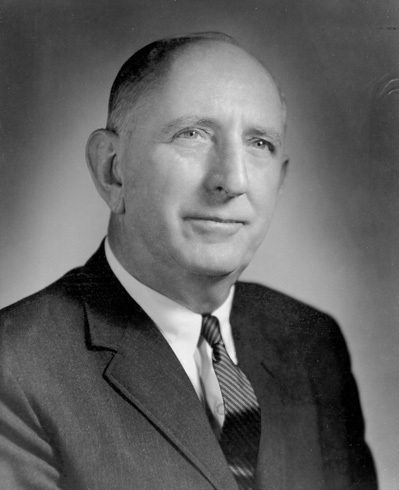


Early life and education
Russell was born and raised in Winder, Georgia. He came from a family with established connections in state politics and law. After secondary schooling he attended the University of Georgia and completed his legal training at the University of Georgia School of Law, beginning a career that combined law, state service and party organization before seeking higher office.
Governor and long Senate career
Russell served as the 66th governor of Georgia from 1931 to 1933. Soon after his term as governor he entered the U.S. Senate, taking office in 1933. He remained a senator from Georgia from 1933 until his death in 1971, becoming one of the chamber's most senior members. During his Senate tenure he was widely regarded as an effective parliamentarian who used seniority and committee authority to influence federal policy.
Committee leadership and institutional roles
Over decades in the Senate, Russell held top positions on important panels and in Senate organization. He chaired major committees that shaped military policy and federal spending, and he served as President pro tempore of the Senate from 1969 to 1971. His committee responsibilities gave him substantial influence over defense appropriations and procurement at critical moments in World War II, the Korean War and the Cold War era. He also played a prominent role in the Senate's rules and procedures.
Political positions and controversies
Russell was a leading voice of the conservative Southern Democrats, often defending the principle of states' rights and opposing federal measures that aimed to end racial segregation. He resisted civil rights legislation and federal intervention in Southern race relations, a stance that generated considerable controversy and shaped his national reputation. In the 1940s he sought broader support for higher office and was involved in national Democratic politics; he pursued presidential backing in 1948 but did not secure the party's nomination, which was won by incumbent Harry S. Truman (1948 campaign, Truman).
Legacy and honors
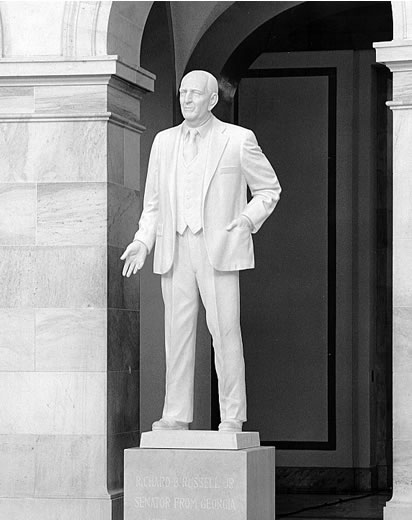
Russell's long service left a mixed legacy: he is remembered both for his effectiveness as a legislator and for his defense of segregationist policies. Several federal and regional facilities bear his name in recognition of his influence on national defense and local development. Notable examples include the U.S. Senate office building named in his honor and hydropower and recreation projects that carry his name.
- Major roles: Governor of Georgia (1931–1933); U.S. Senator (1933–1971); Senate President pro tempore (1969–1971).
- Areas of influence: Defense and military policy, appropriations, agricultural and regional development, Senate procedure.
- Namesakes and memorials: Buildings, infrastructure projects and local dedications in Georgia and Washington, D.C.
For readers seeking more detail, archival material, Senate records and contemporary biographies provide sources on Russell's legislative style and the political context in which he operated. He remains a significant figure for understanding mid-20th-century U.S. politics, the power of Senate seniority, and the resistance to civil rights reforms in the American South.
Further reading on Russell's Senate service and institutional records offer additional perspective on his career and the debates he helped to shape.
Author
AlegsaOnline.com Richard B. Russell Jr.: Long-serving U.S. Senator and Georgia Governor Leandro Alegsa
URL: https://en.alegsaonline.com/art/144806