
Richard E. Taylor: Experimental Physicist and Nobel Laureate
Canadian-born experimental particle physicist whose deep inelastic electron scattering experiments provided key evidence for quarks; Stanford professor and 1990 Nobel Prize co-recipient.
Richard E. Taylor was a Canadian experimental physicist noted for work that established the existence of internal constituents of protons and neutrons. He served as a professor emeritus at Stanford and was long associated with Stanford University. His research helped change the understanding of the substructure of matter and earned him international recognition.
Image gallery
2 Images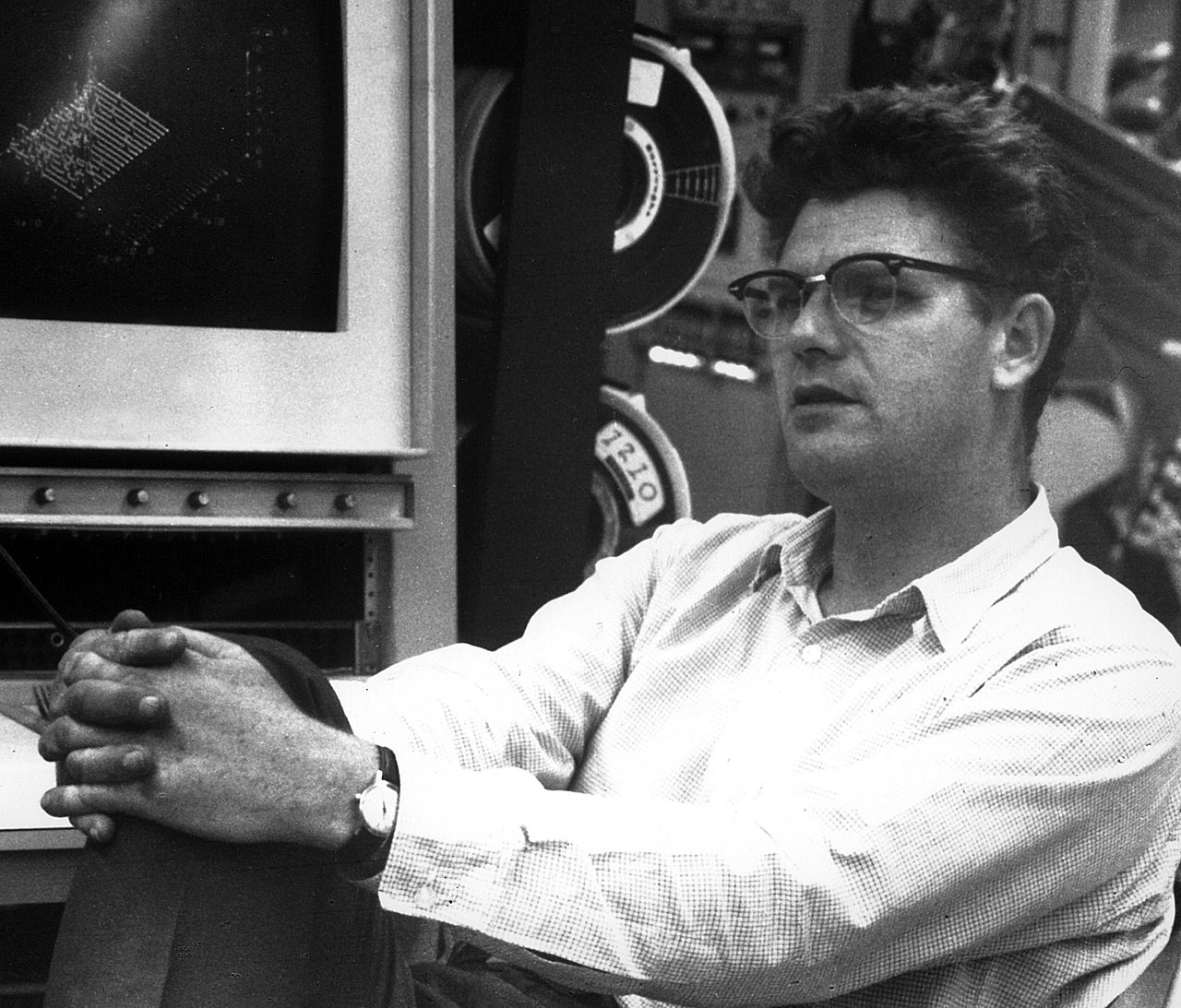

Research and discoveries
Taylor led and participated in experiments that used high-energy electron beams to probe nucleons. By studying how scattered electrons deviated after collisions, his team revealed patterns inconsistent with a smooth, indivisible proton. Instead, the data showed concentrated scattering centers inside the nucleon consistent with point-like constituents, supporting the quark or parton picture for protons and bound neutrons. This experimental evidence was crucial in turning theoretical ideas about quarks into an accepted part of particle physics.
Career and background
Born in 1929 in Canada, Taylor completed university training before joining the U.S. research community. He worked at major accelerator facilities and at Stanford’s laboratory for high-energy physics, where the deep inelastic scattering program was carried out. In addition to leading experiments, he taught and supervised graduate students and contributed to the development of experimental techniques used in later collider and fixed‑target experiments.
Impact, honors and legacy
In 1990 Taylor shared the Nobel Prize in Physics with Jerome Friedman and Henry Kendall for their pioneering studies of deep inelastic scattering, a citation that highlighted the work’s fundamental importance to the quark model. Beyond the Nobel, his career is remembered for rigorous experimentation that confirmed theoretical concepts and for mentoring the next generation of physicists.
- Major prize: Nobel Prize in Physics (1990).
- Field: experimental particle physics, nucleon structure.
- Affiliation: long-term faculty and researcher at Stanford.
Richard E. Taylor died in his home in Stanford, California in February 2018. His work remains a foundational example of how precision experiments can resolve basic questions about the constituents of matter.
Further reading and archival material are available through institutional pages and scientific archives; for institutional summaries see Stanford profile and related resources at university pages.
Author
AlegsaOnline.com Richard E. Taylor: Experimental Physicist and Nobel Laureate Leandro Alegsa
URL: https://en.alegsaonline.com/art/144794