
Renswoude (municipality in Utrecht, Netherlands)
Small municipality in the province of Utrecht, central Netherlands, with a village character, local services and about 5,200 inhabitants (2019).
Overview
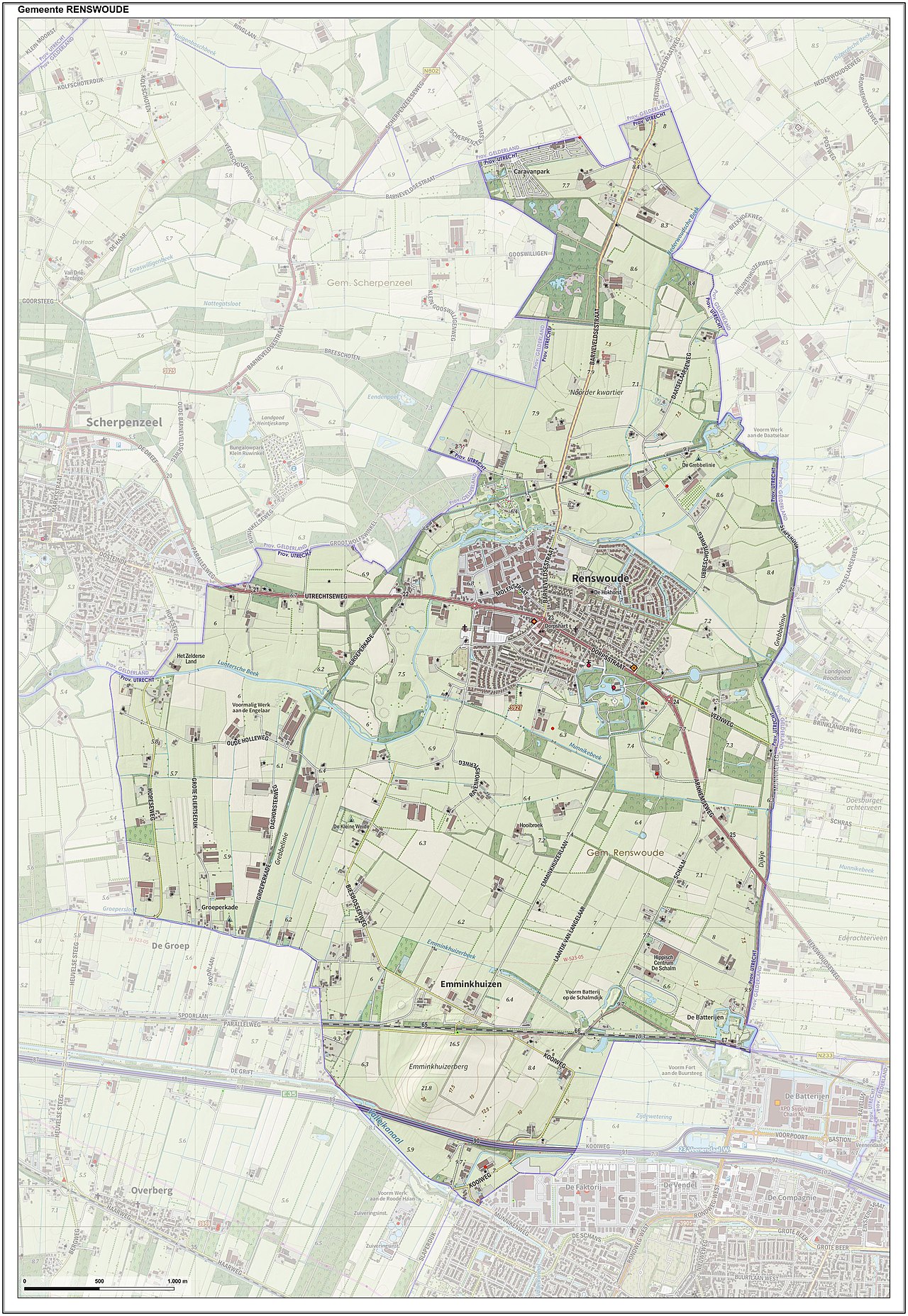
Renswoude is a small municipality and population centre in the central part of the Netherlands. It lies within the Dutch province of Utrecht and is characterised by a compact village core, surrounding farmland and lower population density compared with nearby towns. The municipality recorded roughly 5,200 residents in 2019, making it one of the smaller municipalities in the region.
Image gallery
6 Images


History and development
The locality developed from a rural medieval settlement into a modest modern municipality. Like many places in the Dutch countryside, its historical economy was based on agriculture and estate management. Over centuries the village centre retained a traditional layout while adapting to twentieth- and twenty-first-century infrastructure and services.
Local features and economy
Renswoude combines residential neighbourhoods with agricultural land, small enterprises and community facilities. Residents typically rely on local shops, primary schools and clubs for daily life, while some commute to larger nearby towns for work. Open space, cycling routes and green lanes contribute to a landscape that is valued for recreation and leisure.
- Village centre with civic services and neighbourhood amenities
- Surrounding farmland and green recreational routes
- Local businesses, community clubs and small-scale agriculture
Government, transport and services
Municipal affairs are managed by a local council and executive, responsible for services such as planning, schools and public works. Renswoude is connected to the regional road network and is within short driving distance of larger rail stations in neighbouring towns, which link inhabitants to Utrecht, Amersfoort and other urban centres.
Notable points
Although modest in size, Renswoude preserves a distinct local identity shaped by its rural setting and community life. It is representative of smaller Dutch municipalities that balance historical roots with present-day residential needs, serving as a base for local agriculture, recreation and quiet village living within reach of regional cities.
Author
AlegsaOnline.com Renswoude (municipality in Utrecht, Netherlands) Leandro Alegsa
URL: https://en.alegsaonline.com/art/144751