
Nicholas F. Brady
American banker and politician who served as U.S. Treasury Secretary and devised the Brady Plan for sovereign debt restructuring in the late 1980s.
Nicholas F. Brady (born April 11, 1930) is an American public figure best known for his work in finance and government. He held senior roles in the private sector before serving in federal office. Brady is widely associated with the international debt restructuring initiative known as the Brady Plan and with his tenure in the U.S. Treasury under Presidents Ronald Reagan and George H. W. Bush. He has also served briefly in the U.S. Senate after being appointed to fill a vacancy.
Image gallery
6 Images
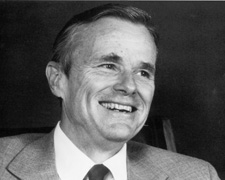
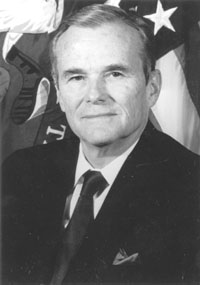


Background and career
Brady built a career in investment banking and corporate leadership prior to entering public office. His private-sector experience shaped his approach to economic policy and financial crisis management by emphasizing market-based solutions, negotiation with creditors, and confidence-building measures. Many accounts of his career note the combination of business acumen and public service that characterized his transition into government.
Brady Plan and sovereign debt restructuring
In March 1989 Brady proposed a framework to resolve the Latin American debt crisis that had burdened many countries through the 1980s. The "Brady Plan" encouraged banks and debtor nations to convert troubled bank loans into tradable securities, later called Brady bonds. Those swaps typically involved some combination of principal reduction, longer maturities, and credit enhancements intended to lower borrowing costs and restore access to capital markets.
- Brady bonds: debt instruments that replaced bank loans and could be traded in secondary markets.
- Credit support: certain restructurings included collateral or guarantees to improve investor confidence.
- Market re-entry: the plan aimed to help countries regain access to international financing.
Public office and later life
Brady was appointed to the United States Senate to fill a short-term vacancy, serving only until a special election could be held. He later served as Secretary of the Treasury during the transition between administrations in the late 1980s and early 1990s, where he handled domestic and international financial matters. His tenure is often discussed in the context of the global debt dialogue of the era and in broader debates about financial regulation and crisis response.
Legacy and notable facts
Brady's name is most commonly linked to the debt restructuring mechanism that bore his name, and "Brady bonds" remain a frequently cited example of market-oriented sovereign debt solutions. He is also remembered for moving between private finance and public office, a path that influenced how policymakers blended technical banking knowledge with diplomacy in international economic policy.
For more on his biography and public roles see resources about his political career as an American politician, his work at the U.S. Treasury, and contemporary accounts of the Brady Plan and its implementation.
Author
AlegsaOnline.com Nicholas F. Brady Leandro Alegsa
URL: https://en.alegsaonline.com/art/143361