
List of notable walls and barriers
Overview and examples of famous walls worldwide: ancient fortifications, medieval city walls, religious remnants and modern border barriers, with their characteristics, history, uses and preservation issues.
Walls are built structures that demarcate, protect, support or control movement. They appear in many forms: defensive ramparts around settlements, retaining or terrace walls in landscape engineering, ceremonial or sacred enclosures, and modern border barriers. Throughout history walls have combined practical, symbolic and administrative purposes and many survive as important cultural landmarks.
Common characteristics. Walls may form continuous curtains, include gates and controlled passages, and be reinforced with towers, bastions or buttresses. Construction materials follow local availability and technology: dry stone, ashlar masonry, fired brick, rammed earth, timber, and, in modern times, concrete, steel and prefabricated panels. Design considerations often include height, thickness, foundations, drainage and sightlines for surveillance or defence.
Historical development. The building of walls dates to early urban settlements and organized states. Classical and medieval periods saw major investments in city and frontier fortifications. The advent of powerful artillery changed fortification design and produced new forms such as angled bastions and star forts. In the 20th century walls also became ideological symbols; some 20th- and 21st-century barriers are built for migration control, border security or separation of communities.
Image gallery
10 Images




Representative examples
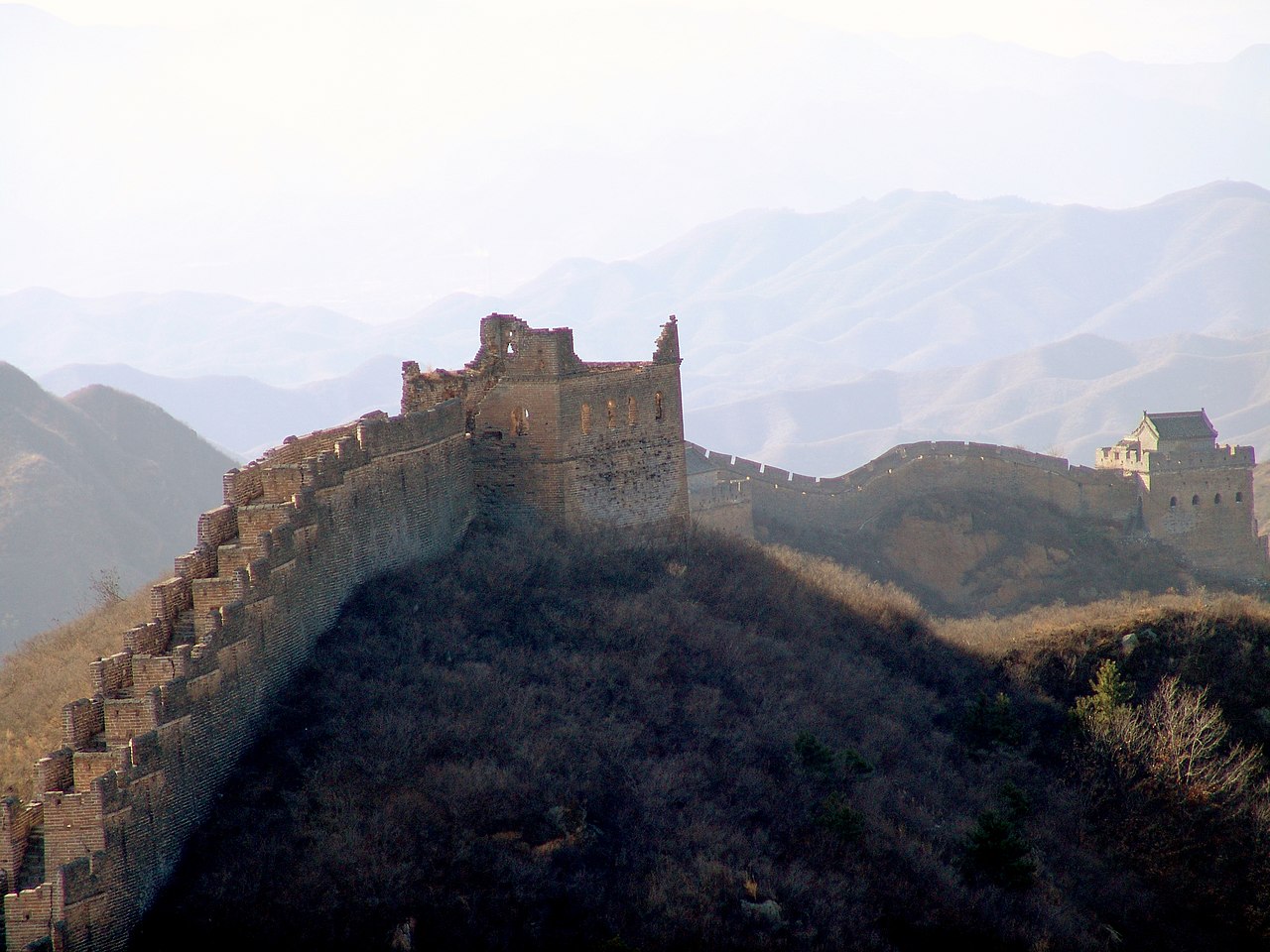
- Great Wall of China — a long series of defensive works built, repaired and extended over many centuries to control and mark frontiers in northern China.
- Hadrian's Wall — a Roman frontier in northern Britain constructed to define and help defend the limits of Roman territory.
- Walls of Constantinople — multi-layered medieval fortifications that protected the city known today as Istanbul for many centuries.
- Western Wall — the surviving western retaining wall of the Temple Mount in Jerusalem, significant in Jewish religious life and heritage.
- Walls of Dubrovnik — well-preserved medieval city walls encircling the Croatian old town, notable for their completeness and tourism value.
- Berlin Wall — a 20th-century political and physical barrier that separated East and West Berlin and became an international symbol of Cold War division.
- Ancient city walls such as Jericho — archaeological remains that illustrate early forms of urban fortification in antiquity.
- Modern border barriers — contemporary fences and walls erected for security or immigration control, which vary widely in form, purpose and public perception.
Uses and significance. Beyond defence, walls mark identity, regulate movement and can serve ceremonial, religious or memorial functions. Historic walls often attract conservation attention and tourism, contributing to local economies. At the same time, modern barriers can generate political debate about human rights, social impact and international relations.
Distinctions and preservation. It is useful to distinguish fortification walls (designed for defence), boundary walls (designed to separate or control), and ceremonial or sacred walls (retaining cultural meaning). Conservation challenges include weathering, urban encroachment and the technical difficulties of restoring structures that evolved over long periods. For compiled lists and additional context see related lists of walls.
Author
AlegsaOnline.com List of notable walls and barriers Leandro Alegsa
URL: https://en.alegsaonline.com/art/141697