
List of cities in Haiti: overview, major urban centers and administrative context
An organized guide to Haiti's cities, their administrative roles, historical importance and contemporary issues, with a curated list of major towns by region.
This article summarizes the principal cities of Haiti, explains how urban places are organized administratively, and highlights historical, economic and cultural roles. For a concise index of place names and further cross-references see the original listing: cities in Haiti. The page emphasizes commonly cited urban centers rather than exhaustive registers of all communes and settlements.
Image gallery
10 Images




Administrative structure and definitions
Haiti is divided into departments, which are subdivided into arrondissements, then communes and communal sections. In everyday use the words "city" and "town" often refer to commune capitals or densely populated urban communes. The capital, Port-au-Prince, is the principal political and economic hub. Other places named below serve as departmental or regional centers, ports, markets or cultural capitals.
Major cities and regional centers
Selected important cities, grouped by department, illustrate Haiti's geographic spread of urban life. This list highlights centers known for administration, commerce, transport or culture rather than every small locality.
- Ouest: Port-au-Prince (national capital), Pétion-Ville, Carrefour.
- Nord: Cap-Haïtien (historic northern port), Fort-Liberté (Nord-Est is nearby).
- Artibonite: Gonaïves (declared independence), Saint-Marc.
- Centre: Hinche (central plateau regional center).
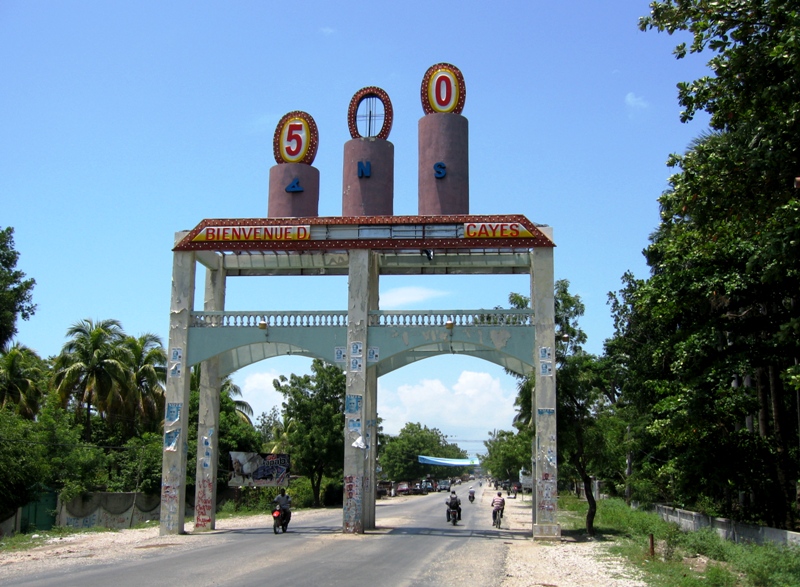
- Sud: Les Cayes (southern port), Jacmel (Sud-Est: artistic and festival center).
- Grand'Anse: Jérémie (cultural and historical town); Nippes: Miragoâne (departmental seat).
- Nord-Ouest: Port-de-Paix; other coastal towns include Petit-Goâve and Grand-Goâve near the capital.
History, culture and notable facts
Many Haitian cities carry deep historical associations. Cap-Haïtien grew around colonial-era architecture and nearby revolutionary battlefields. Gonaïves is closely tied to Haiti's independence events. Jacmel is known for its vibrant arts scene and Carnival traditions, while Jérémie has long been associated with literature and song. Port towns have historically been gateways for trade and cultural exchange.
Contemporary importance and challenges
Urban centers concentrate economic activity, public institutions and services, but also face persistent challenges: limited infrastructure, informal settlements, vulnerability to earthquakes, hurricanes and flooding, and pressures from rapid rural-to-urban migration. Cities are focal points for humanitarian aid, national administration and private enterprise, and many local initiatives address housing, transportation and resilient rebuilding.
For tabulated lists, maps and a more comprehensive index of Haitian municipalities consult the linked resource above or official national publications. The basic pattern of departments → arrondissements → communes helps when navigating administrative lists and understanding the role each city plays in Haiti's national geography.
Author
AlegsaOnline.com List of cities in Haiti: overview, major urban centers and administrative context Leandro Alegsa
URL: https://en.alegsaonline.com/art/141599