
Lebanon County, Pennsylvania
Lebanon County is a county in south-central Pennsylvania with a county seat at Lebanon. Founded in the early 19th century, it combines agricultural valleys, small cities, and a distinct Pennsylvania Dutch cultural influence.
Overview
Lebanon County is a county located in the south-central region of the U.S. state of Pennsylvania. According to the 2010 U.S. Census the population was 133,568. The county seat and largest city is Lebanon. The county occupies part of the Lebanon Valley, a section of the larger Great Appalachian Valley, and serves as a transitional area between the more urbanized eastern counties and the higher ridges to the north and west.
Image gallery
3 Images
Geography and environment
Lebanon County features a mix of rolling farmland, small river valleys and forested slopes. Soils and climate support a range of agricultural activities, while pockets of woodland and stream corridors provide habitat for regional wildlife. The landscape is typical of southeastern Pennsylvania, with four distinct seasons and a temperate continental climate.
History and settlement
The county was created in the early 19th century from portions of neighboring counties and developed as an agricultural and small-manufacturing region. European settlement included many German-speaking immigrants whose cultural influence is still evident in local place names, architecture and traditions. The county’s name recalls the biblical Lebanon, a reference early settlers used because of local stands of trees and the resemblance of some ridgelines to descriptions in scripture.
Economy, education and culture
The local economy blends farming, light manufacturing, retail and services. Small cities and boroughs provide commercial centers and community institutions, including regional colleges and vocational schools. Lebanon County is known for local food traditions—most famously the cured sausage known as Lebanon bologna—and for fairs, historical societies and events that celebrate the area’s Pennsylvania Dutch heritage.
Government and communities
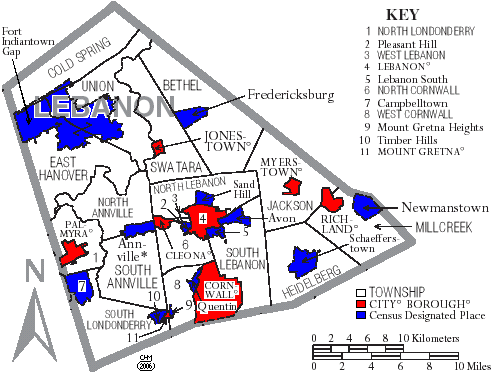
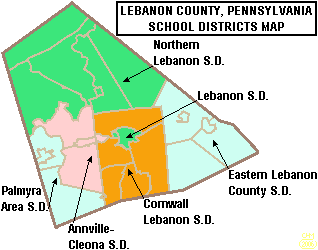
The county government administers courts, public records, health and human services and infrastructure planning for a mix of boroughs and townships. Residents often commute to nearby urban centers for employment, yet many smaller communities maintain distinct civic identities. For municipal information and public services visit the county website or consult regional maps and guides.
Notable facts and distinctions
- County seat: Lebanon, a focal point for local government and culture.
- Cultural heritage: strong Pennsylvania Dutch influence in language, cuisine and festivals.
- Education: home to institutions that serve the county and surrounding region, including a small liberal arts college and vocational programs.
- Research and data: demographic and economic profiles are regularly updated by state and federal agencies; see official sources such as the U.S. Census and county reports.
Author
AlegsaOnline.com Lebanon County, Pennsylvania Leandro Alegsa
URL: https://en.alegsaonline.com/art/141329