
Kweisi Mfume
American politician and civil-rights leader: long-serving U.S. Representative from Maryland, former president and CEO of the NAACP, and a prominent advocate for urban policy and racial justice.
Overview
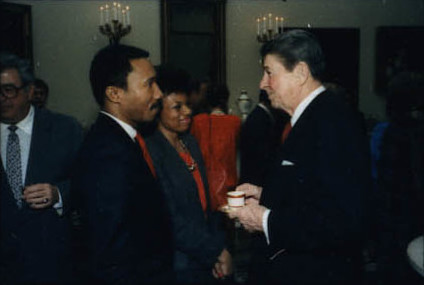
Kweisi Mfume (born Frizzell Gerald Gray; October 24, 1948) is an American politician and civil-rights figure known for his work in Congress and leadership of a major civil-rights organization. He represented Maryland's 7th congressional district in the U.S. House of Representatives from 1987 to 1996 and returned to the same seat after winning a 2020 special election. He also served as president and CEO of the National Association for the Advancement of Colored People (NAACP).
Image gallery
7 Images


Early life and identity
Born Frizzell Gerald Gray, he grew up in Baltimore and later adopted the name Kweisi Mfume. His life and career have been shaped by his urban upbringing and long engagement with community and political institutions in Maryland. Mfume's experience in local civic life informed his focus on issues such as economic opportunity, education, and criminal justice reform.
Political and organizational career
Mfume's public profile rose during his time in the U.S. House of Representatives, where he served the 7th district for nearly a decade before leaving to lead the NAACP. During his tenure as the NAACP's president and CEO, he sought to modernize the organization and expand its national reach. He led the association through a period of organizational change and high public visibility.
Timeline of major roles
- U.S. Representative for Maryland's 7th district, 1987–1996.
- President and CEO of the NAACP (NAACP), serving in the late 1990s and early 2000s.
- Candidate for the U.S. Senate (Democratic primary, 2006), losing the nomination to Ben Cardin.
- Returned to the House after winning a special election in 2020 following the death of Elijah Cummings.
Significance and areas of focus
Mfume is frequently cited for his emphasis on issues affecting American cities, including economic development, educational opportunity, voting rights, and criminal-justice matters. His leadership at the NAACP tied electoral politics to broader civil-rights strategies, and his congressional service has continued those priorities through legislative work and constituent advocacy.
Notable facts and distinctions
Over several decades Mfume has moved between elected office and nonprofit leadership, a pattern that highlights his dual role as policymaker and organizational leader. His career is often discussed in the context of modern civil-rights history and contemporary urban policy debates. For further official information, readers can consult archived profiles and organizational statements linked above.
Author
AlegsaOnline.com Kweisi Mfume Leandro Alegsa
URL: https://en.alegsaonline.com/art/141060