
Julia (1977 film)
Julia is a 1977 American drama directed by Fred Zinnemann, adapted from Lillian Hellman's Pentimento. It stars Jane Fonda and Vanessa Redgrave and received 11 Oscar nominations, winning three in 1978.
Julia is a 1977 American dramatic film directed by Fred Zinnemann and adapted from Lillian Hellman's 1973 memoir Pentimento. Set against the rise of European fascism, the story explores a deep friendship and the moral choices that draw an American writer into secret resistance work. The production was released by 20th Century Fox and became one of the most discussed films of its year for its performances and period atmosphere.
Image gallery
1 Image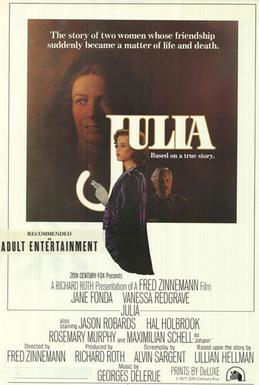
Plot overview
The narrative follows a writer who recalls her youthful bond with a courageous friend named Julia, whose political activism and personal risks pull them into clandestine efforts to aid refugees and resist authoritarian regimes in the 1930s. Events shift between intimate recollection and tense episodes of travel, smuggling, and confrontation with the expanding reach of fascism in Europe. The film mixes personal drama with political thriller elements to dramatize moral commitment and sacrifice.
Cast and performances
- Jane Fonda as the writer figure inspired by Lillian Hellman
- Vanessa Redgrave, whose portrayal of Julia drew widespread acclaim
- Jason Robards among the principal supporting players
- Hal Holbrook, Rosemary Murphy, and Maximilian Schell in key roles
- Early screen appearance by Meryl Streep in a smaller part
Critics singled out the leads for strong, measured performances; the film is often remembered for the chemistry between its central actors and for Redgrave's intense depiction of a woman committed to a dangerous cause.
Production and adaptation
Fred Zinnemann, an established director known for character-driven dramas, framed the screenplay as a reflective memoir rather than a straightforward historical account. The adaptation emphasizes atmosphere, period detail, and personal moral dilemmas. Costumes, locations, and production design were crafted to evoke late 1930s Europe and the United States on the brink of war, and the pacing alternates between intimate scenes and episodes of suspense.
Reception, awards and debates
On release, Julia received strong awards recognition: it was nominated for eleven Academy Awards and won three in 1978. Vanessa Redgrave's performance was honored with an Academy Award, and the film earned praise from many reviewers for its direction and acting. At the same time, the movie — like its source material — prompted discussion about the line between memoir and fiction, since questions have been raised over the years about the factual basis of some scenes in Lillian Hellman's writings.
Legacy
Julia remains notable as a high-profile example of 1970s historical drama that blends personal narrative with political themes. It helped reaffirm the star power of its cast, contributed to conversations about adapting memoirs for the screen, and continues to be referenced in studies of films that portray resistance to tyranny and the ethical challenges faced by individuals during turbulent times.
Author
AlegsaOnline.com Julia (1977 film) Leandro Alegsa
URL: https://en.alegsaonline.com/art/140641