
Bridge (music)
A bridge is a contrasting section in a song that connects larger parts—often called a middle eight—used to provide contrast, development, modulation or a lyrical shift in popular music.
A bridge in popular music is a distinct section that contrasts with the verses and choruses that surround it. Often placed between repeated sections, the bridge serves to refresh the listener's ear by introducing new harmonies, melodies, rhythms or lyrics. In many songs the bridge alters the mood or perspective and prepares the ear for a return to familiar material.
Image gallery
2 Images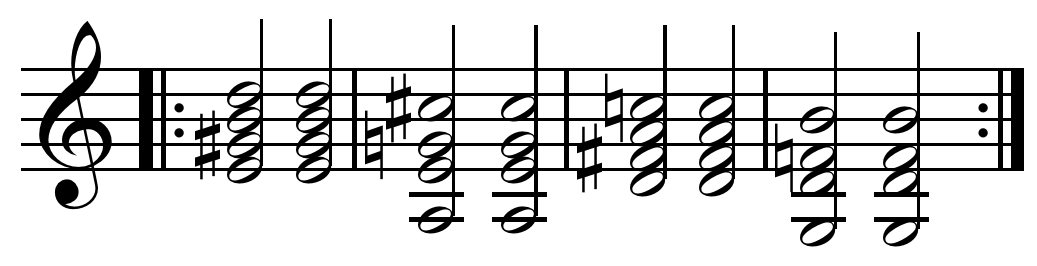

Typical characteristics and structure
Bridges vary widely in length and complexity but share a few common traits. They frequently use different chord progressions, melodic contours, instrumentation or dynamics from the verse and chorus. A traditional form, inherited from early 20th-century popular song, is the "middle eight"—an eight-bar contrasting passage—though bridges can be shorter or longer in contemporary music.
Functions and musical roles
- Contrast: provide harmonic or melodic variety to avoid repetition.
- Development: advance the song’s story or viewpoint with new lyrics or an emotional shift.
- Transition: modulate to a new key or prepare for a climactic return to the chorus.
- Showcase: offer space for an instrumental break, vocal harmony, or solo passage.
History and terminology
The concept of a contrasting section appears in older song forms such as the 32-bar AABA template that shaped much of Tin Pan Alley and early jazz and popular songwriting. In British and American pop, the bridge is sometimes called the "middle eight" when it occupies roughly eight measures. As popular music evolved, producers and songwriters adapted the bridge into many roles: a lyrical twist, a prelude to a key change, or an opportunity for production effects.
Distinctions and modern practice
The bridge should not be confused with the pre-chorus (which builds into the chorus) or with instrumental solos (which may occur in other sections). In modern pop and electronic styles, the traditional bridge is sometimes omitted, shortened, or replaced by a breakdown, post-chorus, or extended outro. Still, when used effectively, a bridge remains a powerful tool to add contrast, momentum and narrative movement within a song.
Whether labeled bridge, middle eight, or interlude, this section continues to be an important device for songwriters seeking variety and expressive contrast within a compact form.
Tags
Related articles
Author
AlegsaOnline.com Bridge (music) Leandro Alegsa
URL: https://en.alegsaonline.com/art/14064