
John A. Costello: Irish statesman, barrister and two-time Taoiseach
John Aloysius Costello (1891–1976) was an Irish Fine Gael politician and barrister who served twice as Taoiseach, was Attorney General in the 1920s–30s, and led the government that declared the Republic in 1949.
John Aloysius Costello (20 June 1891 – 5 January 1976) was an Irish barrister and politician best known for serving twice as Taoiseach and for leading the government that brought about the Republic of Ireland Act. A senior figure in Fine Gael, he held a number of senior legal and political offices across a long parliamentary career and is remembered for his cautious, legalistic style of leadership.
Image gallery
3 Images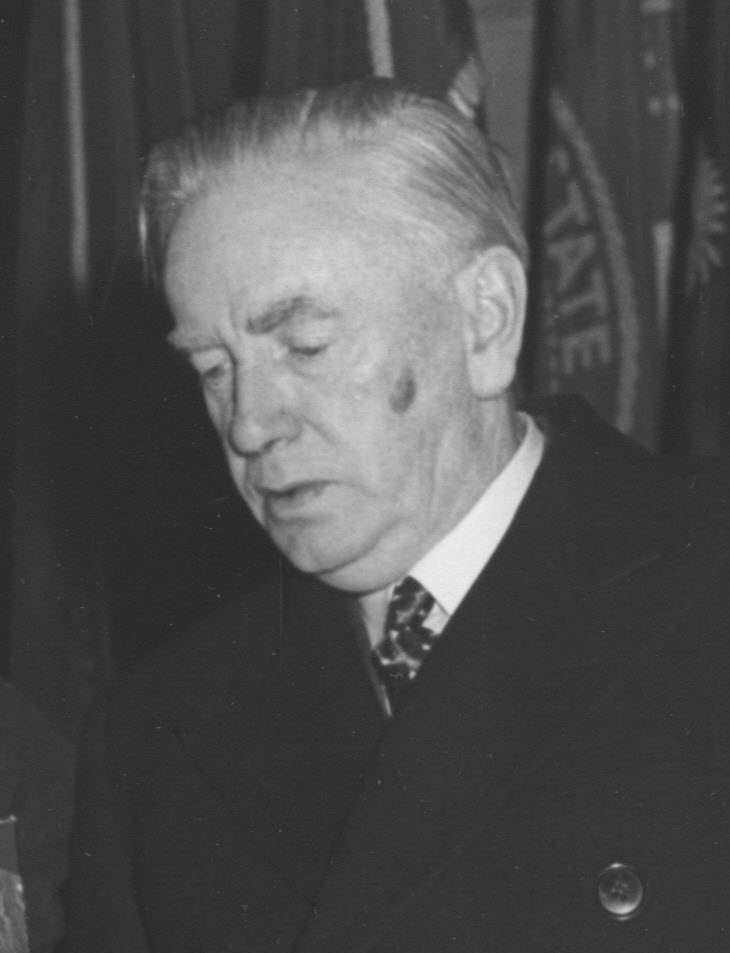


Early life and legal career
Costello trained as a barrister and established a reputation in law before entering frontline politics. He served as Attorney General of Ireland from 1926 to 1932, a period when the Irish Free State was consolidating its institutions. His legal background influenced his approach to government: he favoured orderly, procedural methods and a respect for constitutional forms.
Political offices and leadership
Costello represented his constituency as a Teachta Dála (TD) for many years and rose to party leadership in the 1940s. He was Taoiseach from 1948 to 1951 and again from 1954 to 1957, leading multi-party coalitions that brought together a range of smaller parties and independents. Between those terms he served as Leader of the Opposition. His governments are often described as inter-party administrations because they were formed without a single dominant party majority.
- Attorney General: 1926–1932
- Taoiseach: 1948–1951 and 1954–1957 (Taoiseach)
- Teachta Dála (TD): 1933–1943 and 1944–1969
Republic declaration and policies
One of the most significant actions of Costello's first government was the passage of the Republic of Ireland Act, which removed the remaining constitutional link with the British monarchy and led to the state's formal description as a republic. The act took effect in 1949 and changed Ireland's external status in a way that had important diplomatic and symbolic consequences. His administrations also managed post-war economic and social challenges by promoting stability and attempting pragmatic compromises among coalition partners.
Style, controversies and legacy
Costello was widely regarded as a discreet, moderate leader who preferred consensus-building to confrontation. A colorful anecdote—whose accuracy is debated—says that a remark during a foreign visit helped trigger the decision to declare a republic; historians treat such stories cautiously. He stepped down from party leadership in 1959 and remained a respected elder statesman. Costello's legacy is tied to the peaceful constitutional evolution of the Irish state and to the model of coalition government that became a recurring feature of Irish politics.
For summaries of his roles and years in office, and for further reading on the period of inter-party governments in which he played a central part, consult dedicated political histories and biographies. More detailed entries and archival material are available through specialist resources and parliamentary records.
Author
AlegsaOnline.com John A. Costello: Irish statesman, barrister and two-time Taoiseach Leandro Alegsa
URL: https://en.alegsaonline.com/art/140485