
In Harm's Way (1965 film)
1965 American World War II film directed by Otto Preminger, starring John Wayne and Kirk Douglas; a character-driven naval drama noted for its ensemble cast, production scale and mid‑1960s award recognition.
Overview
Otto Preminger's In Harm's Way is a 1965 American war film that dramatizes aspects of U.S. Navy operations in the Pacific during World War II. The picture aims to combine large-scale naval action with character-driven storytelling, exploring themes of leadership, duty, command responsibility and the moral tensions that arise in wartime. Premiered by a major Hollywood studio, the film sought to present both strategic decisions and the human consequences of those choices.
Image gallery
2 Images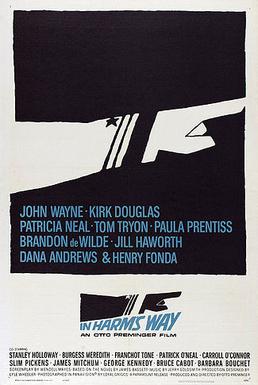

Plot summary
The narrative follows naval officers and those around them as they confront combat, loss and the burdens of command. Rather than focusing on a single battle, the film interleaves personal relationships, professional rivalries and moments of crisis to portray how decisions at sea and ashore affect men and families. Subplots examine the strain of prolonged conflict on morale and the difficult balance between career ambition and ethical obligation.
Cast and characters
The film assembled a prominent ensemble cast led by John Wayne and Kirk Douglas. Other principal performers included Patricia Neal, Tom Tryon, Paula Prentiss, Stanley Holloway, Burgess Meredith, Brandon deWilde, Jill Haworth, Dana Andrews, Franchot Tone and Henry Fonda. The ensemble approach allowed the film to portray a cross-section of perspectives within the Navy and civilian life affected by the conflict.
Source material and production
The screenplay was adapted from a contemporary wartime novel and prepared for a wide-screen cinematic presentation intended to convey the scale of naval operations alongside intimate dialogue scenes. Production combined location work with studio sets to recreate shipboard interiors, command centers and shore installations; miniatures and staged sequences were used where full-scale filming was impractical. The picture was released and distributed by Paramount Pictures.
Reception and awards
At the time of its release the film attracted attention for its cast and production values. It received recognition during the awards season of the mid-1960s, including an Academy Award nomination and at least one British Academy Film Award win in 1966. Contemporary reviews were mixed to positive: many critics praised the performances and the film's formal ambition, while some commented on its deliberate pacing and emphasis on dialogue over continuous action.
Historical accuracy and interpretation
While rooted in the context of real Pacific War operations, the film is a dramatization that blends fictional characters and composite incidents with broadly representative wartime concerns. Filmmakers balanced the desire for credible naval procedure with the requirements of storytelling, and viewers often distinguish between the film's dramatic aims and strict historical detail.
Legacy and home media
In Harm's Way is often discussed in film history for its ensemble casting and for being part of a 1960s trend toward adult, character-focused war dramas. It is of interest to students of genre filmmaking and to scholars examining the careers of its director and leading actors. The film has been made available through various home video and broadcast releases since its theatrical run, and it continues to be assessed in retrospectives of mid-20th-century Hollywood depictions of World War II.
Notable distinctions
- Large ensemble cast of major stars of the era.
- Combination of personal drama with staged naval action.
- Award recognition during the mid-1960s, including BAFTA honors.
- Often cited as an example of Hollywood's adult approach to wartime storytelling in the 1960s.
Author
AlegsaOnline.com In Harm's Way (1965 film) Leandro Alegsa
URL: https://en.alegsaonline.com/art/140065