
George P. Shultz: American economist, statesman, and cabinet official
Profile of George P. Shultz (1920–2021), U.S. economist and statesman who served as Secretary of Labor, Treasury, and State; his career, roles, and legacy in Cold War diplomacy.
George Pratt Shultz (December 13, 1920 – February 6, 2021) was an American politician, economist, and public servant whose career spanned academia, business, and government. He served at the cabinet level in three different departments and became widely known for his role in U.S. foreign policy during the later Cold War. Shultz combined economic training with pragmatic diplomacy and was often described as a centrist and problem solver in both domestic and international affairs. Learn more.
Image gallery
10 Images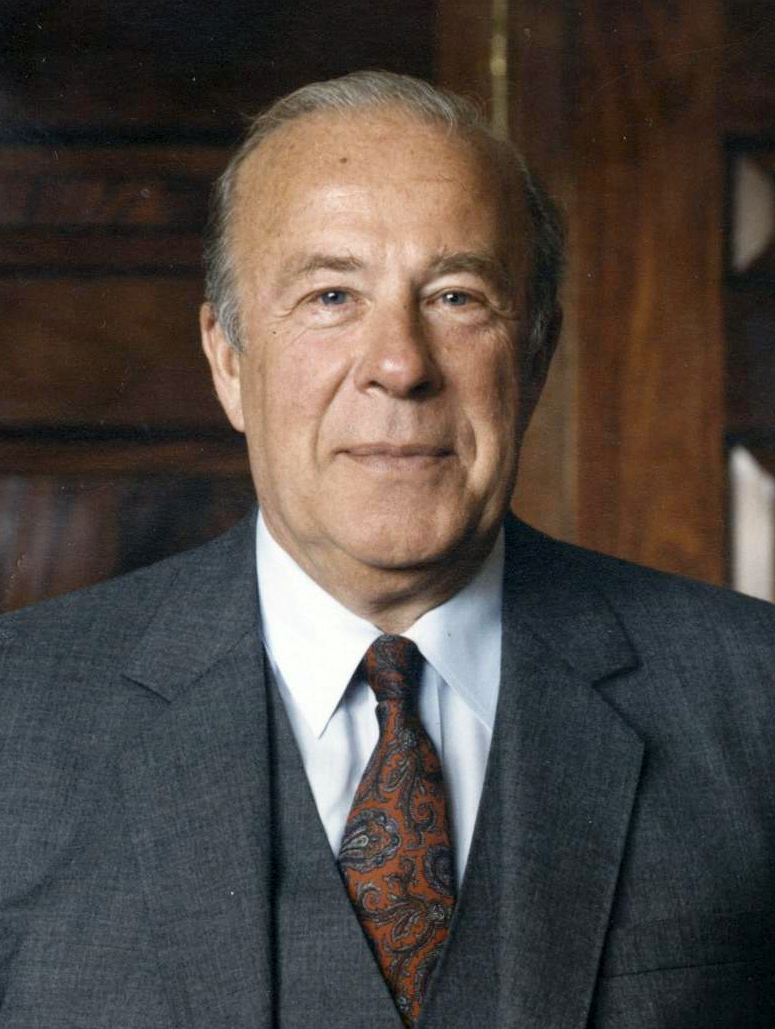



Early life and education
Shultz was born in New York City, in the state of New York. He completed undergraduate study at Princeton University and pursued advanced work at the Massachusetts Institute of Technology. His formative years included service during World War II and later teaching and research roles that shaped his understanding of labor markets, policy design, and management. These experiences prepared him for alternating careers in academia, the private sector, and public office.
Government service
Shultz held three principal cabinet posts in two administrations. He was U.S. Secretary of Labor from 1969 to 1970, a period when labor relations and employment policy were high on the national agenda; the tenure is often noted for bringing an economist's perspective to workforce issues. He later became U.S. Secretary of the Treasury (1972–1974), where he participated in economic policy at a time of global monetary change. In the 1980s he served as U.S. Secretary of State (1982–1989) under President Ronald Reagan, playing a central role in diplomacy and arms-control discussions with the Soviet Union and other governments. Shultz worked alongside contemporaries such as Henry Kissinger on questions of international strategy and the conduct of U.S. foreign policy.
Roles and responsibilities
- Secretary of Labor (1969–1970) — engagement with labor policy and administration. Office overview
- Secretary of the Treasury (1972–1974) — involvement in national economic management and international finance
- Secretary of State (1982–1989) — principal U.S. diplomat during key Cold War negotiations and global crises
Beyond formal titles, Shultz was known for a methodical, analytical approach to problems and for building working relationships across party lines. He drew on economic reasoning when addressing strategic questions and emphasized negotiation and steady engagement as tools of statecraft.
Personal life and later years
Shultz married Helena O'Brien in 1946; after her death in 1995 he married Charlotte Mailliard in 1997. He was the father of five children. In retirement he remained engaged on public issues through writing, speaking, and participation in policy institutions. He lived in California in his later years and died at his home in Stanford, California, on February 6, 2021. Obituary details.
Legacy and significance
Shultz's career is often cited for its breadth: few Americans have served as a cabinet head in labor, treasury, and state. He played a visible role in the diplomacy of the 1980s, when arms control and U.S.–Soviet relations were central to international politics. Colleagues and historians frequently note his combination of economic training and diplomatic skill, and his reputation for candor and collegiality. He and other senior figures of the Nixon and Reagan eras remain subjects of study for those interested in late 20th‑century U.S. governance and foreign policy.
For additional context and primary resources, see official archives and major biography collections. Background and academic records provide more on his training, while institutional repositories hold records of his time in office. Academic profiles and collected papers are valuable for deeper research. Further reading may include published speeches and later interviews reflecting on his long public life.
Author
AlegsaOnline.com George P. Shultz: American economist, statesman, and cabinet official Leandro Alegsa
URL: https://en.alegsaonline.com/art/138829