
Eva Clayton — U.S. Representative and barrier-breaking North Carolina politician
Eva Clayton (born 1934) is an American Democratic politician who served in the U.S. House from 1993–2003 and was the first African American to represent North Carolina there since 1898.
Eva McPherson Clayton (born September 16, 1934) is an American politician who served five terms in the United States House of Representatives. A member of the Democratic Party, she was elected in 1992 and served from 1993 until her retirement in 2003. Her election marked a historic return of African American representation from North Carolina to the U.S. House for the first time since the late 19th century.
Image gallery
1 Image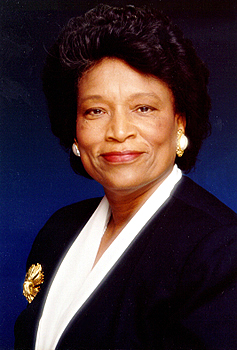
Overview and significance
Clayton's victory in 1992 followed a redistricting process that created a majority-Black district in eastern North Carolina. Her election was notable both for restoring Black congressional representation in the state—last held by George H. White in 1898—and as part of a broader pattern in the early 1990s when several majority-minority districts were established nationwide. During her decade in Congress she represented largely rural counties and brought attention to issues affecting economically distressed communities.
Career focus and priorities
Throughout her tenure, Clayton concentrated on policies that addressed rural development, agricultural concerns, economic opportunity, health care access, and infrastructure in underserved areas. She worked to secure federal resources for local projects and to promote programs that supported small farmers and job creation. Her approach emphasized constituent services and practical interventions to strengthen struggling local economies.
Roles and accomplishments
- Served five terms in Congress from the 103rd through the 107th Congresses (1993–2003).
- Represented a predominantly rural district in eastern North Carolina and advocated for agricultural and economic development.
- Played a role in legislative coalitions and caucuses focused on minority representation and community development.
Background and legacy
Born in 1934, Clayton entered public life after experience in community and public service roles. Her election and decade-long service are often cited as an example of how redistricting and concentrated civic organizing can change political representation. After leaving Congress in 2003 she retired from elected office, but her tenure is remembered for breaking a long-standing racial barrier and for steady advocacy on behalf of rural constituents.
Notable distinctions
Clayton remains an important figure in North Carolina political history: she was the first African American to represent the state in the U.S. House since the 19th century, and her career illustrates the impact of demographic and political changes of the early 1990s. For more detailed records of her legislative work and speeches, consult archived congressional materials and historical accounts of North Carolina's delegation.
Author
AlegsaOnline.com Eva Clayton — U.S. Representative and barrier-breaking North Carolina politician Leandro Alegsa
URL: https://en.alegsaonline.com/art/138178