
Eric Betzig — Pioneer of Super-Resolution Fluorescence Microscopy
Eric Betzig, American physicist and Nobel laureate known for developing photoactivated localization microscopy and advancing live-cell, super-resolution fluorescence imaging.
Eric Betzig is an American physicist and microscopist whose work helped break the diffraction limit in light microscopy. Trained as an experimental scientist, he has combined optical engineering, molecular labeling strategies, and computational analysis to enable imaging of structures and processes at the nanoscale in cells. He holds academic positions including professorships in physics and molecular and cell biology, and has been affiliated with both university and research-institute environments including a senior fellowship at a major laboratory.
Image gallery
5 Images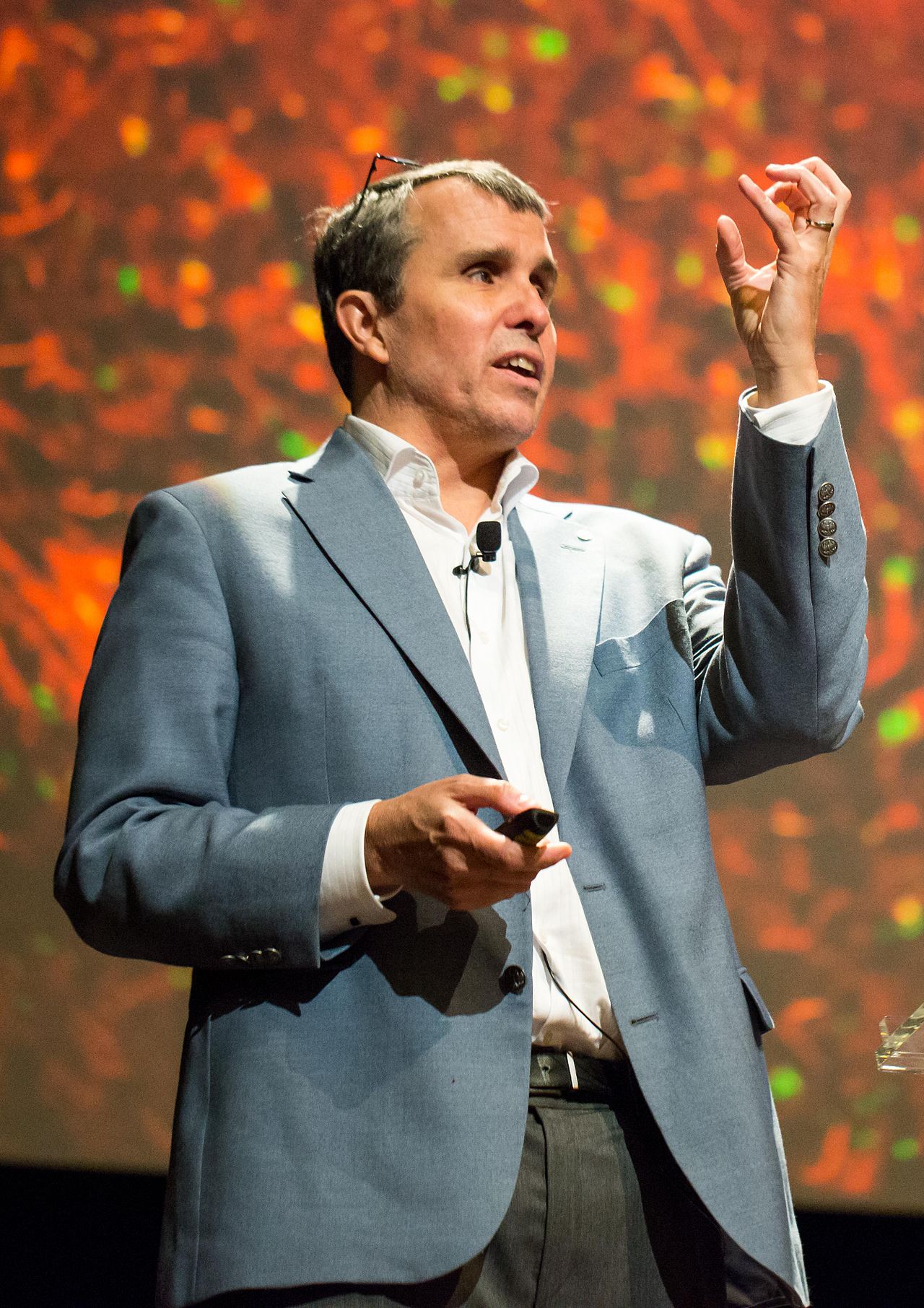



Research focus and methods
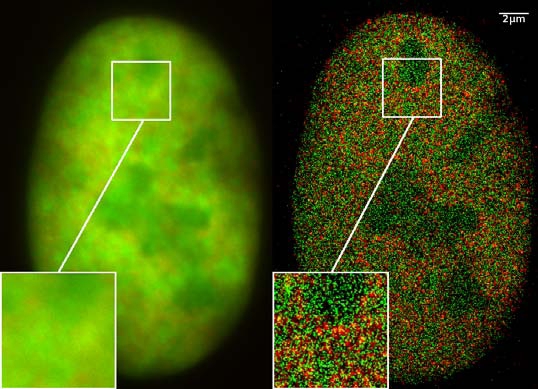
Betzig is best known for co-developing photoactivated localization microscopy (PALM), a form of super-resolution fluorescence microscopy that localizes individual fluorescent molecules to reconstruct images with spatial resolution far below the classical optical limit. His approach relies on switching subsets of fluorescent probes on and off, imaging them sparsely, and computationally determining each molecule's position to build a high-precision map. Variants and complementary techniques have since expanded the toolbox available for biological imaging.
Career and development
After early work in optical instrumentation and imaging, Betzig pursued projects that bridged physics and cell biology, often collaborating with chemists and biologists to design photoactivatable labels and sample-preparation methods. His career includes appointments at university departments and research centers where he combined hands-on instrument design with biological applications. More on his institutional affiliations and profiles can be found via professional profile and academic pages such as university listings.
Impact, applications, and recognition
PALM and related localization techniques transformed live-cell imaging, allowing scientists to visualize protein distributions, molecular complexes, and dynamic events at the scale of tens of nanometers. These methods are widely used in cell biology, neurobiology, and materials science. For this contribution Betzig shared the 2014 Nobel Prize in Chemistry with Stefan Hell and William E. Moerner, recognizing the creation of super-resolved fluorescence microscopy. Additional information and summaries of his work appear on institutional and research pages such as research summaries and laboratory profiles.
Notable facts
- His innovations combine optical instrument design with molecular probes and computational analysis.
- The techniques he helped create enable imaging below the traditional diffraction limit of light.
- He received the Nobel Prize jointly with two colleagues; further context and citations are available through scientific overviews like background articles.
Author
AlegsaOnline.com Eric Betzig — Pioneer of Super-Resolution Fluorescence Microscopy Leandro Alegsa
URL: https://en.alegsaonline.com/art/138090