
Dinesh D'Souza: conservative commentator, author and filmmaker
Indian-American conservative commentator, author and filmmaker. Known for polemical books and political documentaries, a brief presidency at The King's College, and a 2014 campaign finance conviction later pardoned in 2018.
Dinesh D'Souza (born April 25, 1961) is an Indian-American conservative political commentator, author, and documentary filmmaker. He rose to public prominence through polemical books and highly publicized films that critique liberalism, progressive policy, and prominent Democratic figures. From 2010 to 2012 he served as president of The King's College in New York City.
Image gallery
6 Images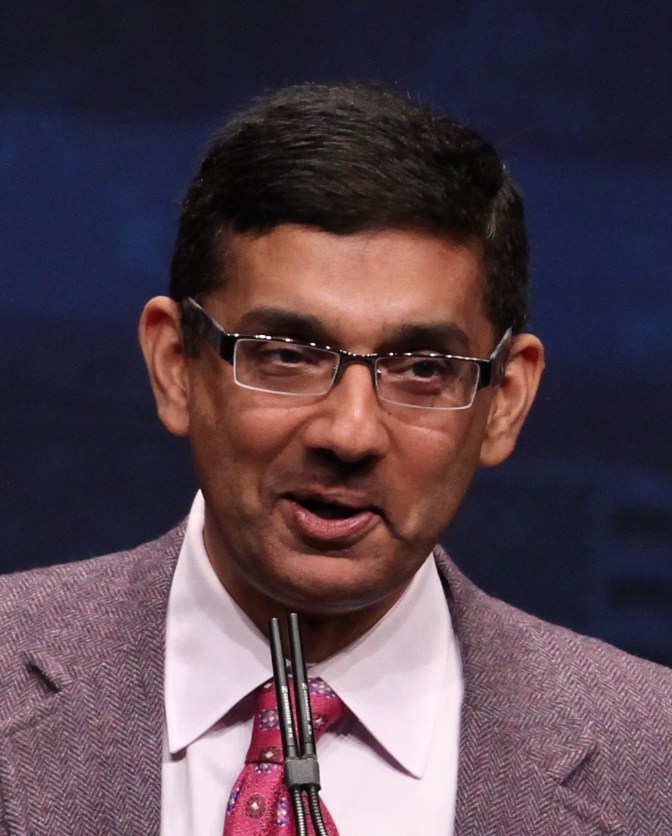


Background and career
D'Souza has worked across media, publishing and filmmaking. He is best known as a prolific author and public speaker who engages contemporary debates over race, education, and American politics. His style mixes polemic, historical interpretation, and political advocacy; supporters praise his contrarian viewpoints, while critics often fault his methods and conclusions.
Major works and films
- Books: A number of D'Souza's books examine higher education, race relations, and American identity. His writings have been influential in conservative circles and frequently spark debate.
- Documentaries: He produced commercially notable films that attracted wide attention and controversy, using cinematic narrative to advance political arguments.
Controversies and legal issues
D'Souza's work and public life have generated substantial controversy. Critics have accused some of his arguments and films of selective evidence or factual errors. In 2014 he pleaded guilty to a federal felony charge related to campaign finance irregularities; this conviction and sentence prompted debate about the legal and political circumstances. In 2018 he received a presidential pardon, which ended the criminal penalties.
Reception and influence
Within conservative media and among many activists, D'Souza is regarded as a prominent polemicist who has shaped public discussion on topics such as higher education, nationalism, and critiques of progressive leaders. Mainstream critics and many historians have often challenged his interpretations and factual claims. His films have been commercially visible and have contributed to political discourse in the United States.
Further reading
For general context on his viewpoints and bibliography, see profiles of him as a conservative commentator and a catalogue of his books as an author. These provide a starting point for exploring both his arguments and the critical responses they have provoked.
Author
AlegsaOnline.com Dinesh D'Souza: conservative commentator, author and filmmaker Leandro Alegsa
URL: https://en.alegsaonline.com/art/137547