
Corvette Summer (1978 film)
A 1978 American adventure comedy about a young man's quest to recover his custom Corvette. Stars Mark Hamill and Annie Potts; directed by Matthew Robbins and released by Metro-Goldwyn-Mayer.
Corvette Summer is a 1978 American adventure comedy film directed by Matthew Robbins. The story follows a determined young man whose painstakingly rebuilt Corvette is stolen; his search for the car turns into a roadbound pursuit that mixes comic mishaps, danger, and an unexpected romantic connection. Produced and released by Metro-Goldwyn-Mayer, the picture arrived in cinemas amid heightened interest in its lead actor, who had recently become famous for a major science fiction franchise.
Image gallery
1 Image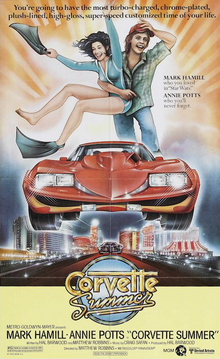
Plot overview
The film centers on a protagonist who has customized and restored a Corvette as a labor of love and a point of personal pride. When the car is taken, he follows a trail that leads him far from home into unfamiliar urban and desert environments. Along the way he encounters a lively young woman who becomes both an ally and a foil; their interactions add warmth and humor to the central chase. The narrative balances light-hearted adventure with moments that explore determination, identity, and the culture around American muscle cars in the late 1970s.
Cast and production
The lead performance was given by Mark Hamill, cast soon after his breakthrough in blockbuster science fiction, and the female lead was played by Annie Potts, whose role drew attention and helped launch a wider career in film and television. The supporting ensemble includes familiar character actors, among them Dick Miller, contributing to the film's comic and characterful tone. Director Matthew Robbins emphasized a mix of action set‑pieces and character moments, and the production made use of contemporary locations and car culture aesthetics to ground its story.
Release, reception, and themes
On release the film received mixed reviews: some critics praised its charm, the chemistry between the leads, and its depiction of Americana, while others found the plot episodic or uneven. Audiences drawn by the star power of the leads and the appeal of a customized Corvette responded variably, and over time the movie has been remembered more for particular performances and its late‑1970s atmosphere than as a major critical landmark. Thematically, the picture touches on youthful ambition, the craftsmanship of auto restoration, and the desire to reclaim what one has built.
Legacy and notable facts
- Corvette Summer is often noted as an early non‑franchise vehicle for its young stars and helped increase visibility for Annie Potts.
- The film captures elements of 1970s car culture and custom automotive styling that appeal to collectors and enthusiasts.
- Though not universally acclaimed on release, it retains a modest cult following and is referenced occasionally in discussions of post‑Star Wars career choices by its lead.
For those interested in exploring more about the cast and production context, contemporary interviews and retrospective articles provide additional background on how the film fit into late 1970s American cinema and popular culture. Further details on distribution and archival material can be sought through studio resources and film reference collections associated with Metro-Goldwyn-Mayer.
Author
AlegsaOnline.com Corvette Summer (1978 film) Leandro Alegsa
URL: https://en.alegsaonline.com/art/136966