
Chevrolet Bel Air
Full-size American automobile produced by Chevrolet from 1950 to 1975, known for its 1950s styling, the 1955 small‑block V8 debut, and enduring popularity among collectors and hot-rodders.
Overview
The Chevrolet Bel Air is a full‑size automobile that was marketed by Chevrolet for the 1950 through 1975 model years. Introduced in the early postwar period as a distinct trim level and quickly established as a recognizable Chevrolet nameplate, the Bel Air came to symbolize mid‑century American car styling and suburban prosperity. It remained in production for twenty‑five years before the Bel Air name was phased out and Chevrolet consolidated its full‑size range under other model names, notably the Chevrolet Impala.
Image gallery
10 Images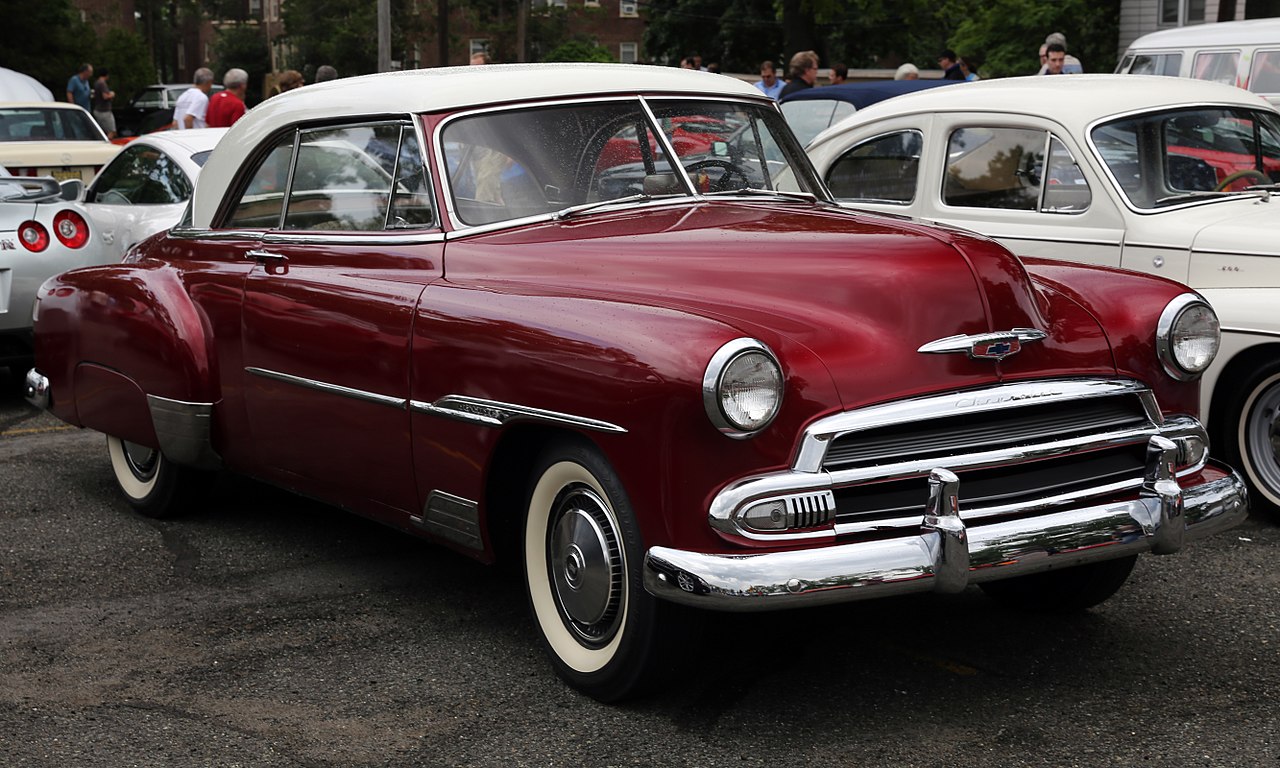



Design and characteristics
Bel Air models are notable for their evolving styling, which reflected broader trends in automotive design. Early 1950s examples featured conservative postwar lines; a major redesign in 1955 introduced a lower, wider stance and clean, sculpted sheetmetal. The 1957 Bel Air became an icon with pronounced chrome trim, tailfins and two‑tone paint schemes. Throughout its life the Bel Air was offered with a range of trim appointments, chrome treatments and interior levels aimed at the mainstream full‑size buyer.
Engines, layouts and body types
Chevrolet offered the Bel Air with a variety of engines and drivetrains appropriate to its era. The model was available with straight‑six and V8 engines; the introduction of Chevrolet’s small‑block V8 in 1955 is an important milestone often associated with mid‑1950s Bel Airs and with the emergence of hot‑rodding culture. Body styles included two‑door hardtops, convertibles, four‑door sedans and station wagons, giving buyers a broad choice for family, leisure and performance applications.
History and development
Over its production run the Bel Air underwent several generational changes that tracked shifting consumer tastes and engineering advances. The mid‑1950s redesigns brought both cosmetic flair and more powerful engine options. In the 1960s the design language moved toward cleaner, larger proportions, and by the early 1970s the full‑size Chevrolet lineup had been reorganized to reflect changing market priorities, emissions and safety standards.
Legacy and cultural significance
The Bel Air occupies a prominent place in classic‑car collecting and American popular culture. The 1955–1957 "Tri‑Five" Bel Airs are especially prized by collectors and customizers for their styling and mechanical simplicity. Restored and modified Bel Airs are commonly seen at car shows, in period films and among hot‑rod enthusiasts. Its long production life and frequent appearance in mid‑20th‑century media have made the Bel Air a shorthand for 1950s automotive style.
Notable distinctions
- The 1955 model year is notable for the introduction of Chevrolet’s small‑block V8 across the line.
- The 1957 Bel Air remains an emblematic design thanks to its chrome, grille and fin treatment.
- Although the Bel Air name ended in 1975, its design influence persisted in later Chevrolet full‑size cars.
Author
AlegsaOnline.com Chevrolet Bel Air Leandro Alegsa
URL: https://en.alegsaonline.com/art/136472