
Augusta County, Virginia
A predominantly rural county in Virginia’s Shenandoah Valley, with historic towns, scenic landscapes, and the independent city of Staunton as its county seat. Population was 73,750 at the 2010 census.

Augusta County is a political and geographic entity in the Shenandoah Valley region of western Virginia. It combines agricultural lowlands, rolling ridges and small towns. The county's administrative functions are centered in the city of Staunton, which is an independent city that serves as the county seat though it is legally separate from the county. Official population counts recorded 73,750 residents in the 2010 U.S. Census.
Image gallery
8 Images




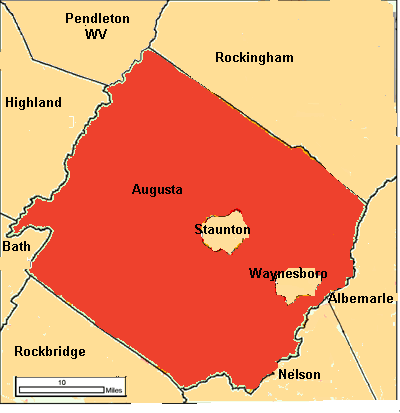
Geography and landscape
The county occupies a portion of the valley between the Ridge-and-Valley Appalachians and the Blue Ridge Mountains. Its landscape supports mixed farming, forests and small-scale industry. Rivers and streams that cross the county feed larger watershed systems and contribute to outdoor recreation and local tourism. For regional context see the geographic region.
History and development
Augusta County traces its origins to colonial-era settlement and expansion into the inland valleys of Virginia. Over time it developed as a primarily agricultural and transportation corridor, with small towns growing at crossroads and near natural resources. Historic sites and preserved buildings reflect 18th- and 19th-century frontier life and later community development.
Government, economy and services
Local government is administered by an elected board and various county departments responsible for schools, roads, public safety and planning. The county economy mixes agriculture, light manufacturing, services and tourism; nearby independent cities contribute employment and cultural amenities. Visitors and residents can find information through the county’s official portals and community resources such as county government pages and regional tourism guides (Waynesboro and other neighboring communities).
Communities and notable features
- County seat: Staunton (independent city serving as the administrative center).
- Independent and adjacent municipalities that interact closely with the county include Waynesboro and other Shenandoah Valley towns.
- Outdoor recreation, historic districts and local festivals contribute to the county’s cultural life and visitor appeal; see local state resources for more details.
Augusta County remains an example of a largely rural American county balancing preservation of its historical landscape with contemporary economic and civic needs. For statistics, maps and administrative contacts consult county and regional reference pages or the most recent census publications.
Author
AlegsaOnline.com Augusta County, Virginia Leandro Alegsa
URL: https://en.alegsaonline.com/art/134799