
825 (DCCCXXV)
Year 825 (DCCCXXV) was a common year starting on Sunday of the Julian calendar. It saw a major shift in Anglo‑Saxon England at the Battle of Ellandun and formed part of wider 9th‑century developments in Europe and Asia.
825 (Roman numeral: DCCCXXV) was a common year that, in the reckoning of the period using the Julian calendar, began on a Sunday (common year starting on Sunday). Contemporary and later historians refer to the year using the Anno Domini system (AD), also described as part of the Common Era (CE), and it is placed within the 1st millennium (first millennium), the 9th century (ninth century) and the 820s decade (820s).
Image gallery
2 Images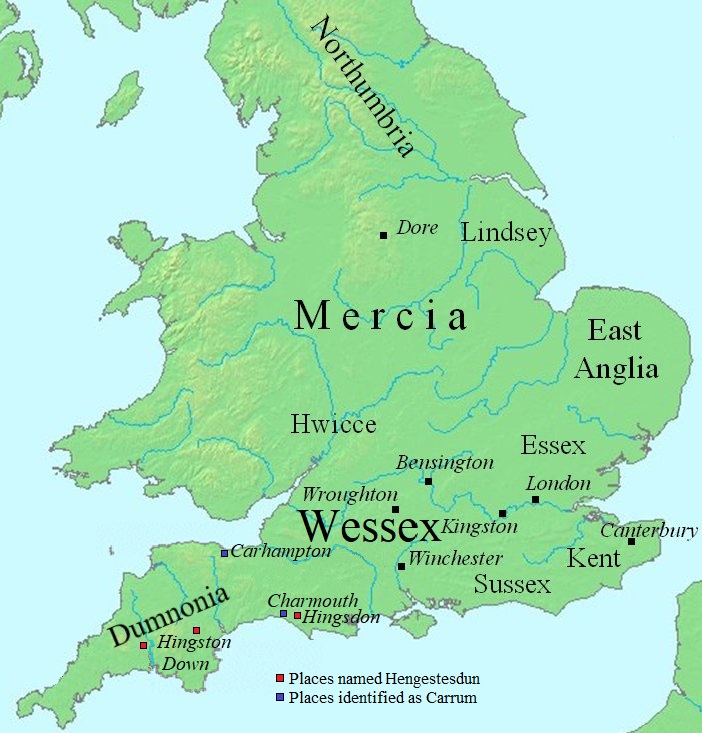
Calendar and numbering
The year was numbered according to the Julian calendar (Julian calendar), which remained the dominant civil calendar in Europe for many centuries. A "common" year in the Julian system has 365 days; every fourth year is a leap year with an extra day. Medieval chroniclers and later compilers retroactively applied the Anno Domini era to earlier events, so modern references to 825 follow that chronological framework.
Notable events and political context
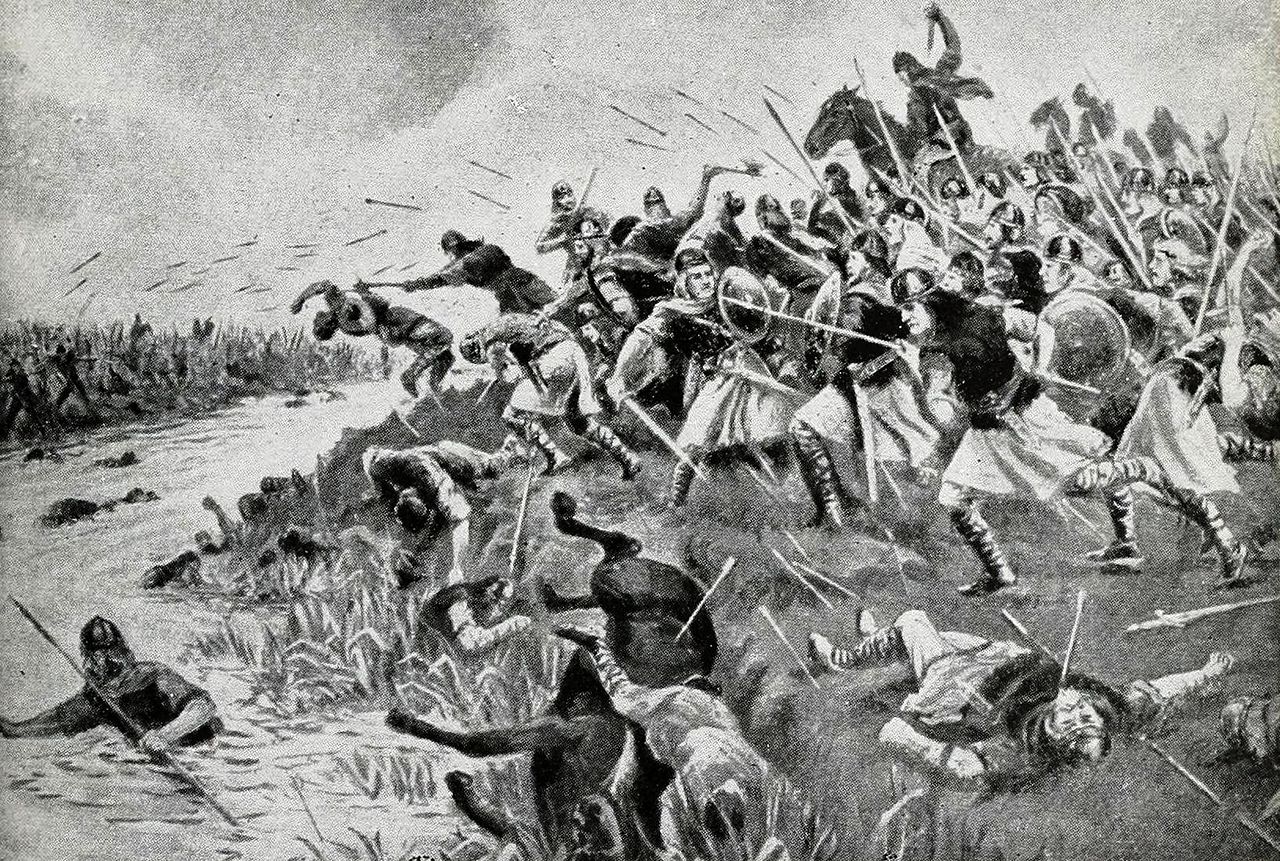
The most widely recorded event of 825 occurred in Anglo‑Saxon England: the Battle of Ellandun, in which King Egbert of Wessex defeated the Mercians. That victory undermined Mercian supremacy in southern England and led to the submission or realignment of several smaller kingdoms, shifting the balance of power toward Wessex. In continental Europe the Carolingian realm continued under Emperor Louis the Pious, while the Byzantine Empire and the Abbasid Caliphate remained principal powers in the eastern Mediterranean and the Islamic world, respectively.
Cultural and regional developments
Across Eurasia the early 9th century was a period of regional consolidation, local warfare and cultural exchange. In China, the Tang dynasty continued to exert influence over East Asia. Maritime and overland trade routes carried ideas, goods and technologies, even as political boundaries and dynastic fortunes changed. These wider dynamics frame the events of 825 within long-term medieval transformations.
Significance and legacy
Although a single year can appear unremarkable in isolation, 825 is often noted by historians for its role in the emergence of Wessex as a dominant English kingdom, a development that contributed to the later unification of England. The way the year is recorded—using Roman numerals, Julian calendrical terms and the Anno Domini system—also illustrates how later medieval and modern chronologies organize the past.
Further reading
Author
AlegsaOnline.com 825 (DCCCXXV) Leandro Alegsa
URL: https://en.alegsaonline.com/art/133957