
220 BC
Overview of the year 220 BC: major political, military, and cultural developments across the Hellenistic Mediterranean, Rome, Qin China, and the Indian subcontinent.
220 BC was a year situated in the later Hellenistic age and the early years of several imperial systems. It falls within the pre-Julian Roman calendar era and sits just after the final unification of China under the Qin. While surviving records from the period are uneven, scholars treat 220 BC as a moment when regional powers consolidated, rivalries intensified, and a number of conflicts and reforms set the stage for later, better-documented events.
Image gallery
1 Image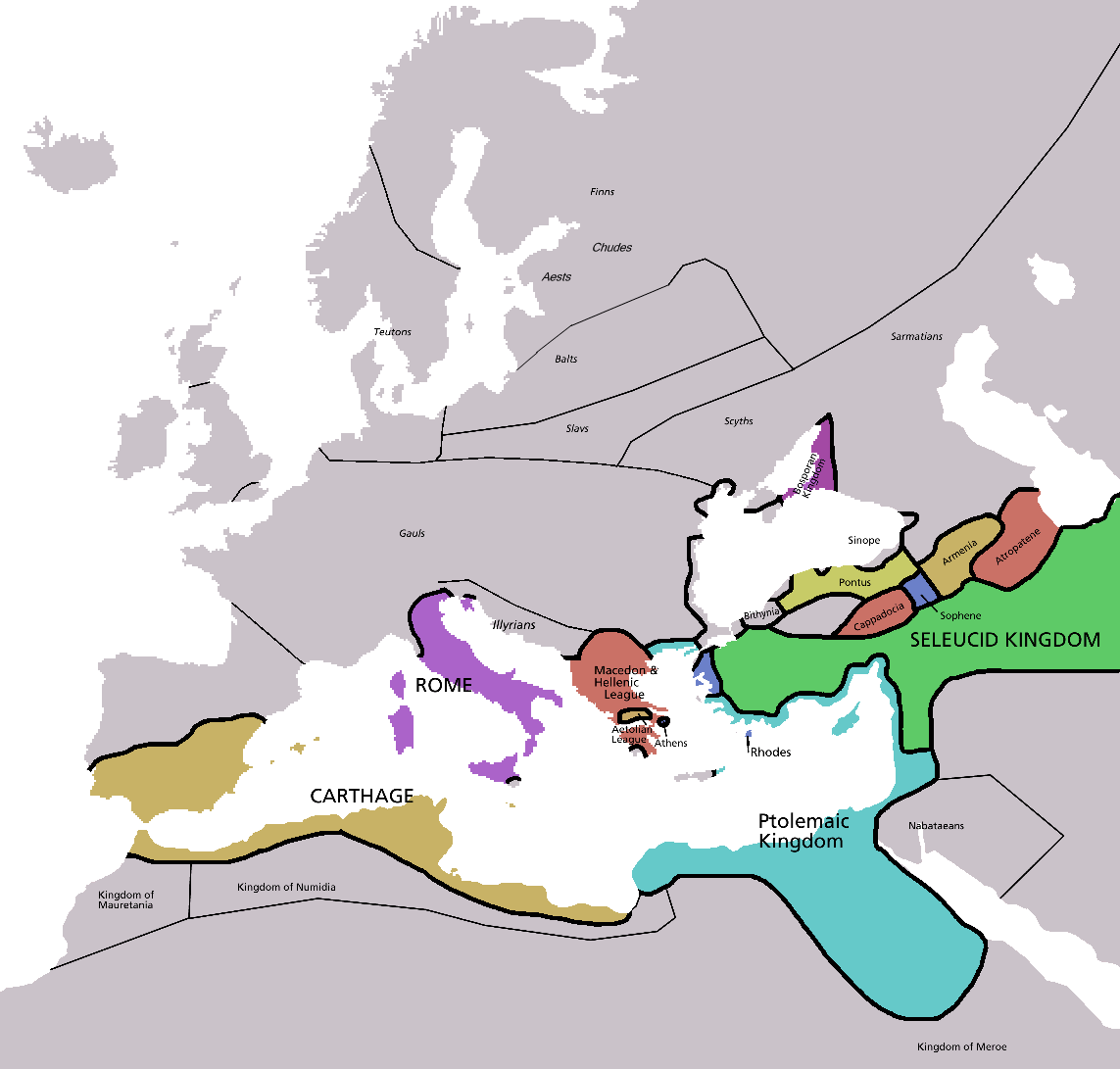
Political and military context
In the eastern Mediterranean the kingdoms that rose from Alexander the Great's empire continued to compete for influence. In Greece the so-called Social War began around this time, a multi-sided conflict that involved the Kingdom of Macedon under Philip V and various Greek leagues and city-states. These regional contests weakened established balances and drew in outside powers.
On the Italian peninsula, the Roman Republic was asserting control over neighboring peoples and building alliances that would make it a dominant regional power. Tensions between Rome and Carthage, which had been growing for decades, were approaching a breaking point that would culminate in the Second Punic War a few years later.
East and South Asia
China was in the immediate aftermath of unification by the state of Qin (221 BC). The new Qin administration implemented centralized governance and policies intended to standardize weights, measures and written scripts across former competing states, strengthening imperial control. In South Asia the Maurya Empire, established in the 3rd century BC, continued to be a major political and cultural force on the subcontinent.
Notable developments and significance
- Beginning of the Social War in Greece, marking renewed conflict among Hellenistic states and leagues.
- Ongoing consolidation of Roman power in Italy and diplomatic rivalry with Carthage.
- Qin centralization in China, continuing policies that would shape imperial administration.
- Persistent interactions among the Seleucid, Ptolemaic and other Hellenistic regimes, affecting trade and diplomacy.
Though 220 BC itself lacks a single defining global event, it represents a transitional year in several regions: military confrontations and league politics in the Mediterranean; administrative consolidation in China; and continued imperial structures in South Asia. These threads contributed to political and cultural developments that historians link to the larger transformations of the third and second centuries BC.
For calendrical and chronological context, contemporary Roman dates are recorded in the pre-Julian Roman calendar, and historians must often reconcile differing local systems when comparing events across the Mediterranean and Asia.
Author
AlegsaOnline.com 220 BC Leandro Alegsa
URL: https://en.alegsaonline.com/art/133835