
(What's the Story) Morning Glory? — Oasis album
Second studio album by Oasis, released October 1995. A defining Britpop record, it produced international hits like “Wonderwall” and “Don't Look Back in Anger” and remains one of the UK's best-selling albums.
(What's the Story) Morning Glory? is the second studio album by the English rock band Oasis, released in October 1995. Building on the success of their debut, the album cemented the group’s position at the centre of mid‑1990s Britpop and introduced a collection of songs that combined loud, chorus‑driven rock with melodic pop sensibilities. The record is often characterised by its layered guitars, emphatic choruses and the songwriting of Noel Gallagher, with lead vocals by Liam Gallagher shaping the album’s public persona.
Image gallery
3 Images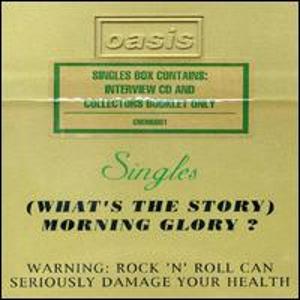
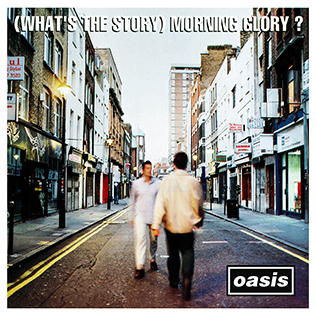

Background and recording
Work on the album took place during 1994–1995 as the band moved from club stages to arenas. The sessions refined musical ideas from earlier recordings while exploring larger, more anthemic arrangements. Production techniques used on the album—including heavy compression and multiple guitar overdubs—helped create its immediate, radio‑friendly sound. Owen Morris contributed to the production process alongside the band, yielding a dense mix that emphasised rhythm and vocal hooks.
Composition and themes
Musically, the album blends swaggering rockers with more introspective ballads. Many tracks juxtapose blunt, direct lyrics with sweeping melodies; the songwriting ranges from observational vignettes to emotive, sing‑along refrains. Instrumentation centres on layered electric guitars, but also features atmospheric textures and occasional acoustic elements that broaden the record’s sonic palette.
Singles and promotion
The album produced several widely broadcast singles, including "Roll with It", "Wonderwall", "Don't Look Back in Anger", "Champagne Supernova" and "Some Might Say." Singles from the album were central to the band’s media profile: "Some Might Say" and "Don't Look Back in Anger" reached the top of the UK singles chart, while "Wonderwall" became an international staple, receiving extensive radio play and enduring popularity. Two tracks from the record reached number one on the U.S. Modern Rock chart, reflecting the band’s growing presence beyond the UK market and regular airplay on alternative radio stations in North America (Modern Rock listings).
Release, sales and chart performance
The album debuted at number one in the United Kingdom and maintained a prolonged chart presence. First‑week sales in the UK were notably high, with contemporary reports citing a strong opening week figure (first‑week sales). Over time it became one of the best‑selling albums in UK chart history: sales figures reported by different sources vary, but the record is widely recognised as selling many millions of copies worldwide. It achieved multi‑platinum certification in multiple territories, including several platinum awards in the United States.
Critical reception and awards
On release, the album received generally positive reviews for its confident songwriting and stadium‑sized arrangements, though some critics noted the production’s heavy compression. It was awarded Best British Album at the 1996 BRIT Awards and later received retrospective honours acknowledging its impact on popular music in the UK. Over the years it has been included in numerous lists and discussions of influential 1990s albums and remains frequently cited in analyses of the Britpop era.
Legacy and influence
The songs from (What's the Story) Morning Glory? have continued to be covered, reinterpreted and performed, and several tracks have become shorthand for the period’s sound. The album helped popularise anthemic, guitar‑based songwriting that influenced a generation of British rock acts and contributed to the international visibility of UK popular music in the 1990s. Its cultural impact extends beyond sales: it became emblematic of a broader musical and social moment associated with Britpop.
Notable facts and touring
- The album followed Oasis’s debut and helped shift the band from underground success to mainstream prominence across Europe and beyond.
- Singles such as "Wonderwall" and "Don't Look Back in Anger" remain staples on radio playlists and at live performances.
- The public chart rivalry that accompanied the release of "Roll with It" drew media attention and highlighted the cultural profile of the Britpop movement.
Continuing relevance
Decades after its release, (What's the Story) Morning Glory? is still referenced in discussions of 1990s British popular music and often included in retrospectives about that decade. While exact sales totals differ depending on the source—some estimates place worldwide sales in the tens of millions, with a commonly cited figure and higher estimates reported—the record’s combination of commercial success and enduring songs secures its place in the era’s musical canon.
The album's material continues to appear in set lists, compilation releases and radio retrospectives, and its songs are frequently used as touchstones when describing the sound and ambitions of mid‑1990s British rock.
Questions and answers
Q: When was "(What's the Story) Morning Glory?" released?
A: "(What's the Story) Morning Glory?" was released in October 1995.
Q: How many copies did the album sell in its first week in the United Kingdom?
A: The album sold 346,000 copies in its first week in the United Kingdom.
Q: What was the album's highest chart position in the UK and the US?
A: The album charted at number one in the UK (staying there for 10 weeks) and number four in the US.
Q: How many copies of the album have been sold worldwide?
A: The album has sold around 23 million copies worldwide, but some sources estimate that it has sold over 30 million.
Q: What singles from the album were big hits in the UK?
A: Singles "Some Might Say", "Roll with It", "Wonderwall" and "Don't Look Back in Anger" were big hits in the UK, with "Some Might Say" and "Don't Look Back in Anger" both reaching the number one spot in the UK singles chart.
Q: What awards did the album win?
A: The album won Best British Album at the 1996 BRIT Awards, and won the BRIT Award for the best British Album of the last 30 Years at the 2010 BRIT Awards.
Q: What is the album's certification in the United States?
A: The album has gone 4× platinum (3.9 million copies) in the United States.
Author
AlegsaOnline.com (What's the Story) Morning Glory? — Oasis album Leandro Alegsa
URL: https://en.alegsaonline.com/art/133382