
Zhao Nanqi: PLA General, Military Reformer, and Political Leader
Biography of Zhao Nanqi (1927–2018), a Chinese general of Korean heritage who led logistics and military-scientific institutions, held provincial and national posts, and served as a CPPCC vice chair.
Overview
Zhao Nanqi (赵南起; Korean: 조남기) (20 April 1927 – 17 June 2018) was a senior Chinese military officer and politician. He rose through the ranks of the People's Liberation Army to become a four-star general and later held prominent political positions, including vice governor of Jilin province and vice chairperson of the Chinese People's Political Consultative Conference (CPPCC). His career spanned the decades when the PLA prioritized professionalization and logistical modernization.
Image gallery
3 Images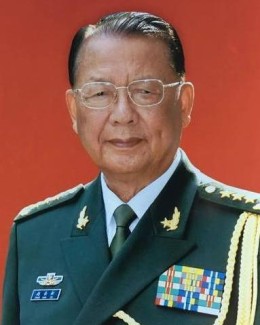

Career and roles
Zhao spent much of his early service in Jilin province, where he commanded regional units and took on combined military and civilian duties typical of cadre in China’s border provinces. He was appointed Director of the General Logistics Department of the PLA from 1987 to 1992, a role that placed him in charge of the armed forces’ supply, infrastructure, and health care systems. Following that post, he served as President of the PLA Academy of Military Science from 1992 to 1995, leading an institution responsible for doctrinal research and high-level military studies.
- Promoted to the rank of general in 1988.
- Member of the Central Military Commission during a period of institutional reform.
- Vice Governor of Jilin province earlier in his career, reflecting combined military–civil responsibilities.
- Vice Chairperson of the CPPCC, 1998–2003, in a senior advisory political role.
Historical context and significance
Zhao’s service coincided with a major transformation of the PLA from a large, manpower-intensive force toward a more modern, technology-focused military. In leadership positions concerned with logistics and military science, he was part of efforts to professionalize support services, improve procurement and maintenance, and develop doctrine that matched changing strategic priorities. His appointments to both military and political bodies illustrate the close institutional links between the PLA and the Chinese Communist Party.
Background and identity
Zhao was of Korean ethnic heritage, and his Korean name, reflected in official records, indicates the presence and participation of minority nationalities within China’s armed forces and political institutions. Officers from minority backgrounds have at times been highlighted for their roles in frontier provinces and in fostering ties with neighboring regions; Zhao’s long association with Jilin, a northeastern province with a significant ethnic Korean population, is consistent with that pattern.
Legacy and later life
After leaving active military posts in the mid-1990s, Zhao continued to serve in advisory and political positions. His tenure in logistics and military research is frequently noted in summaries of PLA institutional development during the late twentieth century. Zhao passed away in Beijing on 17 June 2018 at the age of 91. His career is often cited as an example of a senior officer who moved between regional command, central military administration, and national political roles.
Notable facts
- He held some of the PLA’s senior support and research appointments during a period of reform and professionalization.
- Promotion to full general came in 1988, the same year the PLA formalized a modern rank system.
- Zhao’s trajectory—regional command, central logistics leadership, and military-academic presidency—illustrates the varied pathways to senior leadership in the PLA.
Author
AlegsaOnline.com Zhao Nanqi: PLA General, Military Reformer, and Political Leader Leandro Alegsa
URL: https://en.alegsaonline.com/art/133313