
Zénobe Théophile Gramme and the Gramme Machine
Zénobe Théophile Gramme (1826–1901), Belgian inventor of the Gramme machine, a ring-armature direct-current dynamo whose smoother, higher-voltage output advanced practical electrical generation and motor use in the 19th century.
Overview
Zénobe Théophile Gramme (4 April 1826 – 20 January 1901) was a Belgian electrical engineer best known for inventing the Gramme machine, a milestone in the development of practical direct-current electrical generators. Born in Amay, Gramme developed an armature and machine design that delivered steadier and higher DC voltages than many earlier devices. His work helped move electrical apparatus from laboratory curiosities toward reliable equipment for lighting, industry and experimentation.
Image gallery
4 Images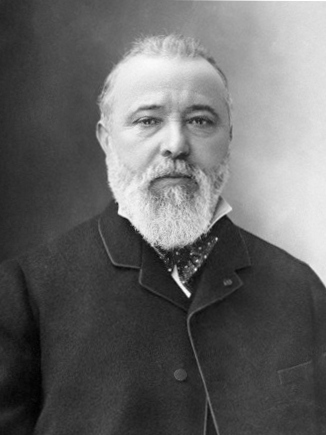


Design and operation
The distinctive element of the Gramme machine is its toroidal or ring-shaped armature, often called the Gramme ring. The ring carries multiple coils of wire distributed around its circumference and rotates within a magnetic field. A segmented commutator and brushes collect the generated current and mechanically rectify the alternating electromotive forces induced in the windings to produce a usable direct current. Because many coils are spaced around the ring, their individual outputs overlap in time, producing a more continuous and less pulsating DC output than earlier single-coil machines.
Technical characteristics
- Ring (toroidal) armature: distributed windings provide overlapping induced voltages for smoother output.
- Commutator and brushes: mechanical means to obtain unidirectional current from rotating windings.
- Reversibility: the device can operate as either a generator or, when supplied with DC, as a motor, illustrating the reciprocity of electrical machines.
- Construction: iron core and copper windings with external field magnets—typical of 19th‑century dynamo practice.
Applications and early adoption
Gramme dynamos found use in lighting systems, electrochemical processes such as electroplating, and as prime movers when run as motors. Their comparatively steady output made them attractive for workshop and factory applications at a time when reliable electric power sources were rare. The machine helped demonstrate that centralized generation and mechanical-to-electrical energy conversion were practical on an industrial scale.
Limitations and successors
While an important advance, the Gramme machine had drawbacks. Its ring armature used a relatively large amount of copper and iron, and the commutator-and-brush arrangement caused wear and sparking under load. Later armature designs (for example, drum or lap-wound armatures) and improvements in magnetic materials increased efficiency and power density. Additionally, the rise of alternating-current systems and improved alternators changed the dominant approach to power distribution for long distances.
Historical context and legacy
Gramme’s work is usually placed in the broader context of late 19th‑century advances in electromagnetism and machine building. The Gramme machine is frequently cited in histories of electrical engineering as a clear step from experimental magnetos toward robust commercial generators and motors. Examples of Gramme machines are preserved in technical museums and remain a common teaching example in textbooks dealing with early dynamo theory and electromechanical energy conversion.
Further reading
For brief biographical material see a short biography. Technical descriptions and historical discussions can be found under entries for the Gramme machine and for the general concept of a dynamo. Comparative treatments that discuss direct versus alternating systems often mention the smoother output of Gramme-style machines in relation to early experiments with alternating current.
Author
AlegsaOnline.com Zénobe Théophile Gramme and the Gramme Machine Leandro Alegsa
URL: https://en.alegsaonline.com/art/133304