
William Jennings Bryan: Populist Reformer, Orator, and Democratic Leader
American politician and orator (1860–1925) known for advocating free silver, leading the Democratic Party in the 1890s–1900s, serving as Secretary of State, and as a prominent figure in the Scopes Trial.
William Jennings Bryan (1860–1925) was an influential American politician, lawyer and orator whose career bridged the Gilded Age and the Progressive Era. He rose from a Midwestern background to become the dominant voice of the Democratic Party around the turn of the 20th century. Bryan combined evangelical religious convictions with populist economic ideas, presenting himself as a spokesman for farmers, laborers and reformers at a time of rapid industrial change.
Image gallery
10 Images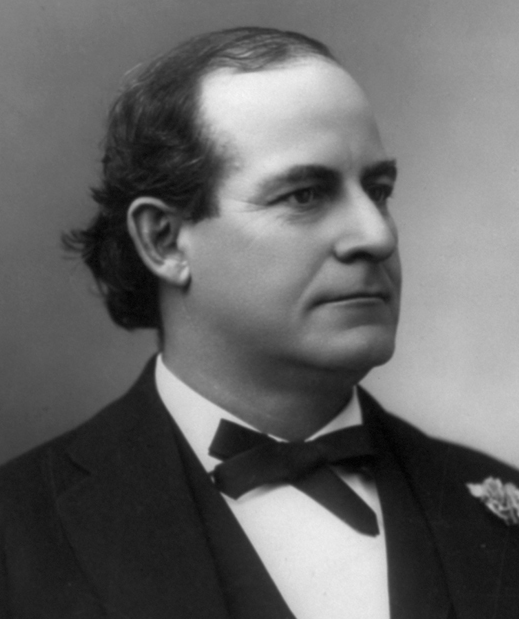


Political ideas and public persona
Bryan is best known for promoting bimetallism, commonly called the "free silver" cause, which sought an expanded money supply by allowing silver to be coined alongside gold. He argued this would relieve indebted farmers and stimulate the economy. His rhetoric was plainspoken and moralistic, often framed in religious language. These beliefs made him a polarizing figure: admired by many grassroots activists, criticized by business interests and conservative bankers.
Rise to national prominence
After legal practice and state politics in Nebraska, Bryan won election to the U.S. House of Representatives where he gained attention for his oratorical skill. He became nationally famous after delivering the fiery "Cross of Gold" speech at the 1896 Democratic convention, a peroration that captured popular anxieties about monetary policy and secured his first presidential nomination. That campaign inaugurated a new style of active, nationwide campaigning in which Bryan traveled extensively and spoke directly to audiences across the country.
Campaigns, leadership and public work
Bryan was the Democratic nominee for president three times (1896, 1900 and 1908) but never won the White House. He served as a principal leader of the party, shaping its progressive program on issues such as antitrust regulation, election reform and opposition to imperial expansion after the Spanish–American War. Outside elected office he remained a prolific speaker on the Chautauqua circuit and other public forums, bringing political and moral argument to mass audiences.
Government service and later controversies
In Woodrow Wilson's first administration Bryan served as U.S. Secretary of State from 1913 to 1915, promoting arbitration and neutrality in the early years of World War I before resigning over differences with the president's handling of international crises. In his later years he became a leading public opponent of the teaching of evolution in schools, actively supporting causes associated with creationism and religious beliefs. He was one of the attorneys in the 1925 Scopes trial, in which a Tennessee teacher was prosecuted for teaching evolution; the case brought national attention to the conflict between modern science and traditional faith.
Notable roles and legacy
- Member of Congress from Nebraska and national party leader
- Three-time Democratic presidential nominee and long-distance campaigner
- Cabinet member who championed peace and arbitration
- Prominent public speaker whose career influenced mass political communication
Assessments of Bryan vary: admirers emphasize his advocacy for ordinary citizens, commitment to progressive reform, and rhetorical gifts. Critics highlight his economic positions as outdated and his later anti-evolution stance as scientifically regressive. Regardless, his career shaped the Democratic Party's identity in the Progressive Era and left a lasting imprint on American political culture, from populist reform movements to debates over religion in public life.
Author
AlegsaOnline.com William Jennings Bryan: Populist Reformer, Orator, and Democratic Leader Leandro Alegsa
URL: https://en.alegsaonline.com/art/132943