
William Ewart Gladstone — Victorian statesman and four‑time British prime minister
Overview of William Ewart Gladstone (1809–1898), his political career, reforms, beliefs and legacy as a four‑time British prime minister and influential leader of the Liberal Party.
Overview
William Ewart Gladstone (29 December 1809 – 19 May 1898) was a dominant figure in 19th‑century British politics whose parliamentary career spanned more than six decades. He led the Liberal movement and served as Prime Minister on four separate occasions, more than any other British statesman. His life combined rigorous classical education at Eton College and Christ Church, Oxford with a reputation for intense moral conviction, prolific public speaking and deep involvement in questions of finance, religion and national policy.
Image gallery
10 Images


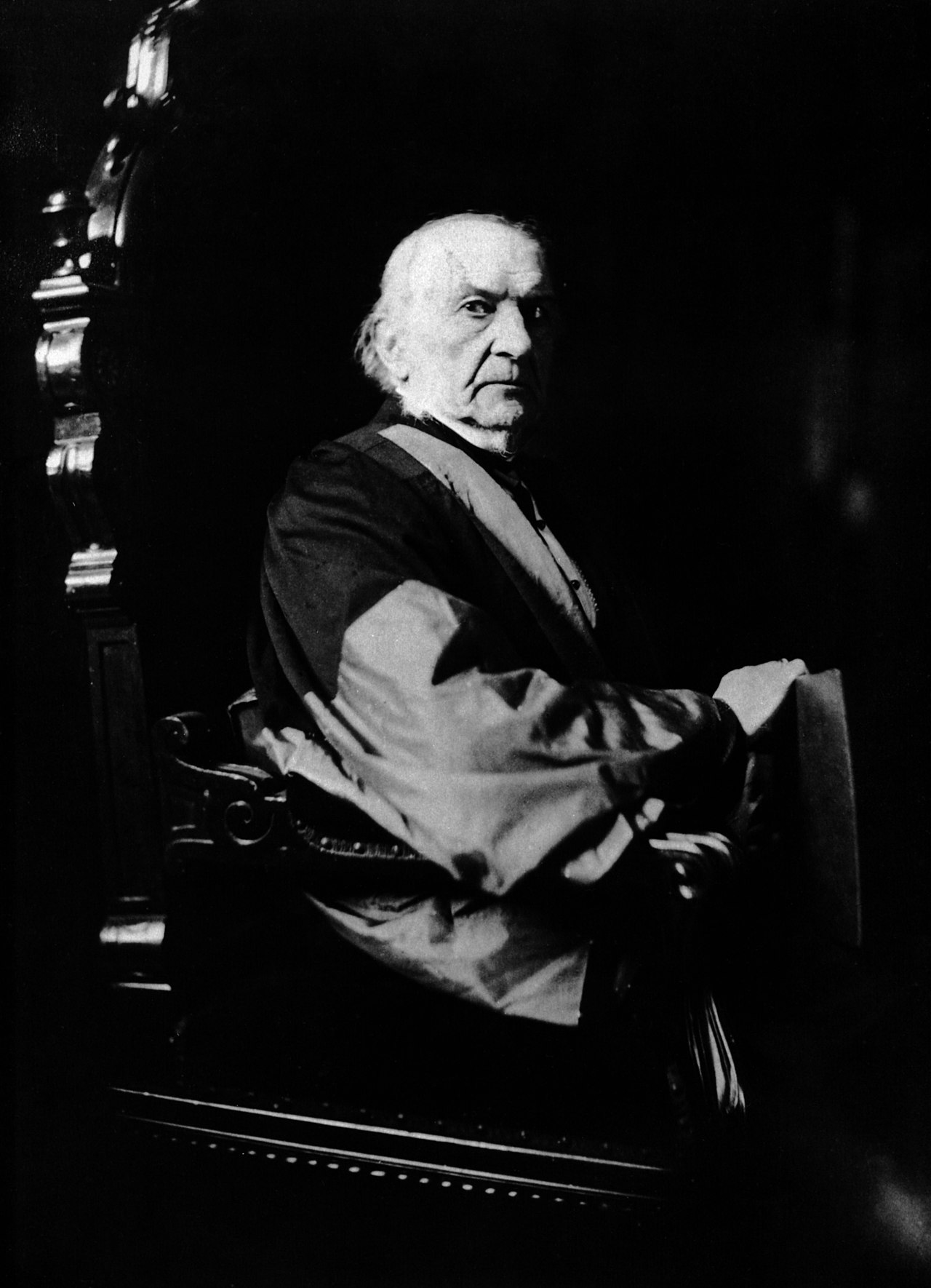


Political career and major reforms
Gladstone began public life in the House of Commons and moved from early conservative sympathies to become the leading voice of the Liberal Party (Liberal Party). He served repeatedly as Chancellor of the Exchequer (Chancellor) and four times as head of government. His ministries are associated with a series of legislative reforms intended to modernize administration, expand civil rights and reduce the power of entrenched interests.
- Disestablishment of the Irish Church, altering the relationship between church and state in Ireland.
- Establishment of the framework for elementary education, making schooling more widely available.
- Measures that increased political accountability, including introduction of the secret ballot and reforms affecting trade unions and local government.
- Fiscal policies emphasizing free trade, balanced budgets and reductions in public expenditure.
Style, beliefs and controversies
Gladstone was known for his moralistic and religiously informed approach to politics. He believed that government should be guided by conscience and the pursuit of justice. His oratorical skill and detailed knowledge of policy made him a formidable parliamentarian and campaigner; his series of public speeches in the late 1870s and 1880s helped shape modern political campaigning. Yet his career also provoked deep divisions: his advocacy of Irish Home Rule split the Liberal Party and reshaped British parliamentary alignments in the 1880s and 1890s.
Legacy and notable facts
Gladstone's influence extended beyond specific laws to the broader development of British liberalism, parliamentary government and party politics. He left a mixed but substantial legacy: admired for intellectual vigor, probity and devotion to principle, criticized by contemporaries for moments of political inflexibility. Notable distinctions include serving as Prime Minister four times and resigning for the final time in his eighties, making him one of Britain’s oldest prime ministers when he left office. He remains a central figure for understanding Victorian politics, the rise of modern party organization and debates over empire, religion and national identity.
Further reading
Readers can consult biographies, collections of his speeches, and histories of Victorian Britain to explore Gladstone’s career in greater depth; parliamentary records and contemporary newspapers also illuminate his public battles and the arguments that defined an era.
Prime Minister • Liberal Party • Chancellor of the Exchequer • Eton College • Christ Church, Oxford
Author
AlegsaOnline.com William Ewart Gladstone — Victorian statesman and four‑time British prime minister Leandro Alegsa
URL: https://en.alegsaonline.com/art/132911