
Walter Kohn: Developer of Density Functional Theory and Nobel Laureate
Walter Kohn (1923–2016) was an Austrian-born American theoretical physicist who developed density functional theory, winning the 1998 Nobel Prize in Chemistry and transforming computational materials science.
Walter Kohn (March 9, 1923 – April 19, 2016) was an Austrian-born American theoretical physicist whose work reshaped quantum many-body theory and computational chemistry. Born into a Jewish family in Vienna, he later became a central figure in condensed-matter physics and materials modelling. Kohn's research delivered practical frameworks that let scientists compute the electronic structure of atoms, molecules and solids with far greater efficiency than earlier methods.
Early life and academic path: Kohn fled Europe as the political climate deteriorated for Jews and emigrated to North America, where he pursued higher education and a research career that combined physics and mathematics. He became a United States citizen and worked at universities and research centers across North America. Biographical overviews and institutional profiles describe both his scientific training and his personal history in more detail (professional profile, family background).
Image gallery
5 Images



Scientific contributions
Kohn is best known for originating density functional theory (DFT) and for the Kohn–Sham formulation that made DFT broadly useful. Rather than solving the full many-electron Schrödinger equation directly, DFT reformulates the problem in terms of the electronic density, a function of three spatial variables, greatly reducing computational complexity. The Kohn–Sham approach introduces a set of auxiliary single-particle equations whose solutions reproduce the exact density, allowing controlled approximations for the exchange–correlation energy.
DFT and the Kohn–Sham framework provided a practical path to study excited materials, chemical reactions, and solid-state properties. These ideas underpin much of modern computational chemistry and materials science: they are central to electronic structure codes and are routinely applied to problems in catalysis, nanoscience, semiconductor design and condensed-matter theory.
Awards, influence and legacy
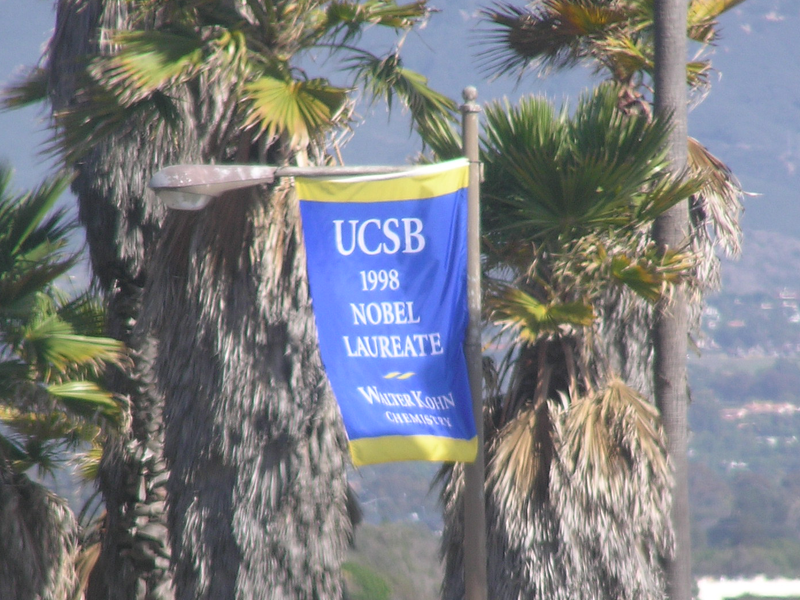
- In 1998 Kohn shared the Nobel Prize in Chemistry with John Pople—Kohn for the development of density-functional theory and Pople for methods in computational quantum chemistry.
- Kohn's work enabled the widespread use of first-principles simulations in both academia and industry, influencing software, methodology and interdisciplinary research.
- He joined other prominent scientists in public statements about global sustainability and policy, including signing the Stockholm memorandum at a Nobel Laureate Symposium.
Walter Kohn spent the later part of his career teaching and researching in California, where colleagues remember him for his clarity of thought and for bridging theoretical physics with practical computation. He died at his home in Santa Barbara on April 19, 2016, from jaw cancer, leaving a legacy evident in the routine use of density-based electronic structure methods across the physical sciences.
For readers seeking more detailed technical introductions, many textbooks and reviews present the mathematical foundations and common approximations used in DFT; institutional pages and historical notes provide fuller biographical context and accounts of Kohn's life and honors.
Author
AlegsaOnline.com Walter Kohn: Developer of Density Functional Theory and Nobel Laureate Leandro Alegsa
URL: https://en.alegsaonline.com/art/132731