
Tomiichi Murayama
Japanese politician who served as Prime Minister from 1994–1996; leader of the Japan Socialist Party and author of the 1995 wartime apology known as the Murayama Statement.
Tomiichi Murayama (born 3 March 1924) is a retired Japanese politician best known for serving as Prime Minister of Japan from 30 June 1994 to 11 January 1996. A long-time leader of the Japan Socialist Party (renamed the Social Democratic Party in 1996), his premiership was notable for an unprecedented coalition with conservative forces and for a nationally prominent wartime apology issued in 1995.
Image gallery
10 Images


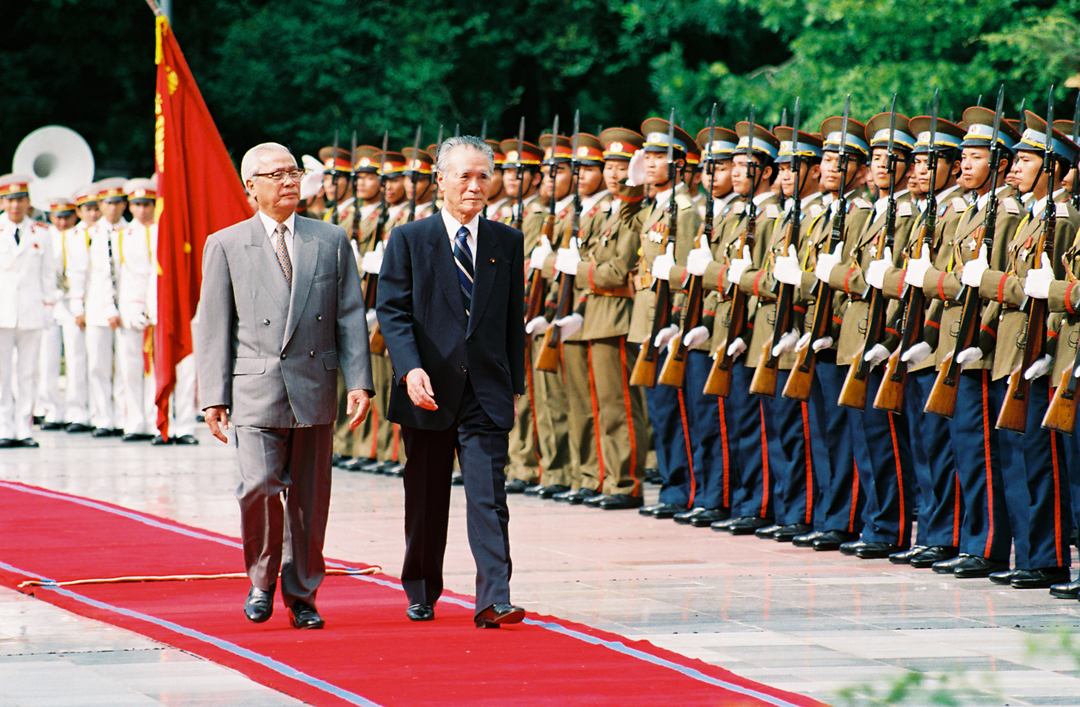


Early life and political rise
Murayama was born in Ōita Prefecture and studied at Meiji University. He entered politics in the postwar period as a member of the Japan Socialist Party and rose through its ranks over several decades, holding positions in both local and national party structures. His background and political orientation placed him among Japan's principal socialist figures of the late 20th century.
Prime ministership and major events
As head of government, Murayama led a three-party coalition that included his own party alongside more conservative partners—an arrangement that surprised many observers because it joined former ideological rivals to form a governing majority. His term coincided with significant domestic crises, including the 1995 Great Hanshin (Kobe) earthquake and the Tokyo subway sarin attack, events that tested the government's emergency response and social policy priorities.
The Murayama Statement and foreign policy
In August 1995 Murayama delivered a public statement marking the 50th anniversary of the end of World War II. That declaration, widely known as the Murayama Statement, expressed remorse for Japan's wartime actions and has remained a reference point in Japan's postwar diplomacy and domestic debate about historical memory. The statement is often cited in discussions of reconciliation and regional relations in East Asia. Read about the 1995 statement.
Legacy and later years
Murayama stepped down as party leader in 1996 after his term as prime minister ended and the Japan Socialist Party reorganized as the Social Democratic Party. Historians and commentators generally view his premiership as a transitional episode in the 1990s—a period of political realignment, economic challenges, and renewed focus on Japan's role in addressing wartime history.
Notable facts
- Office held: Prime Minister of Japan (30 June 1994–11 January 1996).
- Party leadership: long-term head of the Japan Socialist Party; party renamed in 1996.
- Most remembered for issuing the 1995 apology for wartime aggression (the Murayama Statement).
Murayama remains a figure of interest for those studying Japan's postwar politics, party realignment in the 1990s, and official approaches to wartime responsibility and reconciliation.
Author
AlegsaOnline.com Tomiichi Murayama Leandro Alegsa
URL: https://en.alegsaonline.com/art/132031