
Sukarno: Indonesia’s First President and Independence Leader
Sukarno (1901–1970) led Indonesia's struggle for independence, served as its president (1945–1967), promoted Guided Democracy and non-alignment, and was removed after the 1965–66 political crisis.
Overview
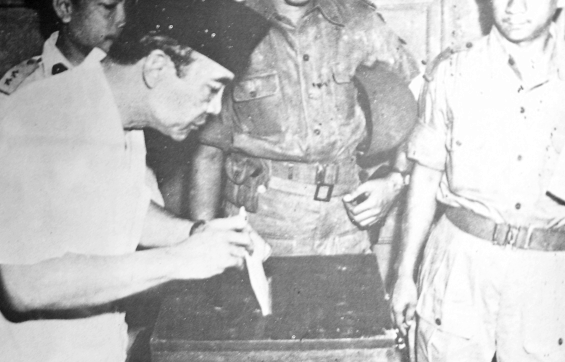
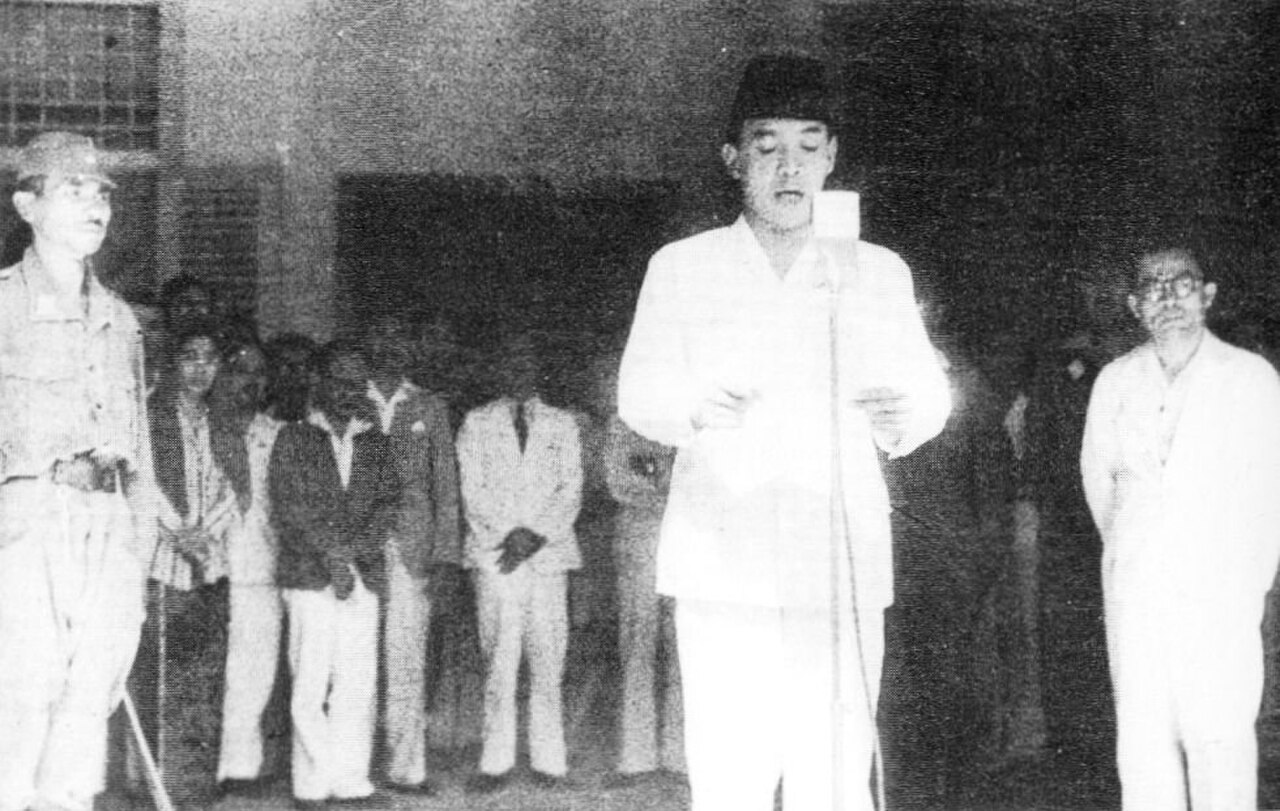
Sukarno (born 6 June 1901, died 21 June 1970) was a central figure in Indonesia’s modern history. As a nationalist leader he proclaimed independence in 1945 and served as the country’s first president from 1945 until 1967. He is remembered for uniting diverse groups to resist colonial rule, for an assertive foreign policy that advanced the Non-Aligned Movement, and for a later period of increasingly centralized rule that ended amid the turmoil of 1965–66.
Image gallery
10 Images



Early life and political rise
Born on Java to a Javanese father and a Balinese mother, Sukarno trained in engineering and developed an interest in political ideas while a student. He became an influential orator and organizer and co-founded the Indonesian National Party (Partai Nasional Indonesia, PNI) in the 1920s. His leadership and speeches helped popularize the cause of independence from the Dutch, and he emerged as one of the most visible nationalists of the interwar period.
Role in independence and the national revolution
After the Japanese occupation of the Dutch East Indies during World War II, Sukarno and colleagues declared Indonesian independence on 17 August 1945. He served as president throughout the diplomatic and armed struggle known as the Indonesian National Revolution, which culminated in full recognition of sovereignty by the Netherlands several years later. Sukarno worked closely with other national leaders, including Mohammad Hatta, to build a unitary republic from the archipelago’s many islands and communities.
Presidency: policies and international posture
During his presidency Sukarno pursued a mix of nationalist, populist and pragmatic policies. Domestically he sought unity among nationalist, religious and leftist forces—an approach sometimes called NASAKOM—and moved Indonesia toward what he called Guided Democracy, concentrating authority in the presidency as he sought to manage political instability. Internationally Sukarno was a prominent voice of decolonizing states: he hosted the 1955 Asian–African (Bandung) Conference and helped shape the Non-Aligned Movement, advancing cooperation among newly independent countries.
1965–1967 crisis and transfer of power
The political balance that Sukarno had tried to maintain broke down in 1965 when an abortive coup attempt and ensuing violence produced a dramatic realignment. The army, under the leadership of General Suharto, suppressed the movement blamed for the coup and moved to displace Sukarno. Over 1966–67 Sukarno’s authority was reduced and then transferred; he formally relinquished the presidency under pressure, and Suharto became the effective head of state before being confirmed as president.
Legacy, names, and remembrance
Sukarno’s legacy is complex. Many Indonesians honor him as a founding father of the republic, a charismatic nationalist who secured independence and gave the country a strong sense of identity. Others criticize his authoritarian turn, economic difficulties late in his rule, and the political polarization that preceded his removal. He is often called Bung Karno or Pak Karno in popular memory. The spelling of his name appears both as Sukarno and the older Dutch-influenced Soekarno; he signed his name with the older form while official modern Indonesian orthography uses Sukarno. For further reading about his role in Indonesia and the postwar era see Indonesia overview, the colonial context of the Netherlands, and accounts of the transition to General Suharto.
- Key dates: born 1901; proclaimed independence 1945; president 1945–1967; died 1970.
- Major initiatives: leadership in the independence movement, Bandung Conference, promotion of non-alignment and Guided Democracy.
- Contested aspects: political centralization, economic challenges, and the violent upheavals of 1965–66.
Author
AlegsaOnline.com Sukarno: Indonesia’s First President and Independence Leader Leandro Alegsa
URL: https://en.alegsaonline.com/art/131419